On Narratives and Mental Health: Lunas Collective at PETA’s Workshop Caravan
This piece is written by Julienne Estabaya, a volunteer for Lunas Collective who participated in the Control + Shift: Narrative Change workshop held on March 13 and April 7, 2026.
Drawing from her experience as a participant, this piece reflects Julienne’s observations and insights on the role of narratives in shaping conversations around mental health, and on how creative approaches can help foster agency, care, and collective change.
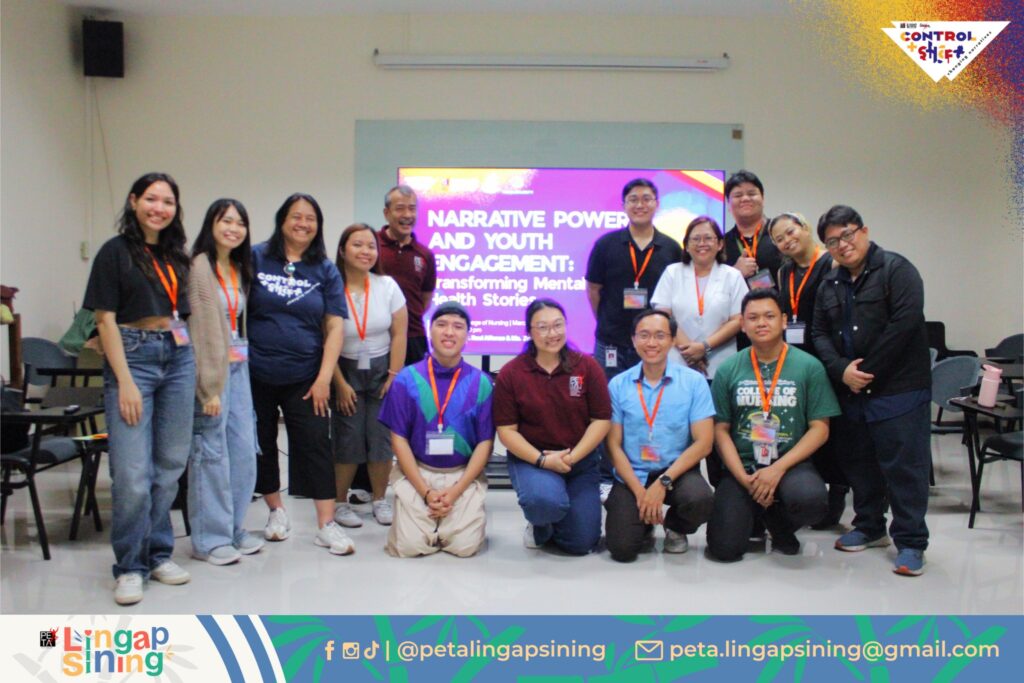
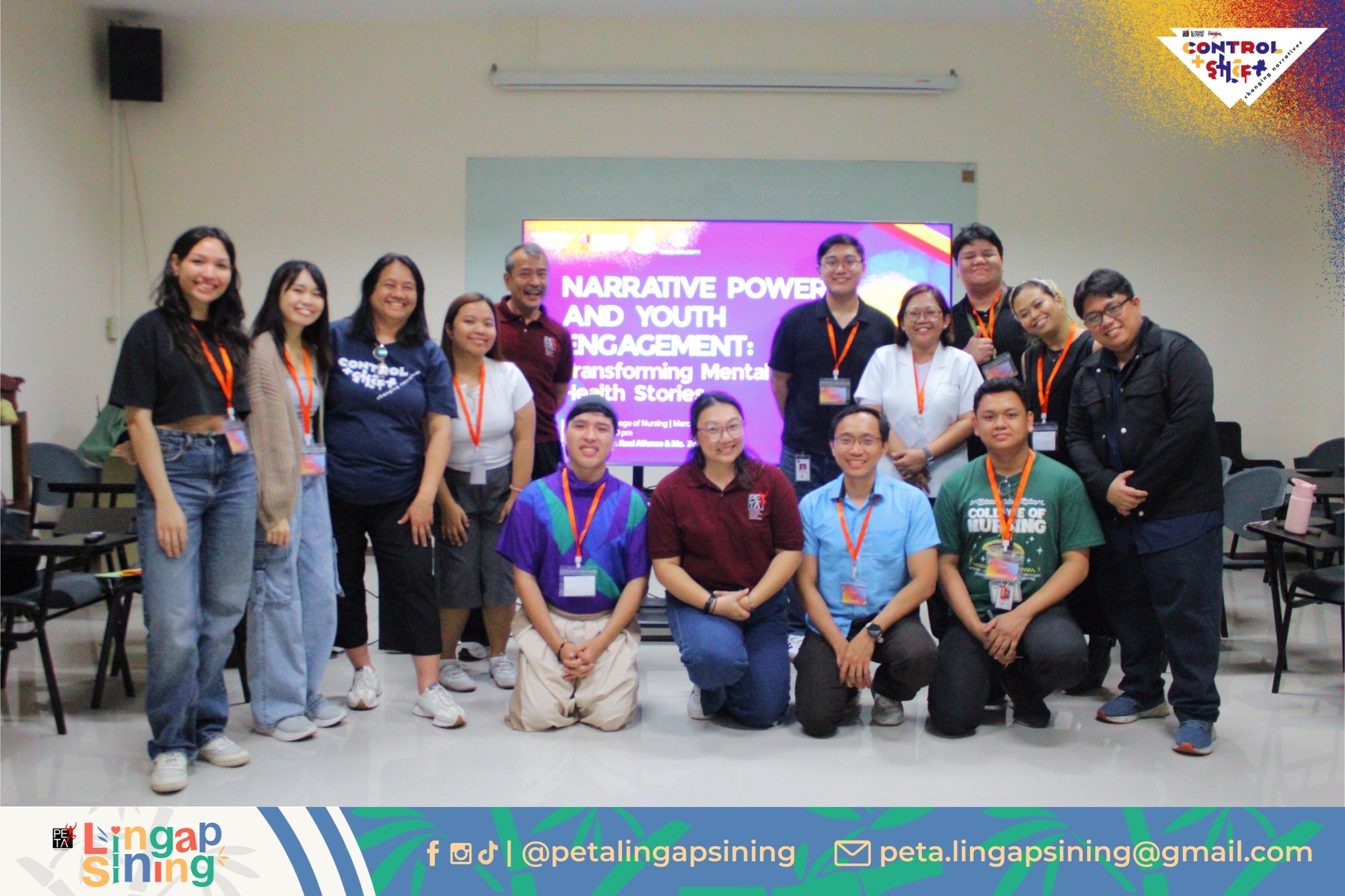
Over the course of two sessions, participants from Lunas Collective, Mental Health PH, and the UP Manila College of Nursing gathered at Sotejo Hall on the UP Manila campus for a workshop organized by PETA Lingap Sining. Together, we examined prevailing narratives surrounding mental health in the country and explored creative interventions that could support and amplify transformative narratives within our respective organizations and programs.
After a series of icebreakers tastefully imbued with theatricality, we officially kicked off the workshop by exploring the stories we know most intimately and tell most often: our own. Through both traditional and digital creative mediums—think blind contour drawing, improvisation, and video production—we examined the various elements that make up our identities: our preferences, the meanings we assign to our names, and the ways we wish to be seen by the world, among many others.
These exercises highlighted a fundamental truth about narratives: objective facts may remain the same regardless of how we tell a story, but meaning is shaped by how those facts are arranged, framed, and shared.
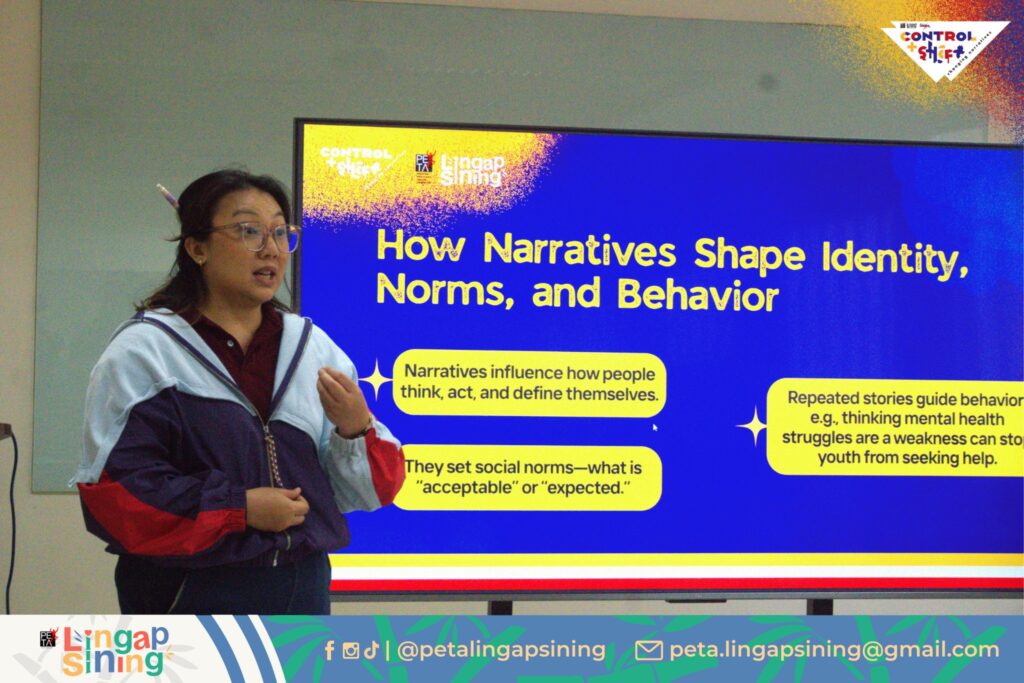
Whilst individual narratives are important, it is equally crucial to examine the conditions that shape them. Individual narratives, including those around mental health, are not spun in a vacuum; they are largely informed by our immediate environments and broader cultural contexts. We talked about the myriad of social determinants–like financial/economic status, or cultural beliefs, that can significantly impact one’s narratives surrounding mental health, and how they can also influence whether or not we decide to seek help or care.
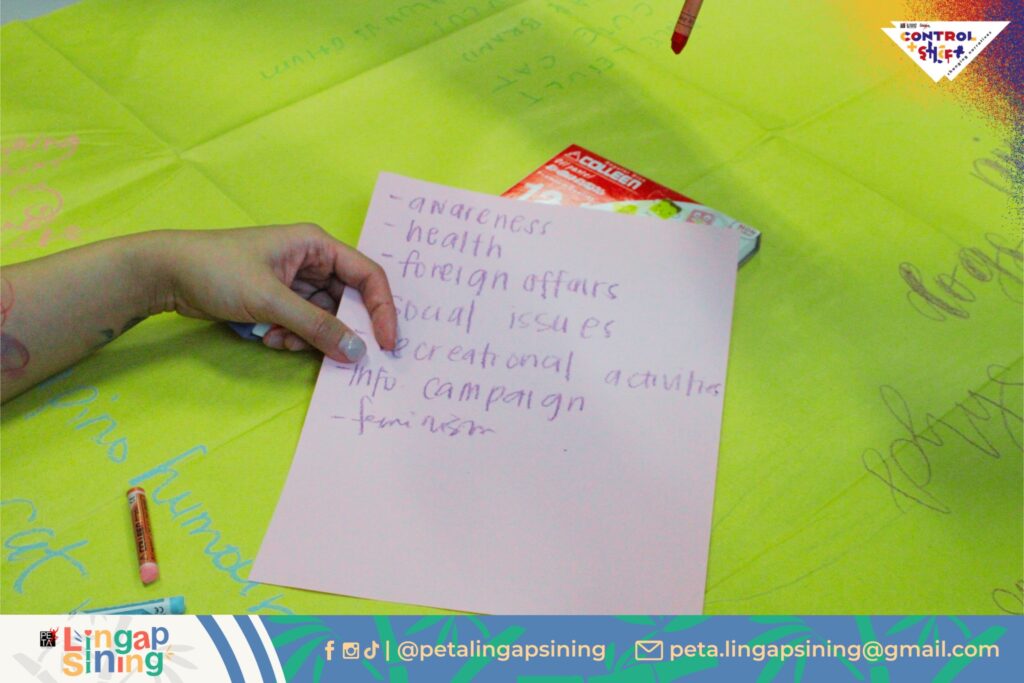
As the workshop progressed, our focus expanded from our personal stories to the broader ecosystems in which they exist. Participants broke into groups to discuss dominant and harmful narratives surrounding mental health, then reimagined them into narratives that foster agency, solidarity, and collective action through creative approaches.
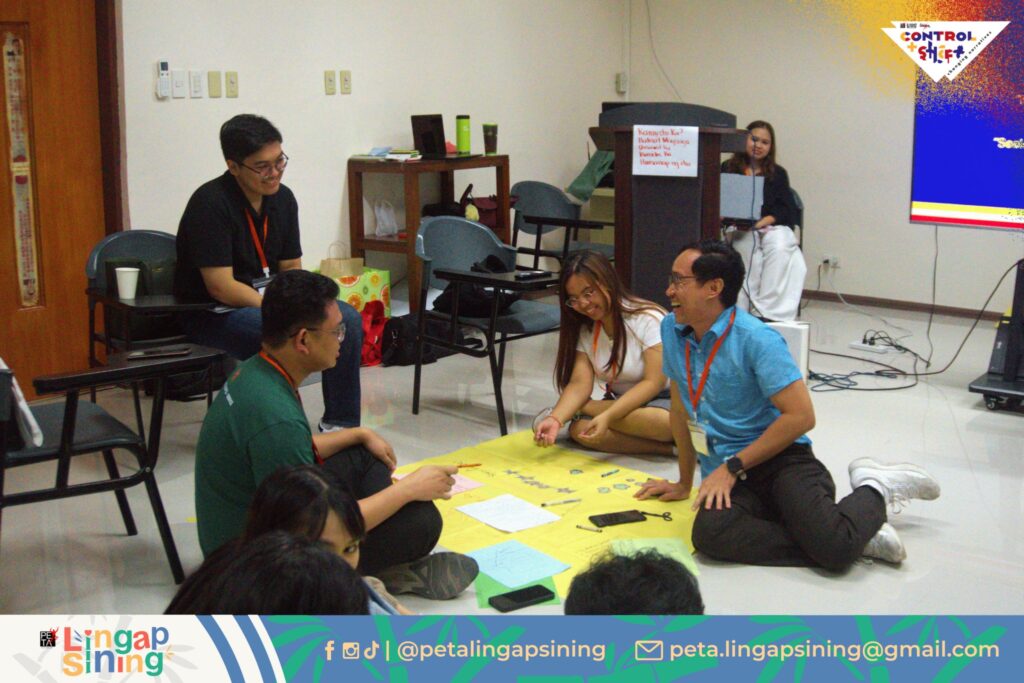 That we found ourselves returning to these conversations even after the workshop—going so far as extending the dialogue with people outside of it—speaks to both their resonance and relevance.
In many ways, the workshop felt like an extension of our advocacy and work at Lunas Collective. We understand that the patriarchy, alongside its intersectionalities, produces conditions that are ripe for gender-based violence, as well as barriers that could prevent individuals from seeking help - barriers rooted in shame, guilt, and/or fear of judgment. It was within this context that our helpline was established, as a response to the urgent need for feminist and survivor-centered psychosocial care for people with lived experiences of gender-based violence and/or reproductive health concerns. That it remains volunteer-powered points to a collective willingness to show up for one another, and highlights the role of community in making care more accessible, and in inspiring the possibility of meaningful and lasting change.

Dolls of Dignity: Stitching Stories of Period Power
This piece is written by Bry, a multimedia arts student who uses storytelling to document lived experiences and amplify real-life voices. Rooted in curiosity, empathy, and critical reflection, their work explores how personal narratives connect to broader social issues.
Written from the perspective of someone present in the space, this piece reflects Bry’s observations and reflections during Lunas Collective’s creative care sessions with menstruators.
When we were little kids, we used to play different games. These games became a way to express our creativity and explore our interests—sometimes we stumbled, we lost, we won—collecting experiences and lessons along the way. Who would have thought that after a decade or two, these same acts of play can take on a new meaning: becoming powerful ways to process real-life struggles.
When these forms of creativity are used to explore deeply personal and often stigmatized, unheard experiences, what does menstrual dignity truly look like?
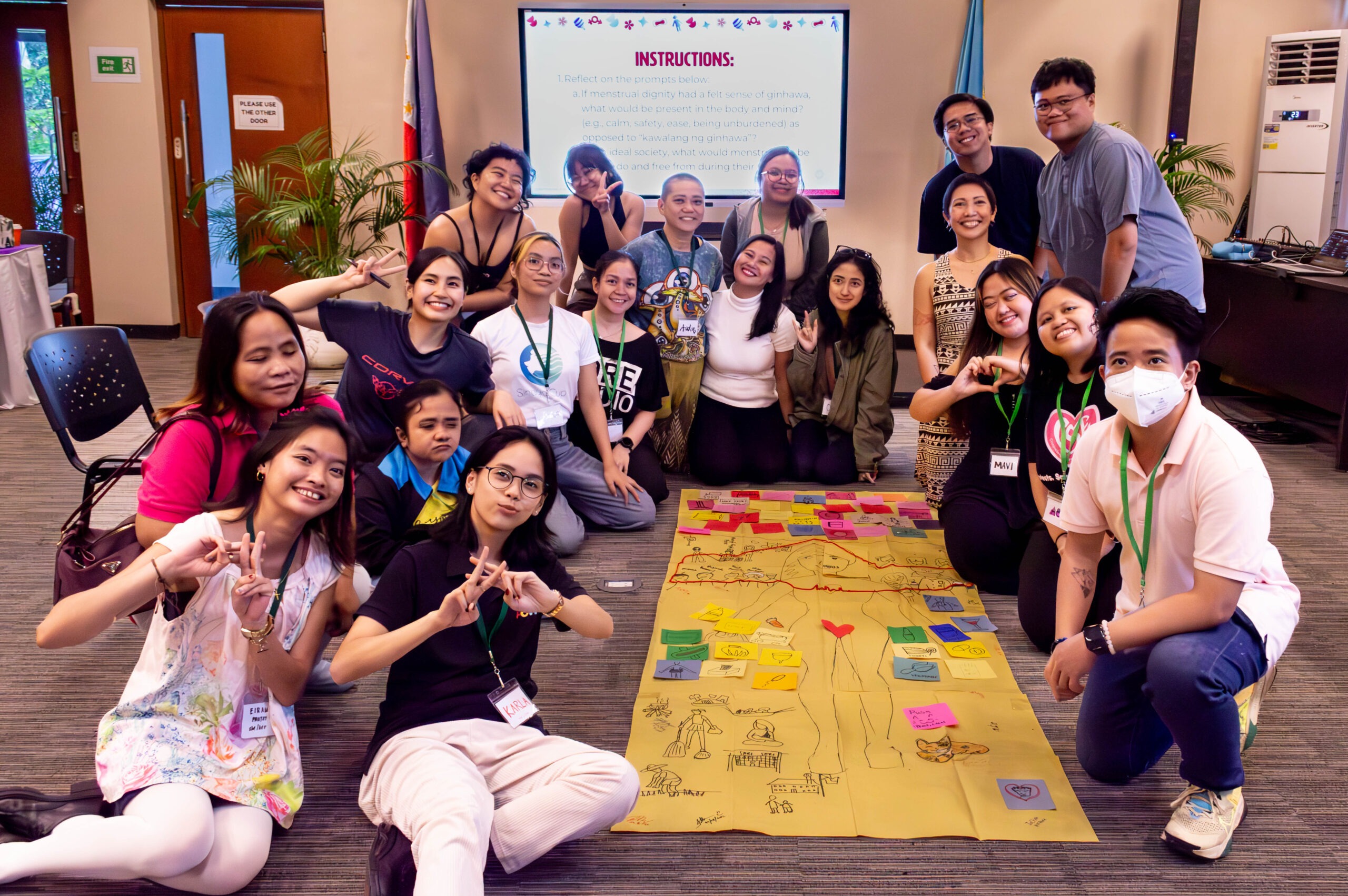
On March 7 and 8, 2026, Lunas Collective conducted a creative care session for their research project, “POWER, PERIOD: An Exploratory Research on the Meaning of Menstrual Dignity through Collective Care.” Diverse participants were invited to share their stories and experiences through doll-making, poem, human tableau, role play, drawing, and other art forms, reimagining what dignity and care look like in the context of their lived experiences.
Menstrual Sensation Through Body Scan
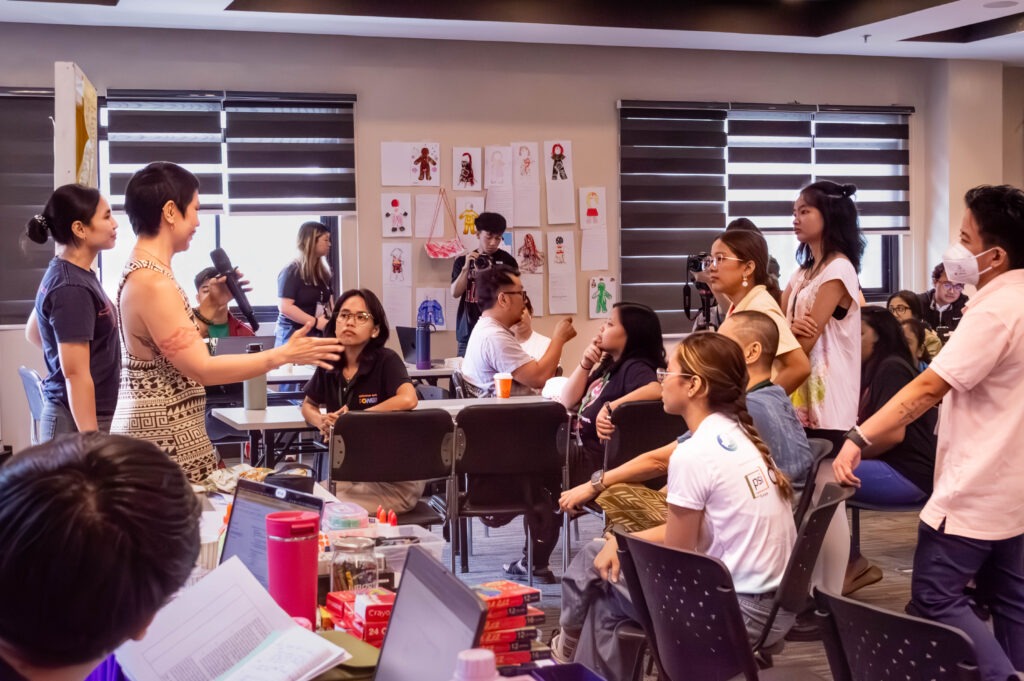
The workshop started with a guided body scan, participants notice where the memory holds and locate “sites of feeling” when they think of menstruation. “Parang hinihiwa yung ulo sa gitna,” the group shared the same sensation with one another.
These sensations were also translated into movement—not as a performance, but as a way of expression. Participants with diverse abilities described their movements, some with the help of a sign language interpreter, and each movement was mirrored by the group—an early gesture of recognition, empathy, and collective care.
After the body scan, the group was given materials such as cardstock, coloring materials, pencils and pens, glitter, different-colored yarns, sequins, and acrylic paint. Each participant was asked to create a “Doll of Dignity” and write a poem reflecting their experiences and insights from the body scan and group sharing.
Safe Space: Opportunity for Collective Sharing
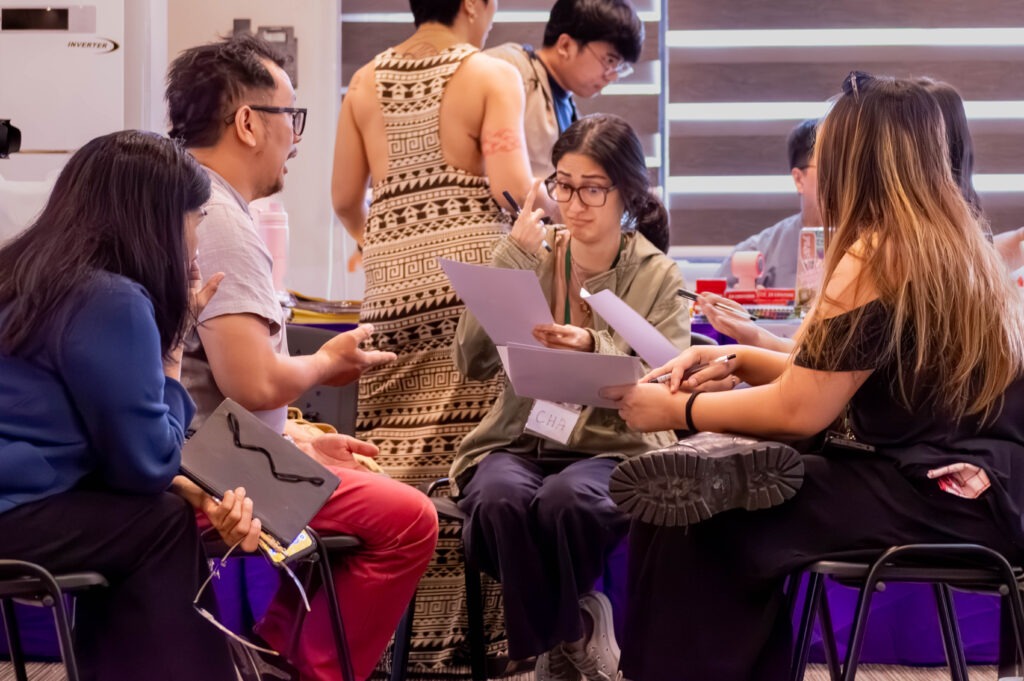
The workshop opened a space not just for storytelling, but also for participants to deeply listen to their bodies. They shared how menstruation is not a linear experience, but rather a constant shifting between pain, care, and adaptation. Some spoke about remedies that worked for them: drinking soda to ease the flow, using heating pads, while others found comfort in rest and stillness. Food also became part of the equation—what may seem harmless to the body, like langka (jackfruit), can trigger dysmenorrhea during menstruation.
This collective sharing revealed a pattern: menstruators learn to read their bodies over time through lived experiences. Every month brings anticipation, discomfort, and sometimes dread—but also preparation. Comfort becomes intentional, and care for oneself and others becomes practiced. Menstruation was described as both disruptive and instructive. It interrupts daily routines, limits movement, and reshapes plans. Yet at the same time, it signals people to slow down, to listen, and to respond—reminding them that pain signals the body’s presence and needs.
“Kahit ayaw man natin siya sa ilang araw, hihingin mo pa rin na dumating siya buwan-buwan,” a participant shared. Menstruation, though often unwanted, becomes something expected. It is a natural, uncontrollable cycle that demands readiness. Yet within this lack of control, there is a different kind of power—the power to prepare, to understand, and to care for oneself. Here, dignity begins.
We Fight: Battles And Dignity
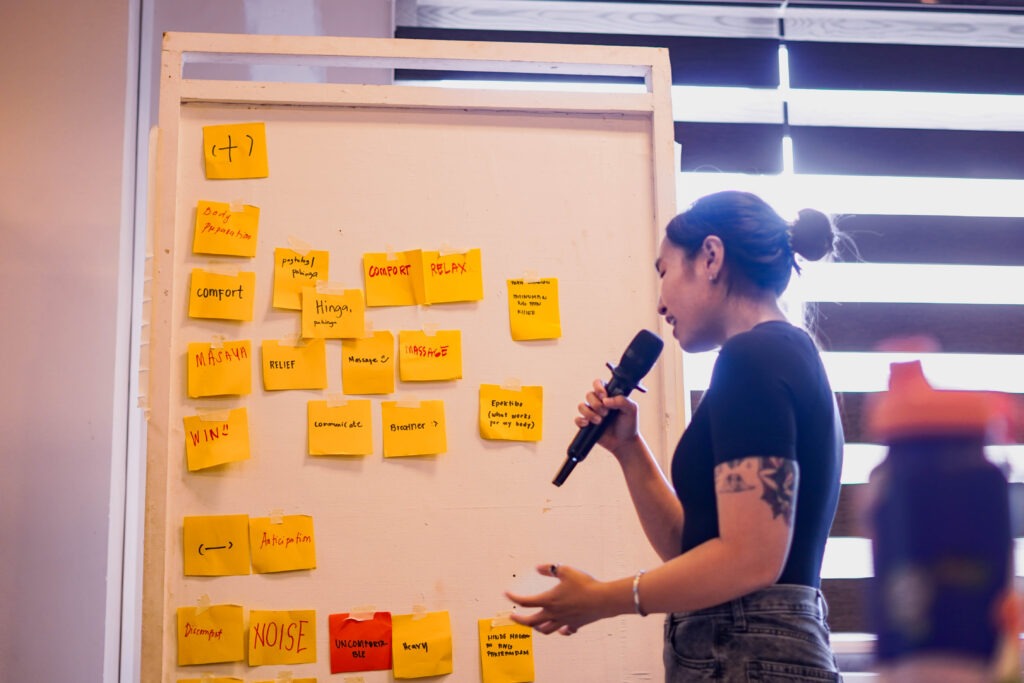
“We want to empower. The battle is not only within our bodies, but also within society.” Many participants traced their earliest encounters with menstrual stigma to everyday spaces—classrooms, homes, and workplaces. For some, menstruation was something to be hidden, joked about, or dismissed.
One menstruator recalled being told by a professor that they were “maarte” for expressing menstrual pain. Another shared how conversations about menstruation were discouraged in their home, especially in public spaces. These experiences reinforced a culture of silence, where menstruation became taboo. This silence becomes even more complex when layered with gender and identity. Transgender men in the group spoke about the double burden of experiencing menstruation while navigating discrimination. “Mabigat, doble ang hiya,” one shared, highlighting how menstruation can intensify feelings of exclusion.
“The cycle of shame can become a cycle of care.” In this sense, dignity is relational. It is built through spaces where people feel seen, supported, and understood—not only by their peers, but also by institutions.
Menstrual Dignity in Different Institutions
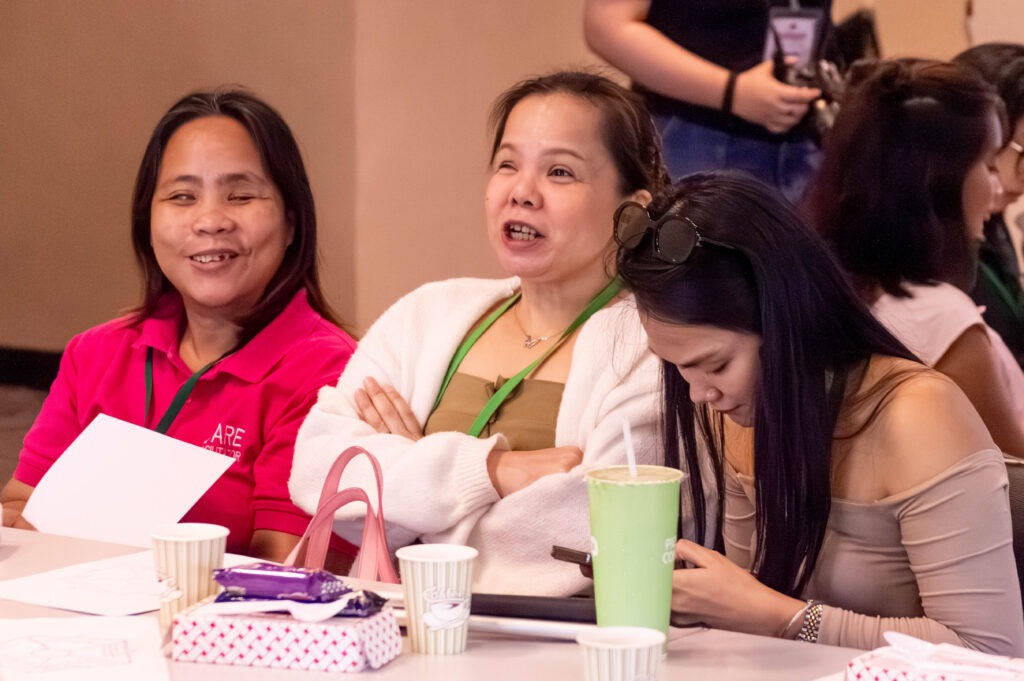
Menstruators also named barriers that prevent menstrual dignity from being fully realized. Responsibilities such as schoolwork, household chores, and profession demands often override the body’s need for rest. Even during significant life events, menstrual pain can overshadow what should have been joyful or memorable experiences.
Financial constraints also become part of this reality. Menstrual products, though essential, remain inaccessible for many. Some participants shared stories of people cutting cloth to use as makeshift napkins, while others pointed out inconsistencies in public health priorities: “Why are condoms free while menstrual products are not?” Workplaces and public spaces were also described as unaccommodating, especially in male-dominated fields. Facilities, resources, and policies rarely account for menstrual needs. Even when support exists, it is not always accessible.
Participants emphasized that dignity requires more than individual coping—it demands systemic change. This includes government-funded menstrual products, inclusive healthcare, and policies that recognize the diverse realities of menstruators. Education also plays a crucial role. Many shared that they only learned about menstruation after experiencing it, revealing gaps in early and accessible information.
Awareness creates space. But awareness alone must also be intentional and inclusive—reaching different communities, including Deaf and marginalized groups, while holding institutions accountable.
Reimagining Dignity Through Creativity and Care
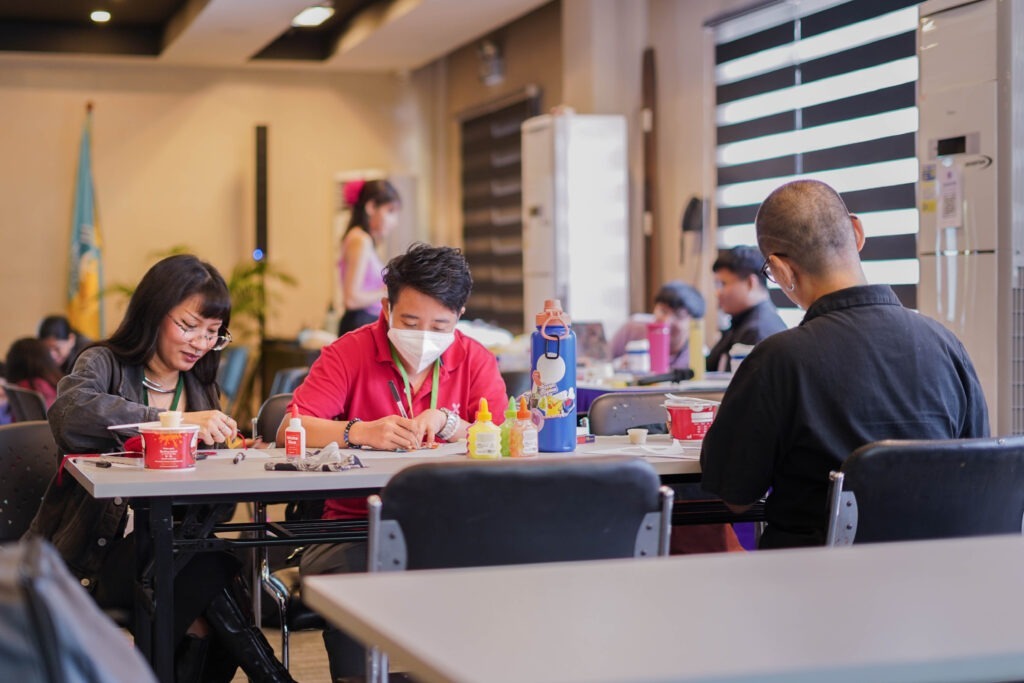
On the second day, participants revisited their creations, connecting their dolls to their inner child and their first experiences of menstruation. Through yarn, color, and texture, participants reflected on experiences marked by confusion, fear, curiosity, and eventually understanding.
This creative process revealed something essential: when people are given safe spaces, expression flows. Art became a bridge, connecting personal experiences to collective understanding. While pain remained a shared experience, participants recognized that its manifestations differ from one another. Some found relief in movement and physical activity, while others experienced comfort in stillness. Emotional responses also varied—some chose isolation to manage mood swings, while others found comfort in being cared for.
This showed how support is deeply personal. It can look like preparing warm compresses, offering food, providing financial help, or simply asking, “Kumusta ka?” It can also mean respecting one’s autonomy, allowing menstruators to define what they need, rather than assuming their limitations.
As participants reimagined menstrual dignity, they described a world without shame, where care is normalized and people have control over how they navigate their time and bodies. A world where menstruation does not hinder participation, but is understood as part of everyday life.
The workshop revealed that menstrual dignity is not a fixed concept. It is continuously shaped through experience, words, and collective action. It lives in small gestures of care, in the courage to speak, and in the systems we choose to build.
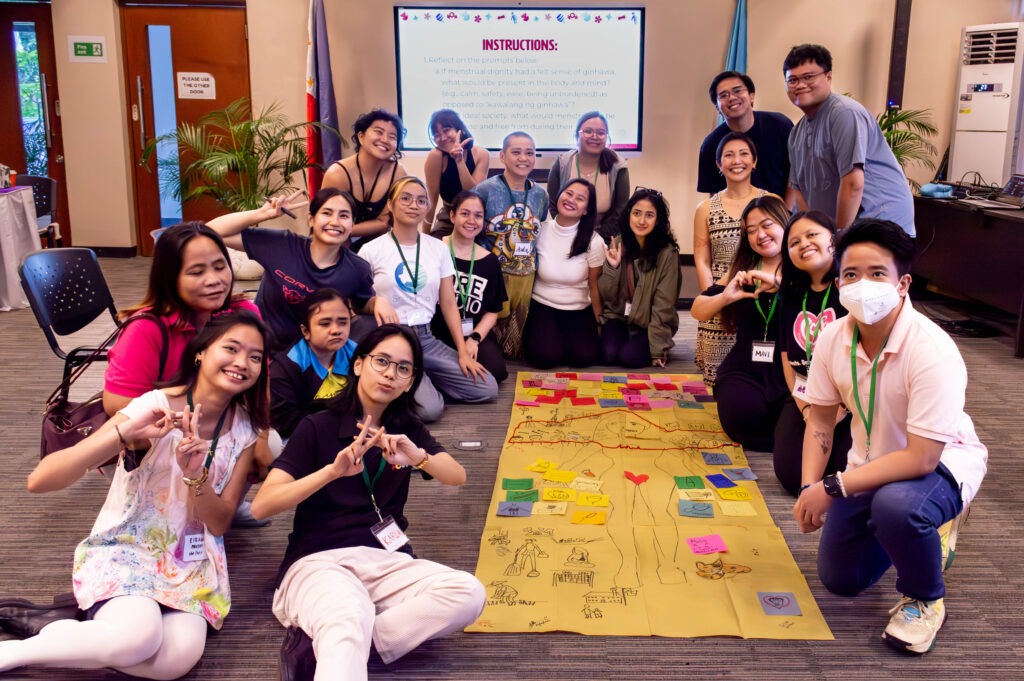
And like the games we once played as children, it invites us to imagine, to create, and to begin again—this time, with intention.
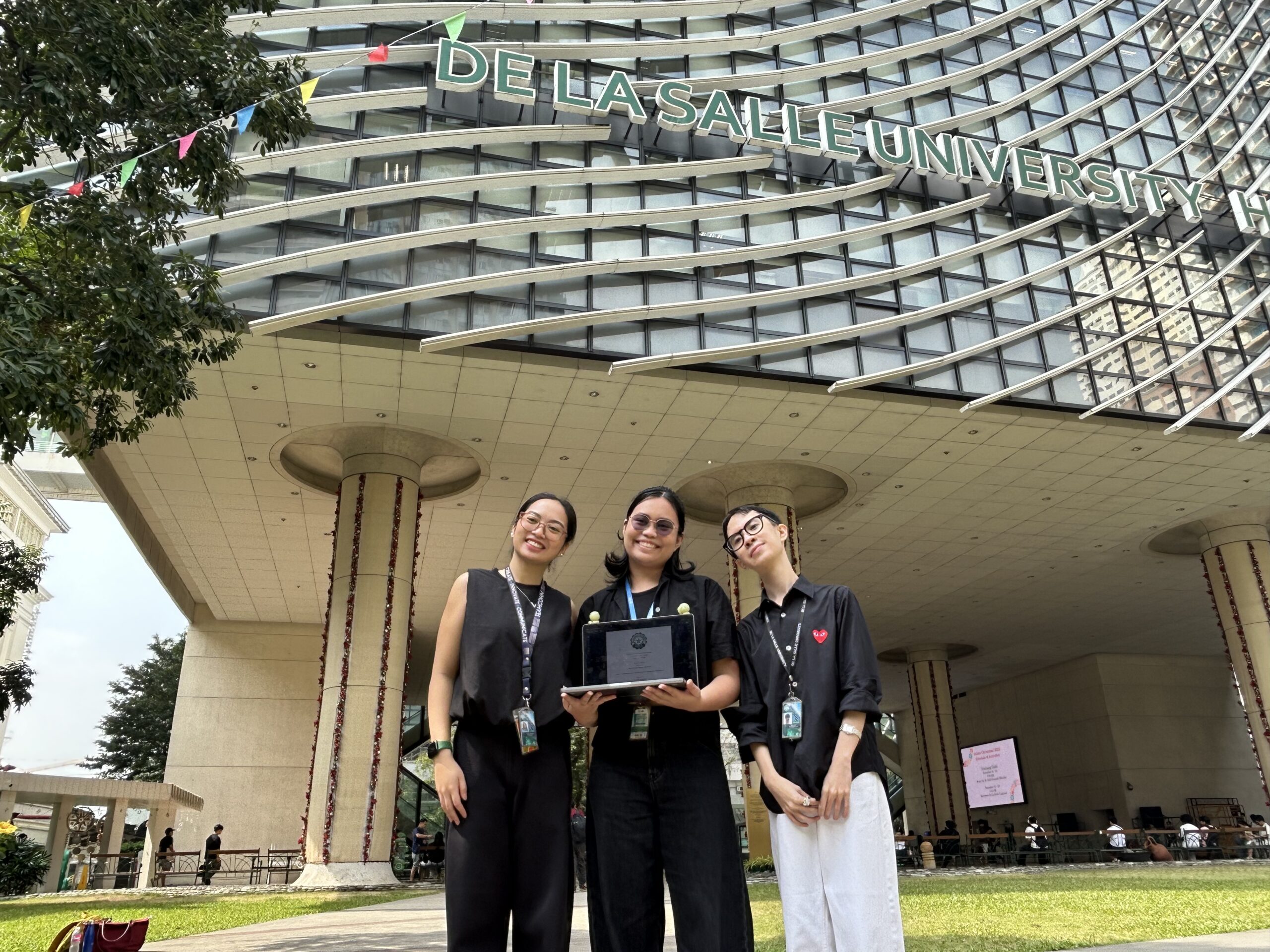
Care as Communication: Reflections from a DLSU OrgComm Thesis
This piece is written by Gabby, Kai, and Richmond, graduates of the AB Organizational Communication program at De La Salle University–Manila. It is based on their undergraduate thesis, “Care as Communication: Exploring Lunas Collective’s Compassionate Communication.” Through their work, they aim to foster meaningful connections through communication grounded in the values of feminism, inclusivity, and accessibility. Beyond their academic and professional pursuits, they advocate for creating safer spaces within their communities.
Group Reflection:
In a world where pressure comes from all directions, organizations are exploring avenues to better connect with their members and constituents - and care serves as a powerful conduit for this.
Working with Lunas Collective for our thesis, we individually had our realizations about valued communication and its effect on a team that truly cares and nurtures others.
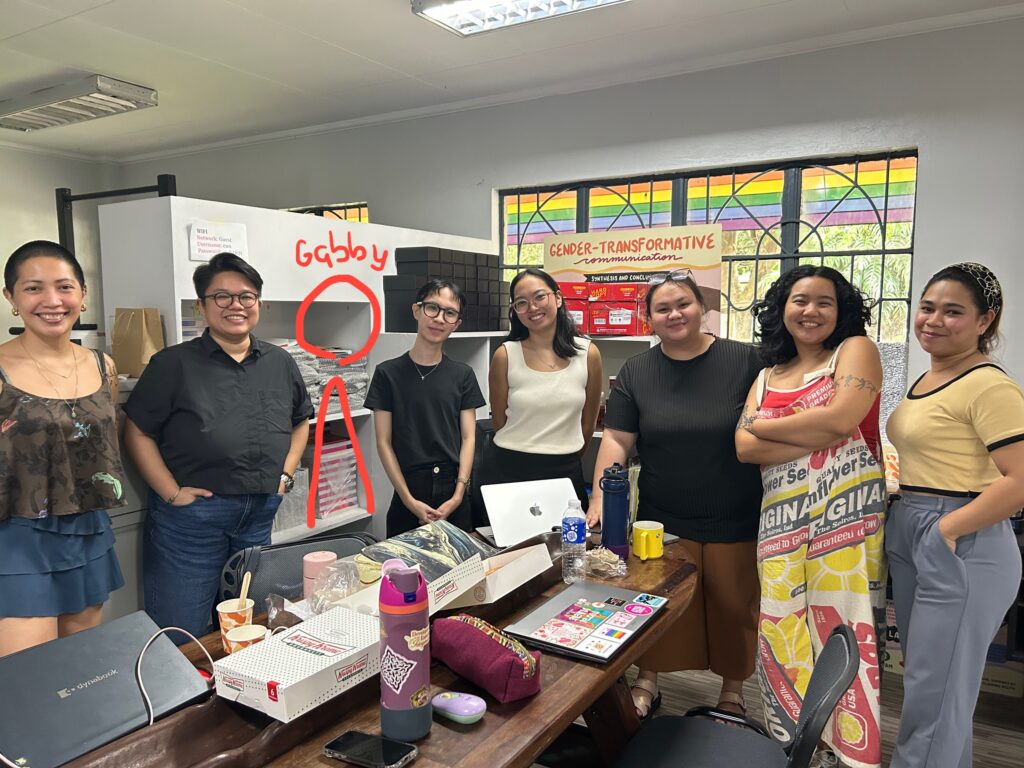
First, we saw the impact and significance of an organization going beyond rigid structures and bureaucratic processes and instead, recognizing the power of dialogue, compassion and emotions. People would be surprised how much professional kindness has an effect on their audience, as exemplified by Lunas Collective’s practices.


Second, our personal interactions with them pushed our drive to highlight the kind of work that Lunas Collective does for the communities they passionately support. We appreciated how they use their everyday words and time to support and transform lives towards continued self-discovery, healing, and empowerment.
As we present this thesis paper, we share that its creation demonstrated a lot of compassion and openness to learn about communication that is formed through principle and intention. Through shared experiences and conversations with the org's core team and volunteers, our understanding of [the Lunas Collective Feminist Care Principles] continued to unfold. Each meeting sparked deeper curiosity, revealing just how rich, nuanced, and interesting their history, culture, and practices are.
 Thank you, Lunas, for your unwavering support! We are proud to be able to integrate our academic wisdom into your meaningful platform, and we hope that our readers find that same spark and admiration we found here.
Output Summary:
At Lunas Collective, care is more than a value—it is the heart of how the organization shows up for one another and for every person who reaches out. This study explored exactly how care manifests itself as compassion unfolds in Lunas’ day-to-day work. The research looked at how the core team communicates compassion to their vollies, and how vollies communicate care with each other and with service-users.
The study showed how deeply compassion is woven into Lunas’ culture and communication. Drawing from Miller’s (2007) framework of Compassionate Communication, the research showed how this principle guides every interaction, specifically how they compassionately notice, connect, and respond. Most importantly, the study identified Lunas Collective’s communication style to be Dialogic Reflection, in which vollies aid in the service-users’ introspection instead of enforcing concrete solutions through clean language and active listening.
Feminist Approaches to Mental Health: Reflections from GMHAF 2026
This piece is written by Janine Del Mundo, one of the Co-Executive Directors of Lunas Collective.
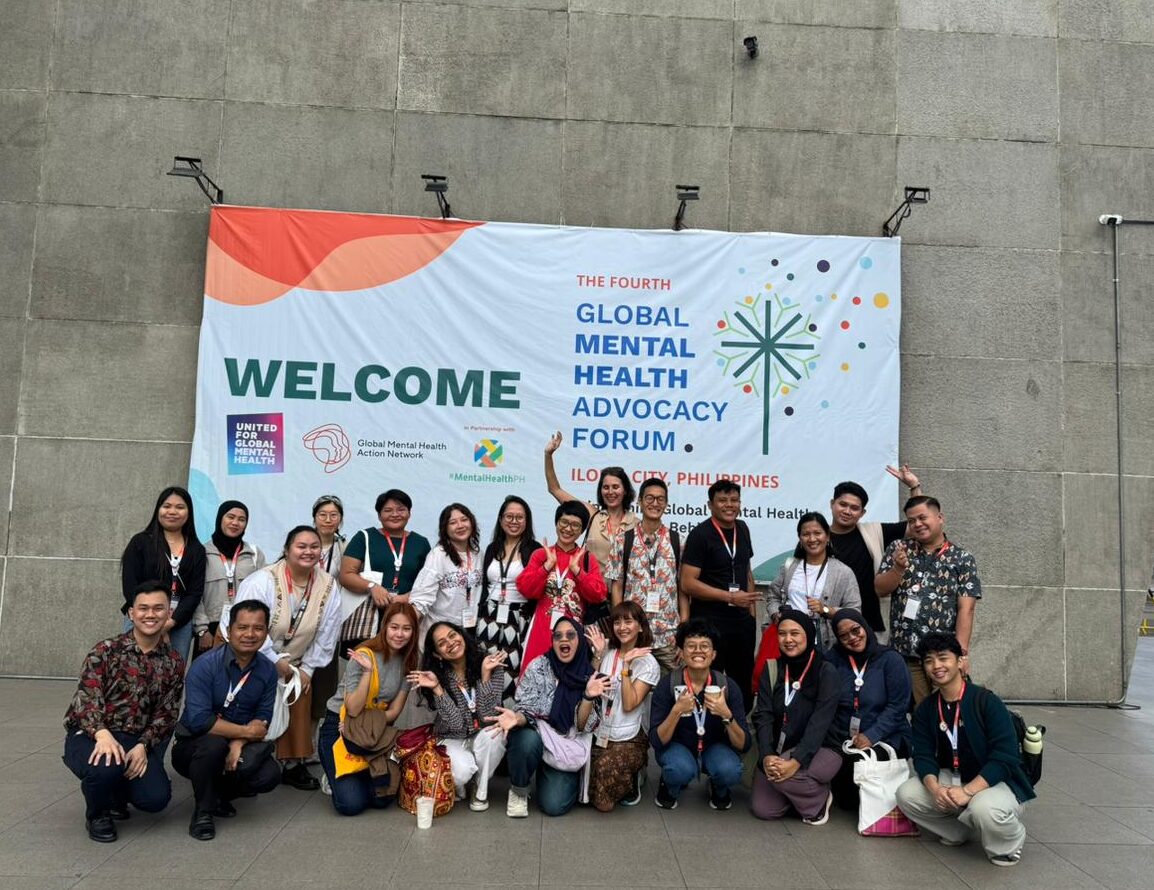
It has been a month since the fourth Global Mental Health Advocacy Forum (GMHAF), convened by the Global Mental Health Action Network (GMHAN) and hosted by United for Global Mental Health, in Iloilo City, Philippines.
We at Lunas Collective, as part of the AwareNest Community of Practice (CoP)—funded organizations whose participation in the forum was supported by EMpower - The Emerging Markets Foundation—are now mapping ways to translate the forum’s learnings into concrete outcomes.
More than a space for networking, the forum affirmed the legitimacy of organizations integrating mental health into their work, such as Lunas Collective, a feminist organization focused on addressing gender-based violence (GBV) and sexual and reproductive health (SRH) concerns in the Philippines.
In our context, civil society and nonprofit organizations are often the first line of support that people turn to, especially for concerns rooted in sociopolitical struggles. Organizations like ours help build community resilience amid persistent challenges in accessing healthcare.
At Lunas Collective, we are deeply aware of the barriers people face when seeking help for experiences of GBV and their SRH needs. Because of this, we take extra steps to thoughtfully connect individuals to diverse forms of care and services. For example, we prepare them for possible challenges when approaching healthcare and service providers who may not yet be fully sensitive to the kind of care and support they need—especially when their concerns are considered taboo. In doing so, we create space to share and exchange strategies on how to engage with an imperfect healthcare system.
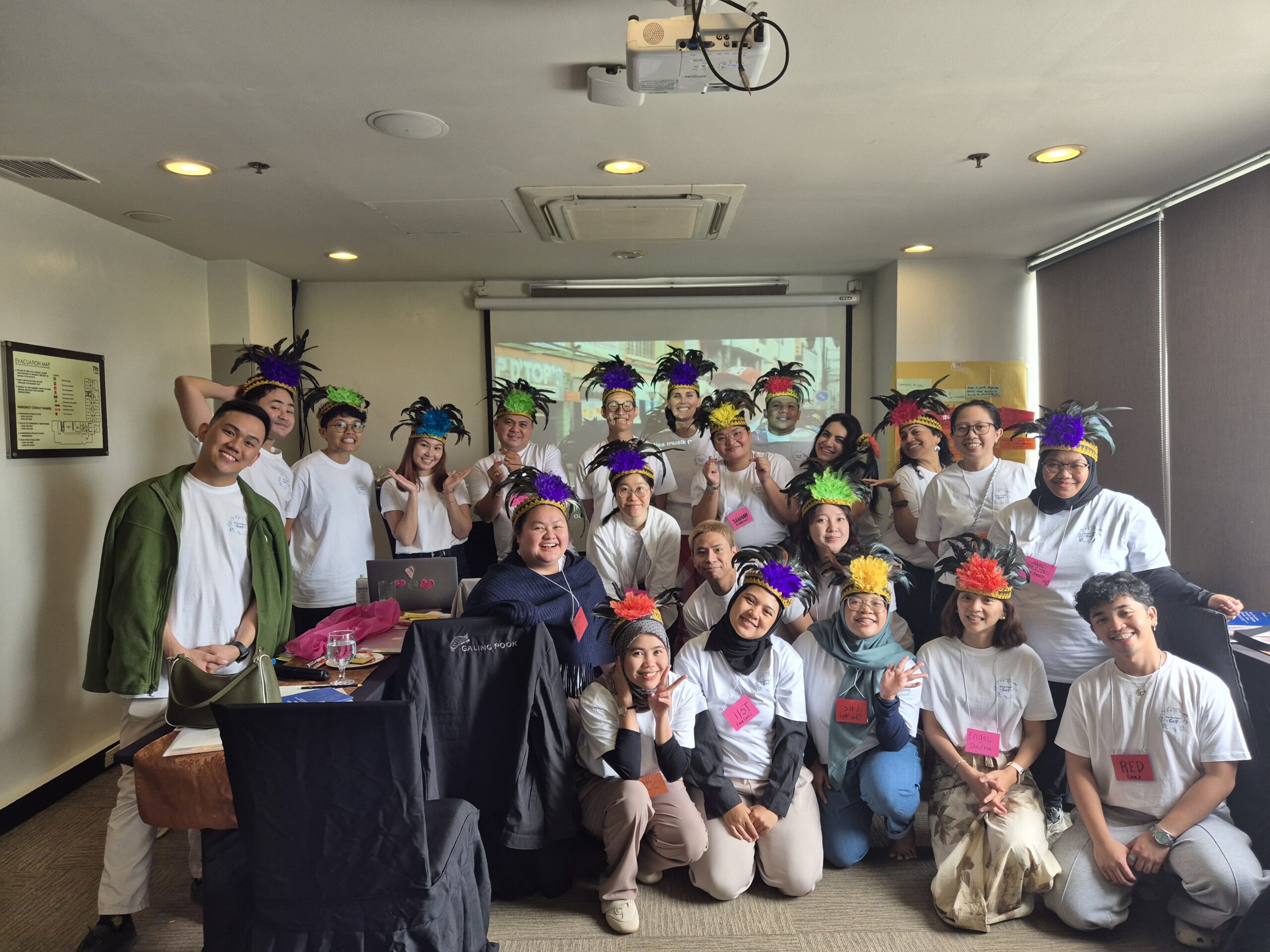 Relatedly, the one-day post-GMHAF CoP workshop highlighted the need for organizations working with grassroots communities to integrate mental health and SRH services. Mental health challenges do not exist independently of the social conditions in which people are situated. A coordinated mental health and SRH service will only affirm that our experiences are embodied, diverse, and contextual. Integrating mental health and SRH services is an area that Lunas Collective is intentionally advancing.
Given these realities, it is only right for organizations with a social justice and feminist agenda to claim space in forums like GMHAF and in the broader mental health landscape.
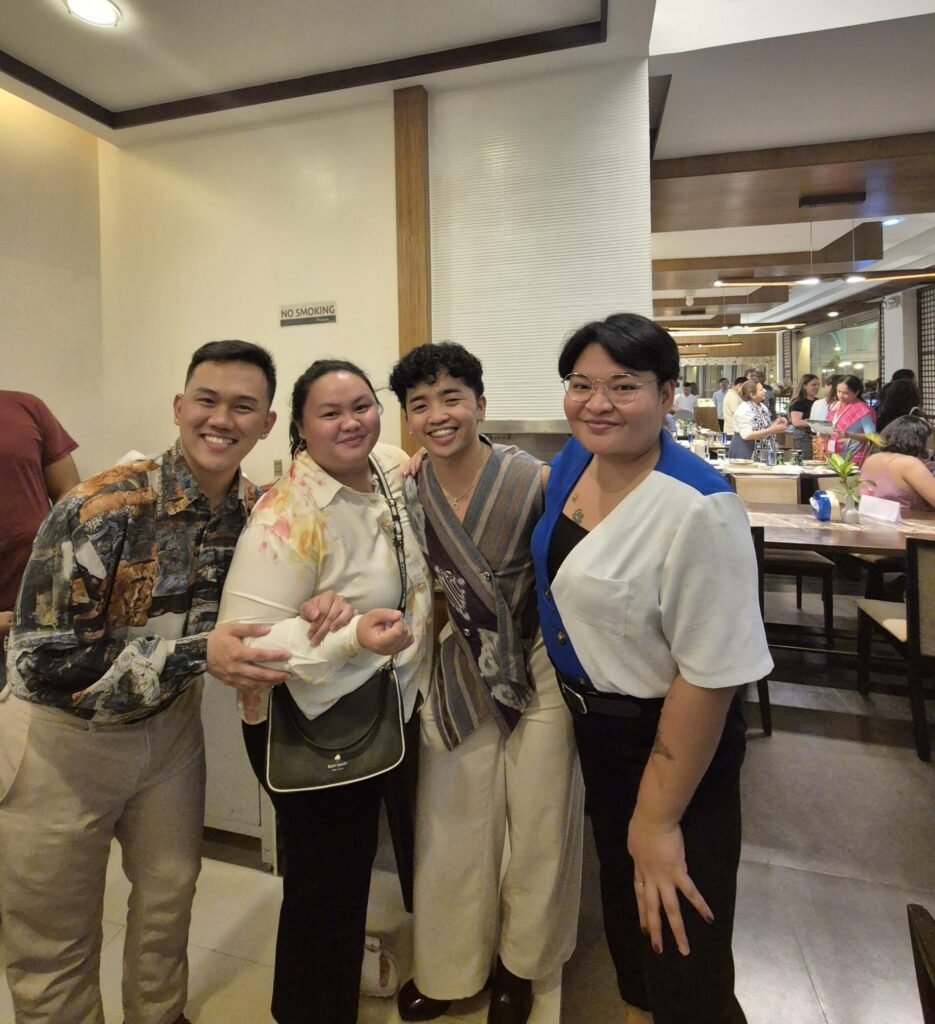
On a more personal note, as a formally trained mental health practitioner, my ethics and practice have been shaped by my work with Lunas Collective. Rather than limiting mental health care to traditional one-on-one counseling sessions, we continue to work toward designing spaces and systems that make care accessible, sustainable, and replicable—while remaining open to feedback, improvement, and collaboration.
Our volunteer-powered chat helpline reflects this approach. It is work that thrives on power-sharing between service providers and those who use the services.
This is the kind of work being carried out by organizations across sectors—Lunas Collective included—that recognize mental health not as a standalone service, but as a shared, community-rooted responsibility.

Janine Del Mundo is a psychologist-in-training based in the Philippines who integrates mental health with advocacy for human rights and sexual and reproductive health. She serves as one of the Co-Executive Directors of Lunas Collective, and she led the rebuilding of the organization’s chat helpline after the pandemic.

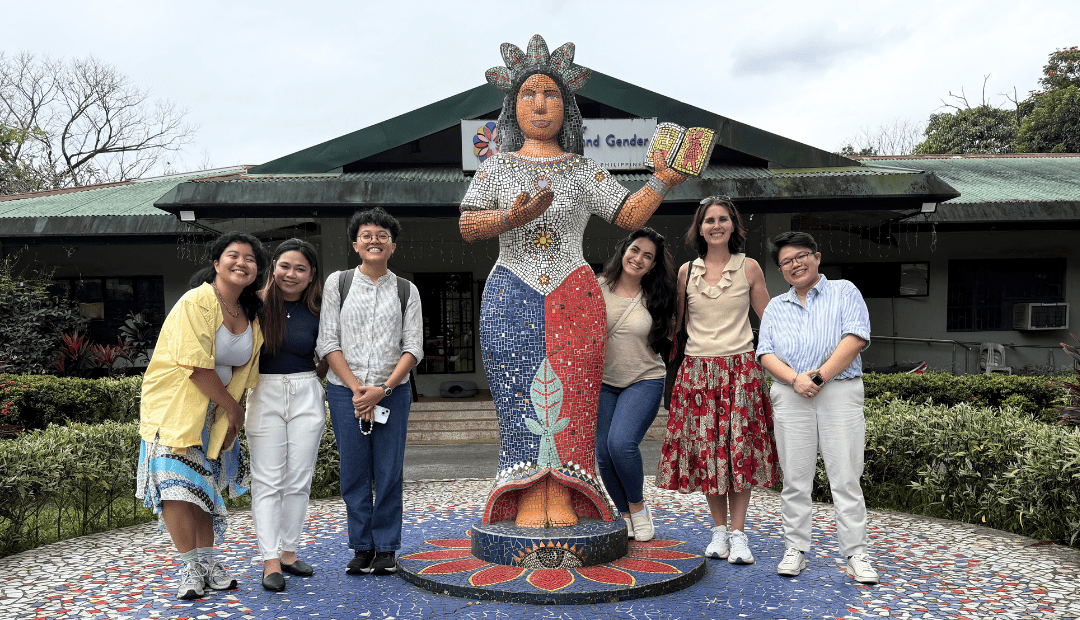
Sharing Practices, Strengthening Care: Lunas Collective in Conversation with EMpower
This piece is written by Louisse Katherine S. Gappi, Junior Project Officer of Lunas Collective, part of the team leading the chat helpline operations.
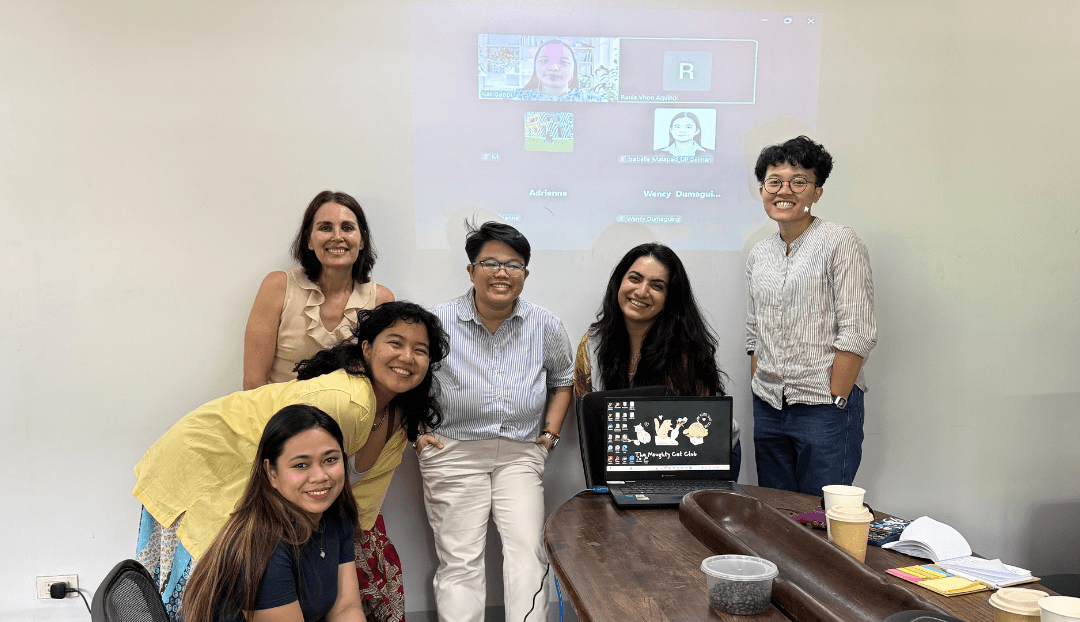

On February 6, 2026, we met with our funding partner, EMpower–The Emerging Markets Foundation, to discuss in detail our chat helpline service, which has been volunteer-driven since our inception in 2020.. The Lunas Collective core team and helpline volunteers welcomed the EMpower team represented by Coory Pakpahan (Programme Officer for East and Southeast Asia), Deborah Diedericks (Global Mental Health Lead), and Simren Sekhon (Development Manager for Asia).
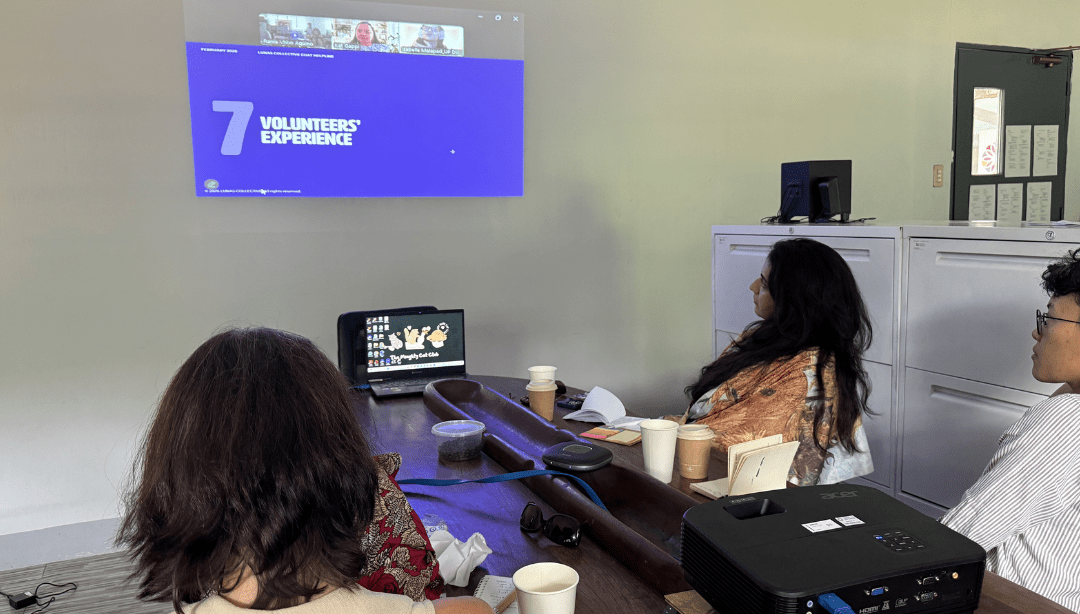
The meeting started with an introduction to the current gender-based violence (GBV) situation in the Philippines and Lunas Collective’s response and care framework. Our volunteers then shared their personal experiences with practicing their advocacy and finding a community through the helpline. One volunteer expressed that the helpline was a way for them to ground their studies in real life while another said that joining the volunteer pool was a step in their healing as a victim-survivor themselves. This sharing was followed by a brief simulation of chat helpline operations by the volunteers present.
Our chat helpline was established in 2020 as a response to rising rates of GBV, particularly domestic abuse, during the COVID-19 lockdown. It remains volunteer-powered, offering psychosocial first aid and appropriate referrals to individuals experiencing distress related to GBV or sexual and reproductive health concerns. Since then, we have branched out to conducting other programs promoting survivor autonomy and feminist care, such as #DearSurvivor, while keeping our chat helpline consistently operational.
If you are someone you know suffers from GBV and related concerns, the helpline is online from Mondays to Saturdays, 1:00 PM to 7:00 PM through the Lunas Collective Facebook page.
Lunas Collective Leads Open Space on Consent, Pleasure, and Clean Language in Bali
By Jeza Rodriguez, Chief Operating Officer, and Ria Landingin, Director of Communications
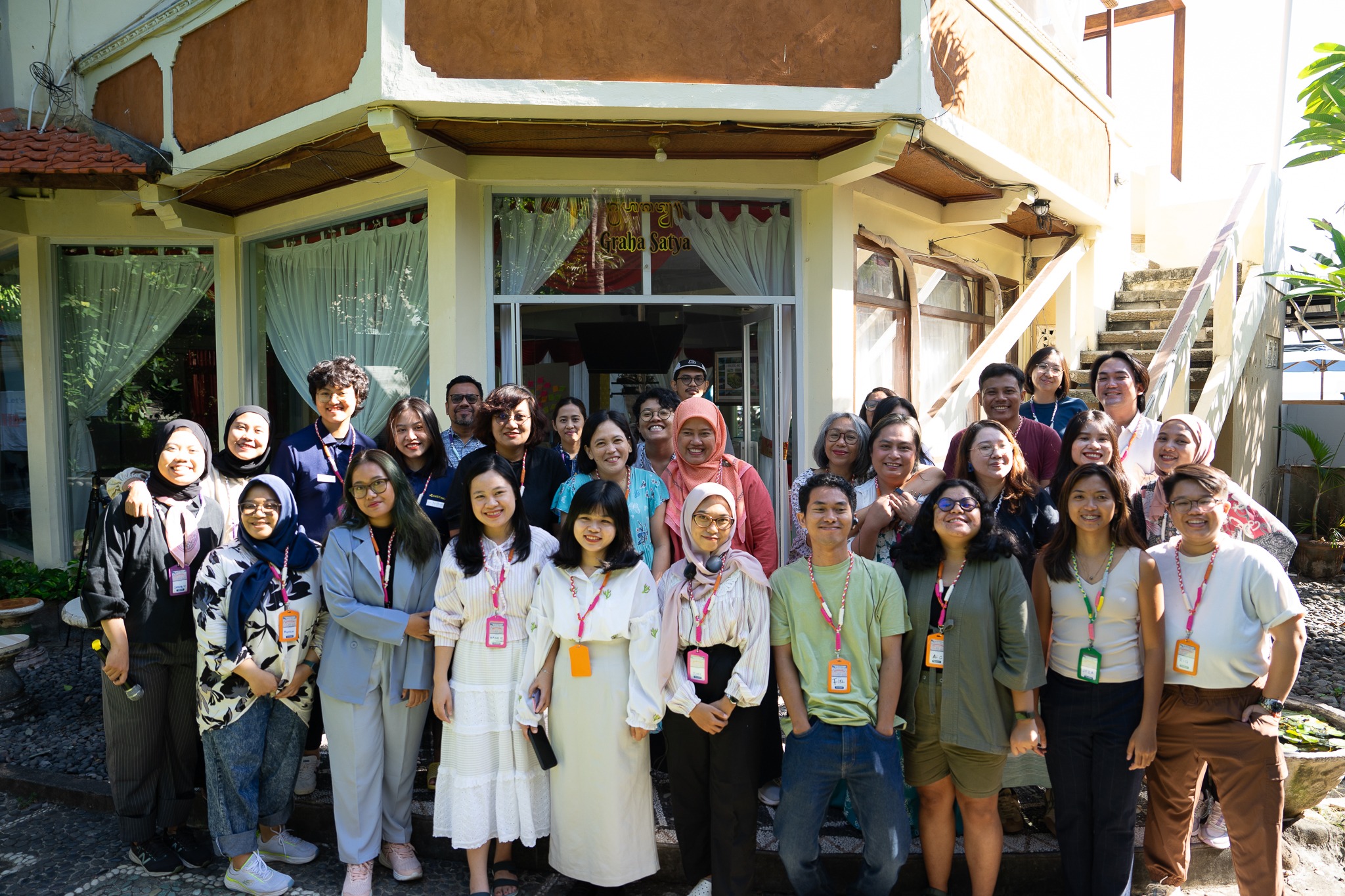
From June 9 to 11, 2024, the AwareNest CoP on Sexual and Reproductive Health and Rights (SRHR) convened in Tulamben, Bali, Indonesia, for a pivotal in-person forum. Set against the backdrop of Tulamben's tranquil environment and the historic USAT Liberty shipwreck, this unique location provided an inspiring setting for participants from Indonesia, Vietnam, and the Philippines. They engaged in vibrant knowledge-sharing sessions, impactful plenary discussions, and visited the Sekolah Ekoturin in Ban Village, a local initiative highlighting community-driven efforts in SRHR education and empowerment.
Creating a Community of Practice
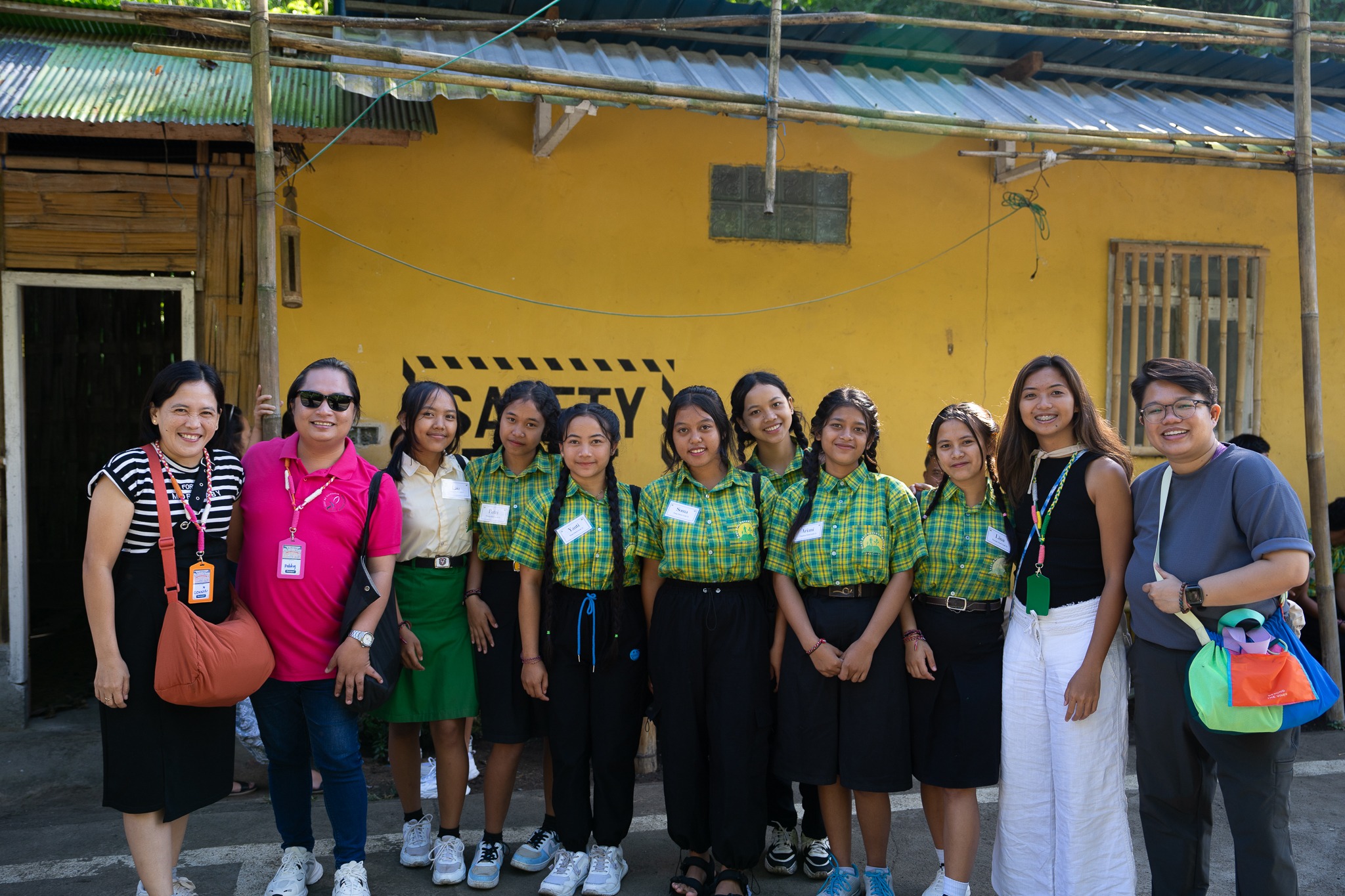 Since 2023, the AwareNest CoP has evolved through a year of virtual meetings, culminating in this enriching in-person gathering. Organized by Perkumpulan Pamflet Generasi and supported by EMpower — The Emerging Markets Foundation, the forum's open space sessions and the immersive visit to East Bali Poverty Project’s Sekolah Ekoturin exemplified its commitment to fostering collaboration and sharing best practices among SRHR practitioners across East and Southeast Asia.
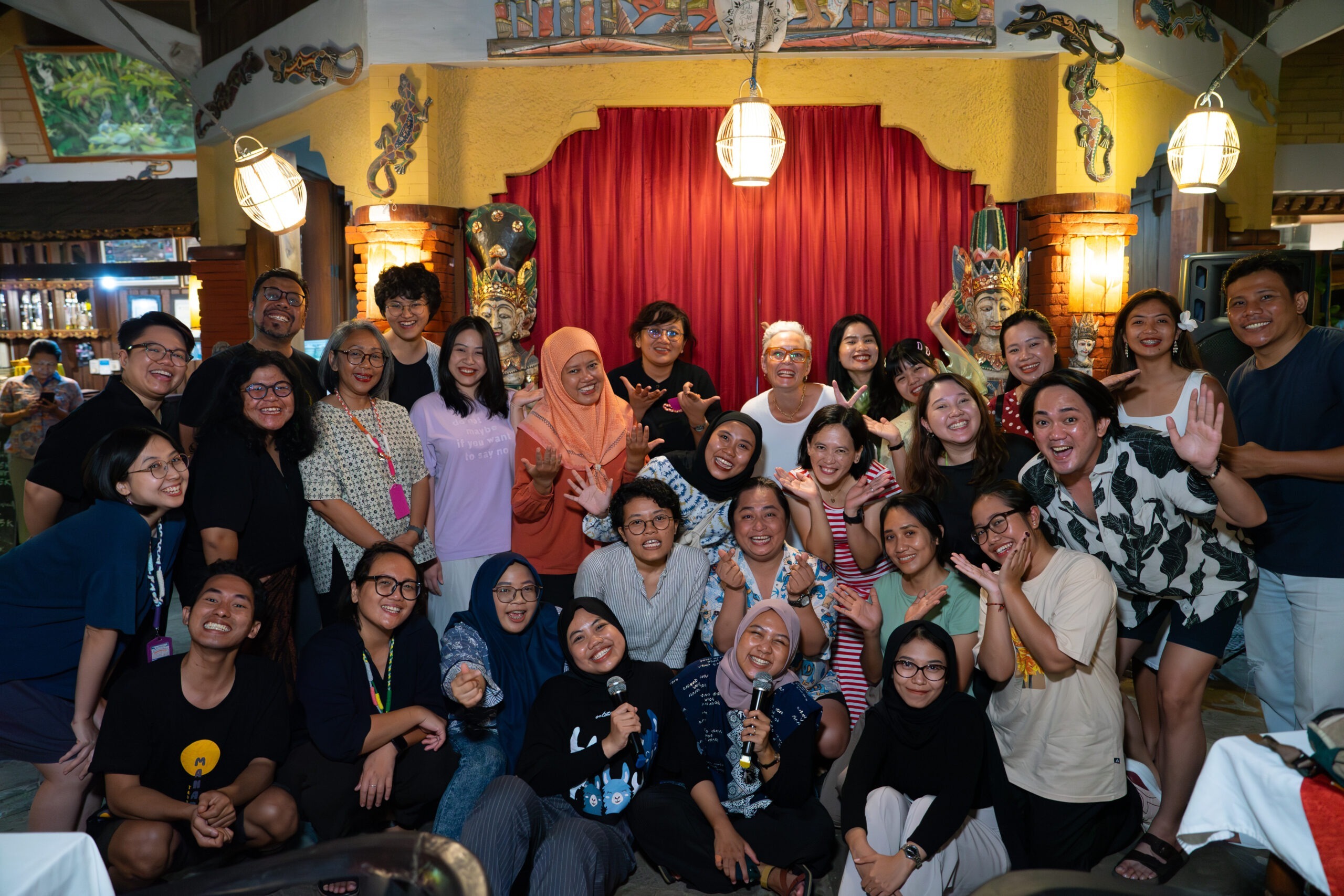 Participants not only shared their successes and challenges but also explored innovative approaches to address regional SRHR issues, underscoring the forum's pivotal role in shaping future strategies and initiatives.
Our Open Space Session
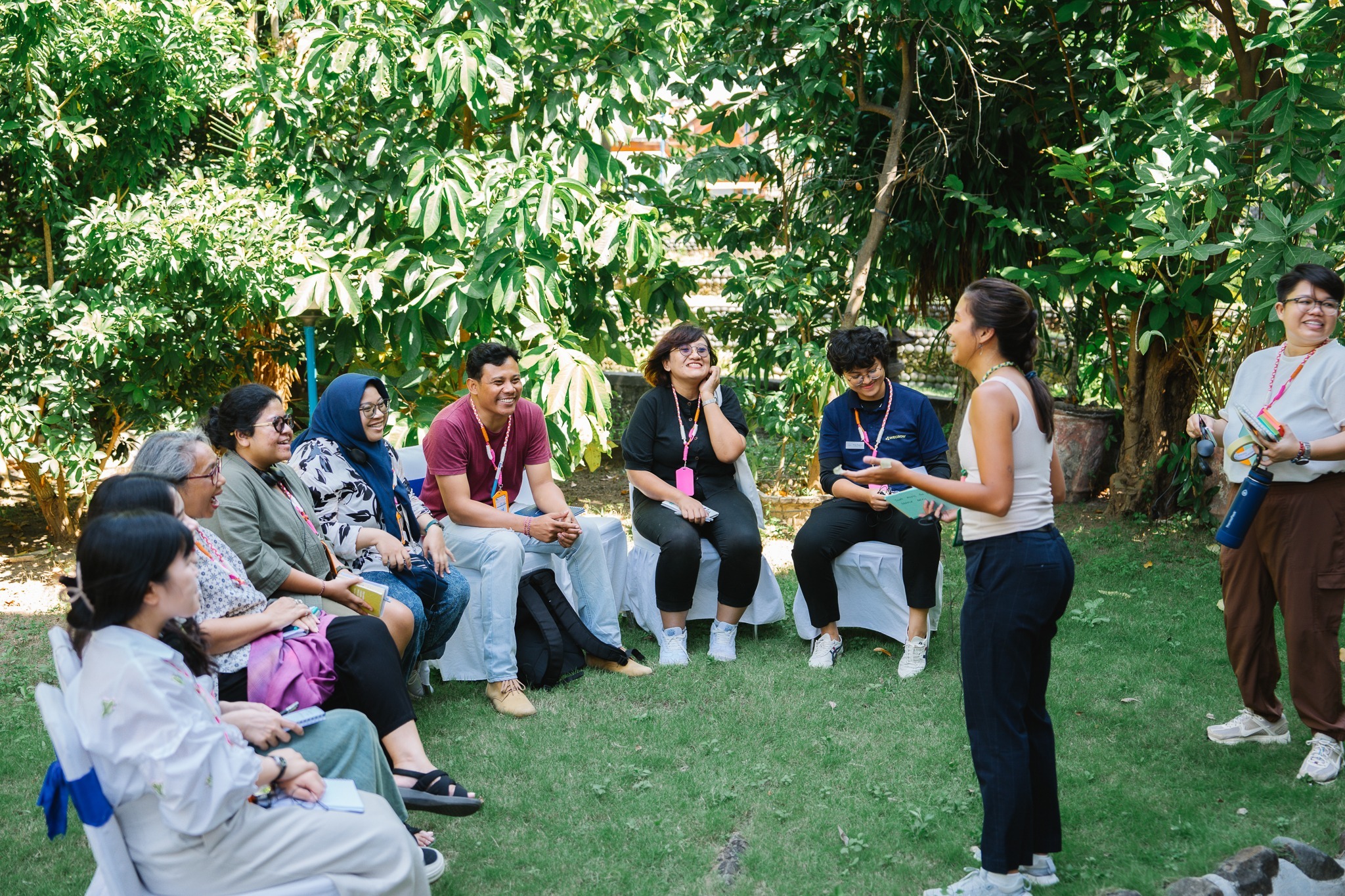
Representing Lunas Collective, we facilitated an outdoor open space session focused on "Consent, Pleasure, and Clean Language." The session delved into the foundational principles of consent as a cornerstone of respectful interactions and relationships. Drawing on insights from EMpower’s Learning and Training Methods consultant Charles-Louis de Maere, Founder of Exploration Labs and Licensed Visual Thinking Trainer of the Biklabo method, we applied Clean Language techniques as one of our applied practices rooted in Feminist Care principles.
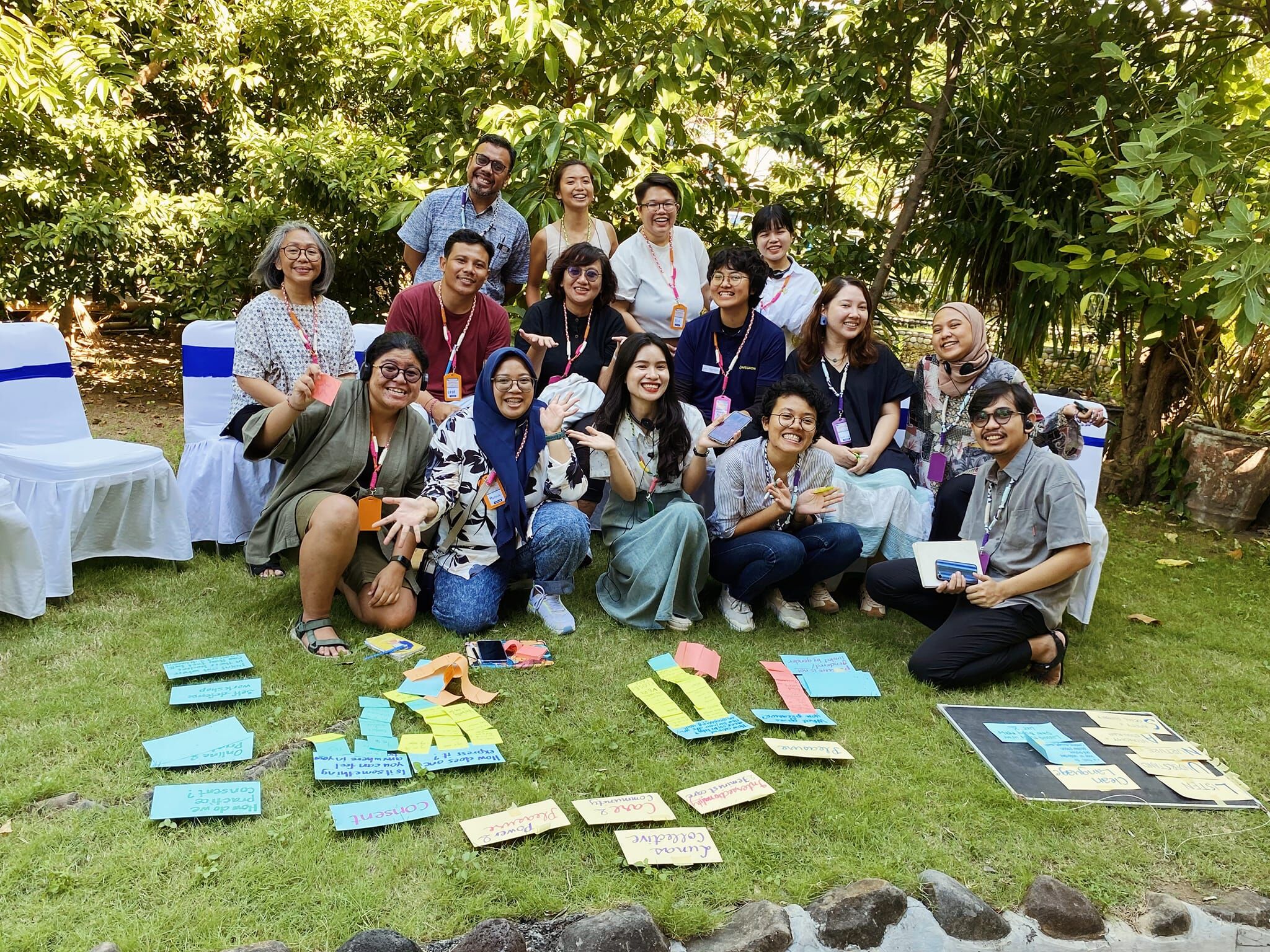 During our session, we dissected pleasure to encompass various forms of joy, happiness, and the sense of safety and comfort in our sexuality. This approach not only facilitated meaningful dialogue but also empowered participants to explore and share their experiences openly, enriching the collective learning and understanding within the CoP. Roots of Health (Ugat ng Kalusugan) led a session on "Legal Literacy for Human Rights," further enriching the diverse topics discussed during the forum. Philippines, represent!
Reflections
Following our open space session and the enriching opportunity, we reflect on the insights gained and the ongoing impact within the AwareNest CoP and broader SRHR community. Our commitment to Feminist Care principles, guiding both our advocacy and daily practices, was evident in our application of Clean Language during discussions. The experience also included a one-day free day in Denpasar, Bali, providing additional moments of connection and reflection.
Jeza, Chief Operations Officer
Although I've facilitated workshops for international audiences before, this experience marked my first time implementing the "Open Space" concept outdoors. Bringing our participants outside and actually using and applying the "Open Space" idea was a unique opportunity.
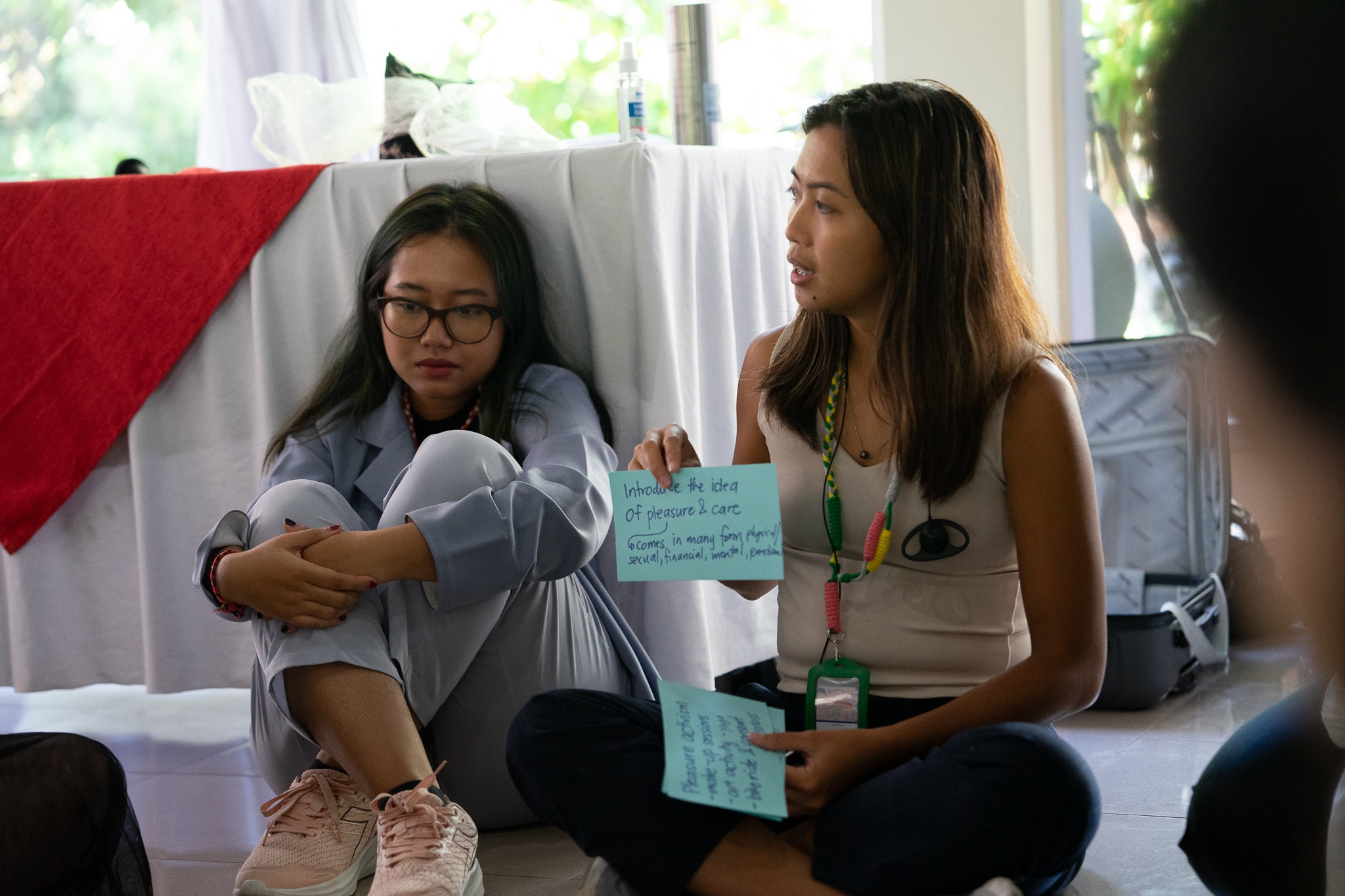 I have to admit that the idea of bringing people outside was heavily inspired by the bike workshops I've been doing for the past few months. This approach not only encouraged us to break away from traditional workshop settings, but it also supported our idea of "third spaces," places where we can interact with members of our community and even turn strangers into friends.
Not only did we enjoy our time discussing the concepts of Consent, Pleasure, and Clean Language, but we were also moved by the grassroots efforts of the East Bali Poverty Project (EBPP), where we met young people actively campaigning against child marriage in their community. We also learned about different advocacy approaches from the sister organizations.
It has truly been our “pleasure” to meet everyone and share what we have been doing in Lunas Collective. What a meaningful and relaxing work trip it has been. Matur suksma, Bali!
Ria, Director of Communications
After nearly four years with Lunas Collective, representing our non-profit at a regional gathering was deeply meaningful. Sharing how we turn theory into practice and translate our learnings into tangible care work felt incredibly rewarding. Seeing our approaches resonate with fellow EMpower grantees opened many doors for future collaboration. The sense of care felt like a ripple effect moving through the community. I’m truly honored to have represented Lunas on a regional stage.
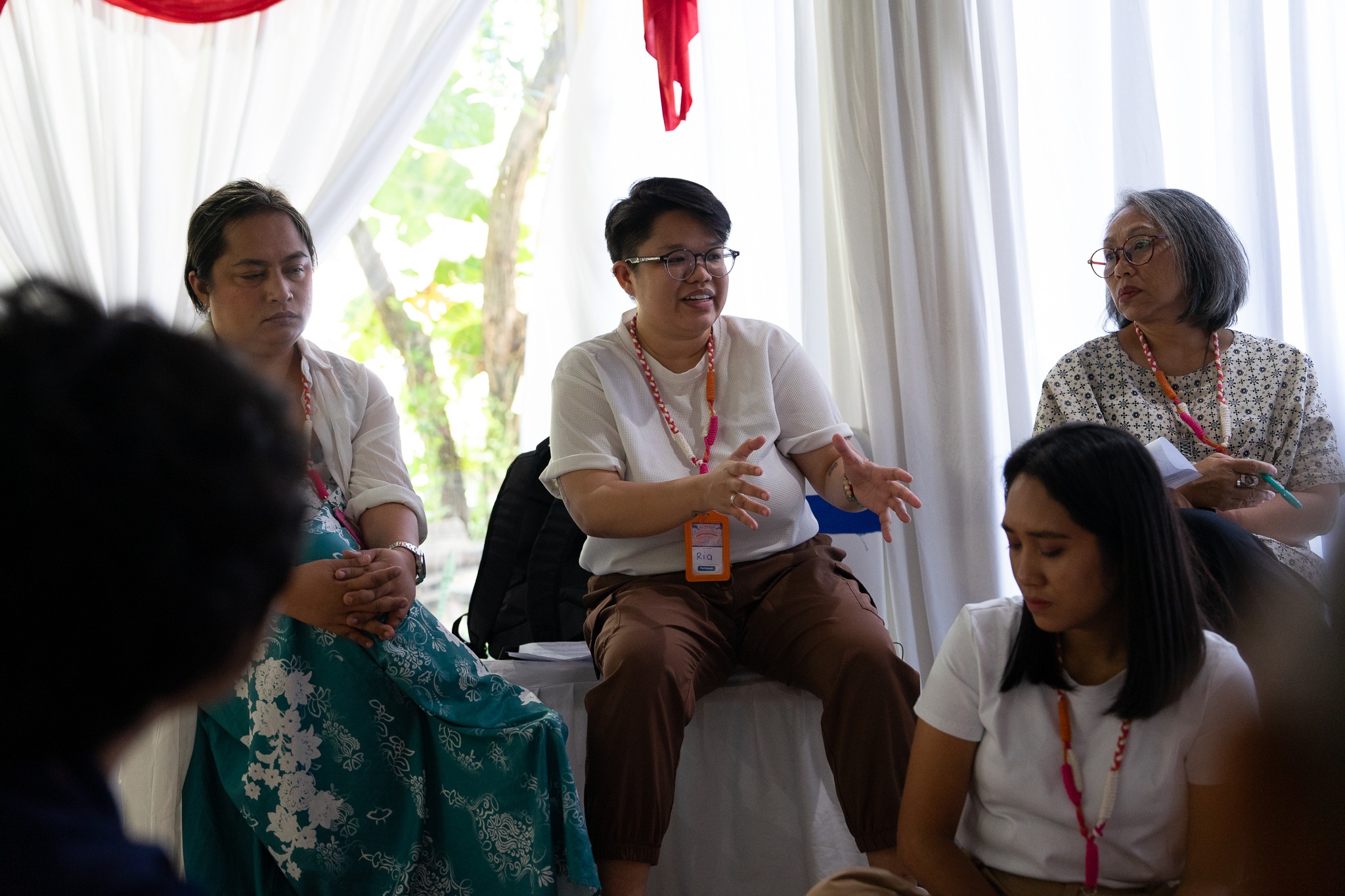
This opportunity was also a powerful push to keep going. The immersion brought so many things into perspective, making it even clearer why our call for collective action and our emphasis on care spaces are at the heart of Lunas Collective’s mission. It reaffirmed my commitment to our advocacy and inspires me to keep contributing to our shared goals with renewed energy and dedication.
As a bonus, Jeza and I squeezed in a bit of free time in Denpasar before our early morning flight. I even reconnected with the same Grab driver who toured me around Bali two years ago! We tried coffee, enjoyed local Balinese food, and ended the day sharing a meal with the driver who took us around the city. At Lunas Collective, we put in the work — but we never forget to celebrate our joys and pleasures, too.
Read EMpower's article about this Learning Session.
Watch this highlights reel to get a glimpse of what transpired during this event:
Photo Credit: Perkumpulan Pamflet Generasi and EMpower — The Emerging Markets Foundation

Lunas Collective Celebrates 3 Years: Creating Communities of Care and Promoting the Pleasure and Self Expression
Lunas Collective celebrated three years with a series of inspiring care sessions from February to March, emphasizing self-expression, connection, and community building.
February 18: Creative Movement Workshop with Kathrin Knöpfle (Care Session)
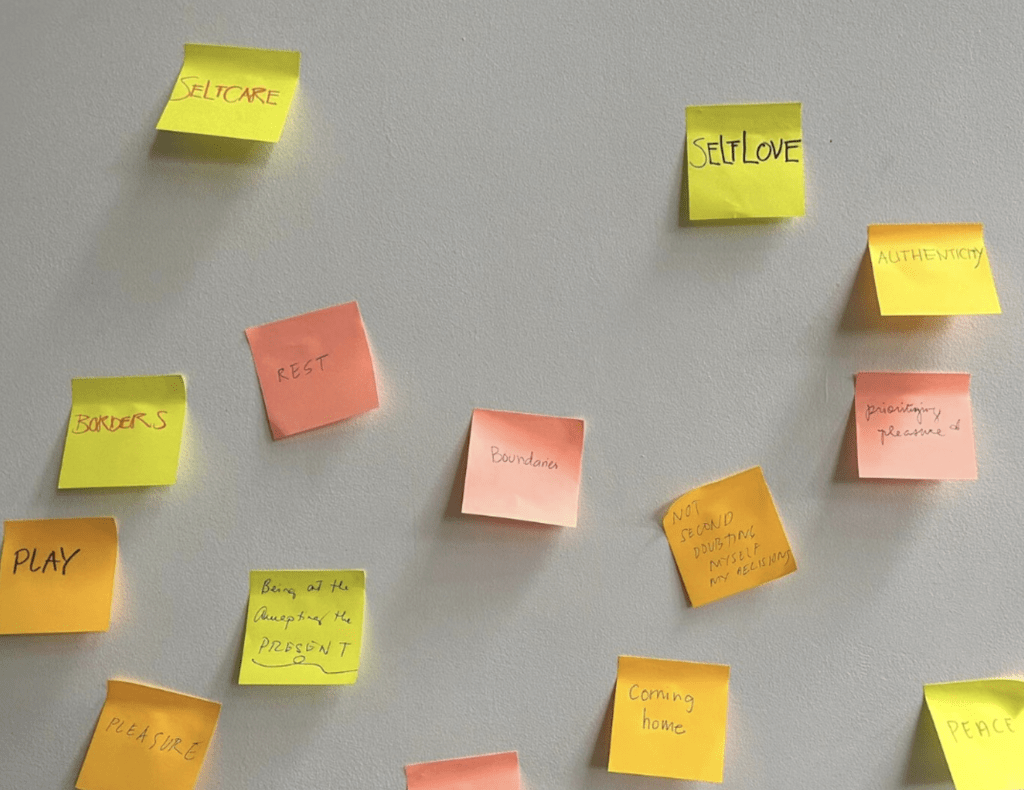
We began our celebrations on February 18th with a Creative Movement Workshop. Supported by INROADS, the workshop was facilitated by Filipina-German artist, Kathrin Knöpfle, a Filipina-German. Participants engaged in discussions on gender dynamics, mental health, and sexual health, creating a safe space for self care and connection.
February 26: Art Party with kayecanvas (Care Session)
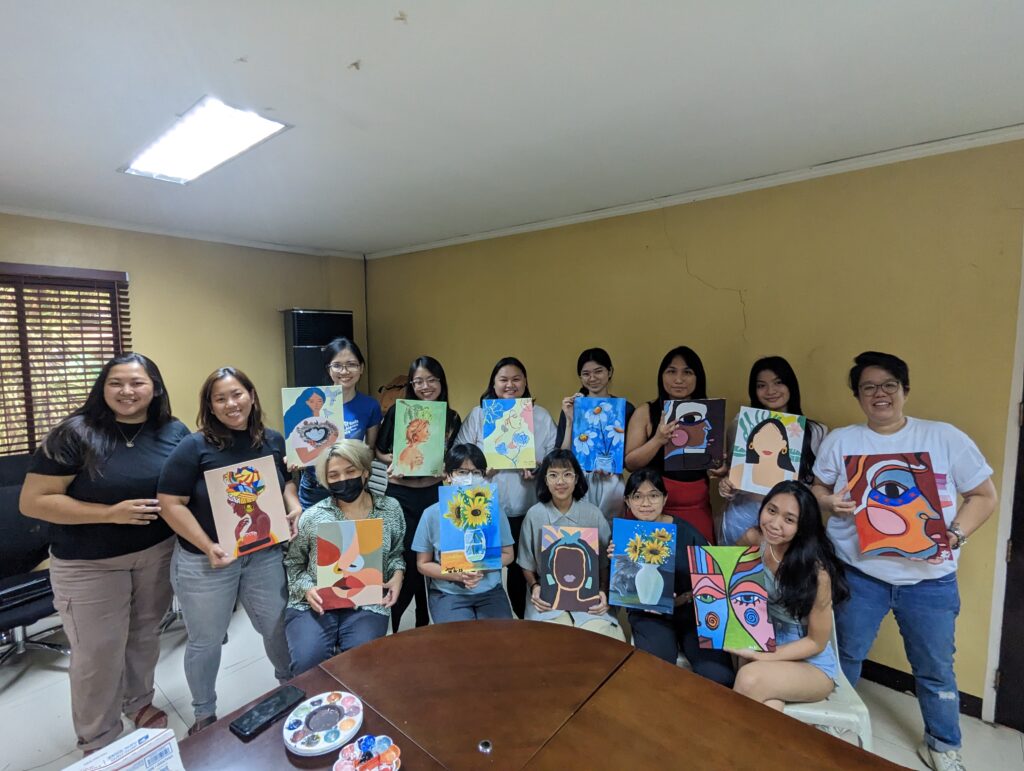
On February 26th, we hosted an Art Party, guided by peer kayecanvas, where vollies expressed themselves on blank canvases. This event fostered creative self-expression and community.
March 1: Purple Bazaar and Art Exhibit at the Commission on Human Rights
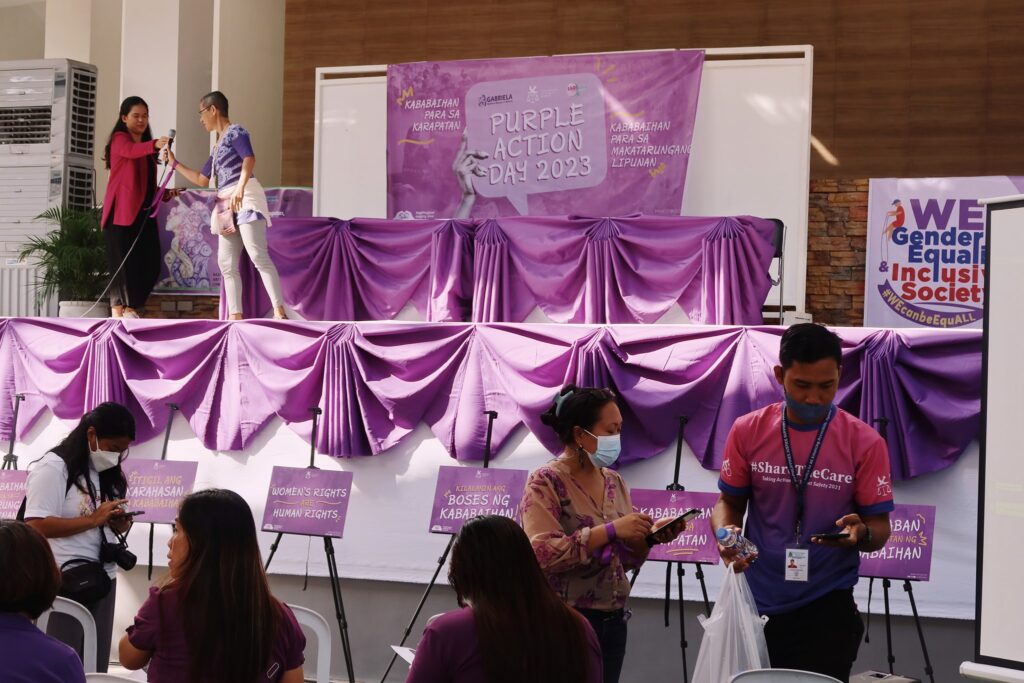
We joined women-led organizations at the Commission on Human Rights’ Purple Bazaar, marking the start of Women’s Month. The event featured ‘#PleasureIsPower’ shirts and Lunas Collective-themed stickers, promoting care, pleasure and community.
March 11: Hike at Mt 387 in Nueva Ecija (Care Session)
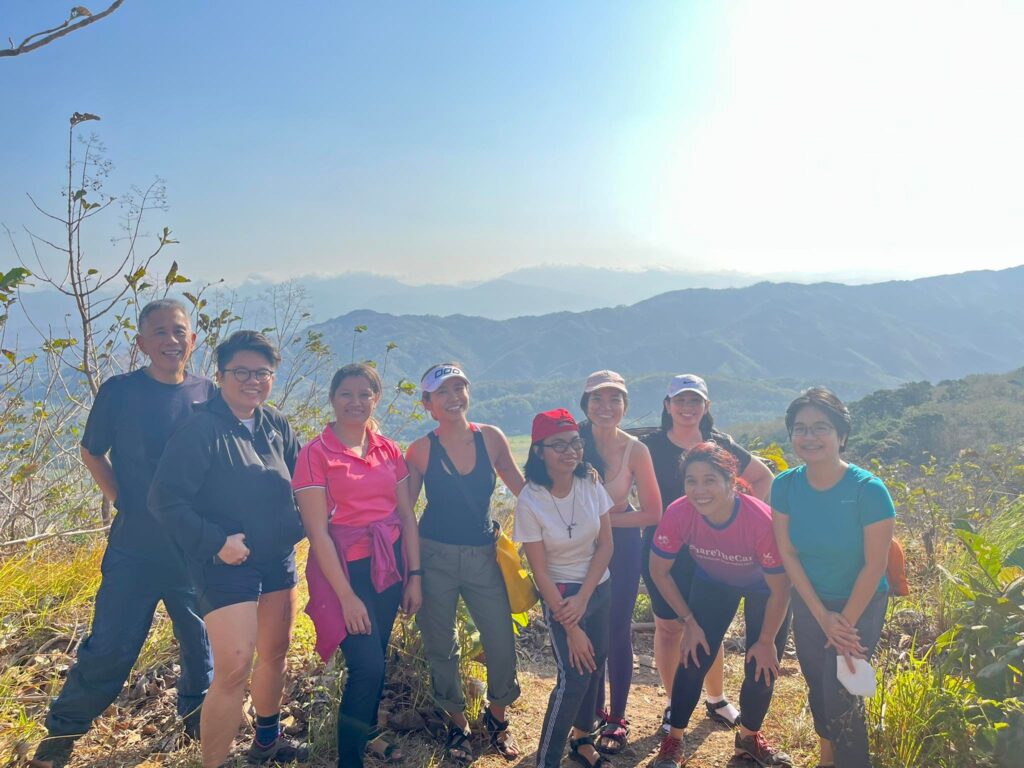
Just a little after International Women’s Day (IWD on March 8), our vollies connected with nature by hiking at Mt 387. They supported the local farming community and KaPuncan, the land’s protectors, fostering a sense of responsibility and community.
March 16 to 18: DANZ DISH 15: TAYMPERS with La Salle Dance Company (LSDC) Street
Lunas Collective was a beneficiary of DANZ DISH 15: TAYMPERS by LSDC-Street, which celebrated Filipino roots through dance. Lyka Lucena (Director of Services) and Ria Landingin (Director of Communications) represented Lunas Collective, showcasing the power of collaboration and advocacy.
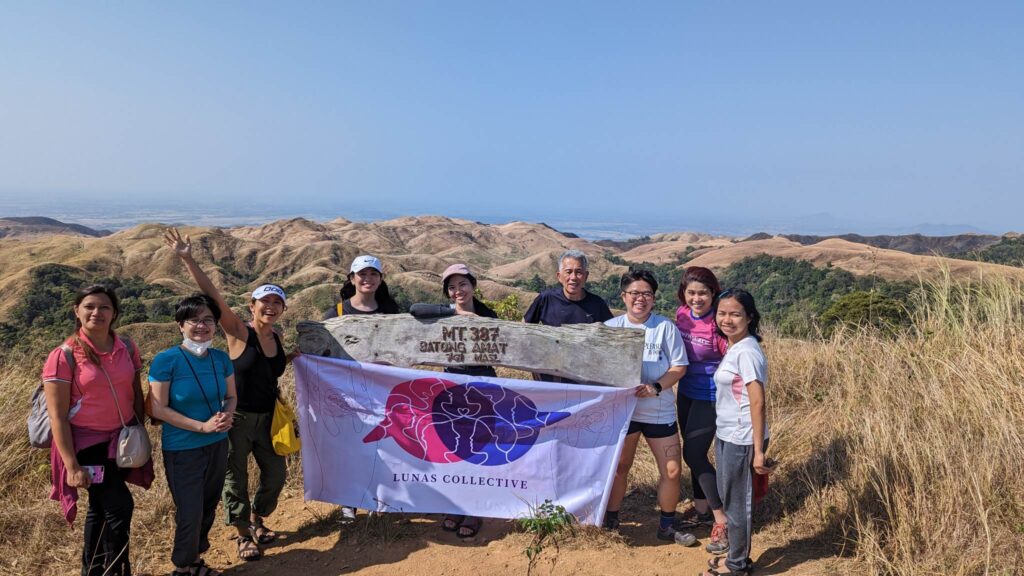
Our third anniversary was on March 29, 2023, and it was truly made meaningful by these events and with growth of our work! We have engaged over 2,000 storytellers, onboarded 200+ vollies, and all in 3 years of operations.
From the bottom of our hearts, thank you for your trust and support! We extend our gratitude to all participants, collaborators, and supporters for making our anniversary and Women’s Month celebrations a success.
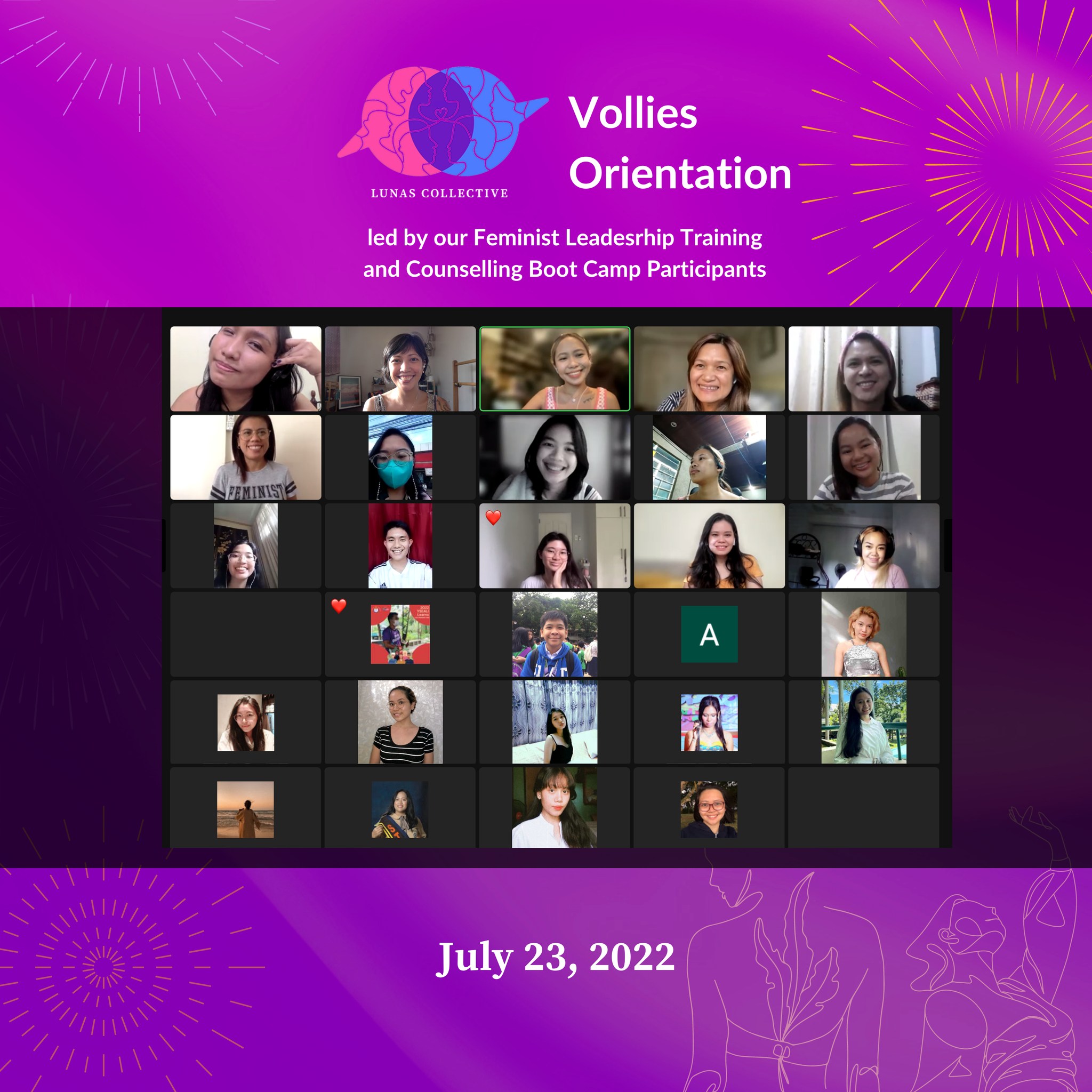
Feminist Counseling Boot Camp and Feminist Leadership Training Empowers Leaders and Counselors
We successfully completed our first-ever Feminist Counseling Boot Camp and Leadership Training Program, which took place from April to October 2022. This initiative brought together aspiring feminist peer counselors and leaders into a community dedicated to creating a more inclusive and caring world.
The program has drawn participants from diverse backgrounds, united by their commitment to promoting gender justice and using social media to support those affected by gender-based violence.
We are on a mission to empower those who wish to learn about providing care and leading with a feminist perspective.
Leadership training highlights importance of grassroots activism.
The Leadership Training, offered to youth leaders and gender justice advocates, is an inclusive opportunity that emphasizes the importance of feminist leadership, care, and grassroots activism. The program includes both synchronous and asynchronous learning, allowing participants to engage with a wide range of topics and practical skills.
Among the key areas of focus are:
- Gender, Sexuality, and Power Orientation
- Care Work as Work
- Ethical Use of Data
- Community of Care
- Self-Care Tools and Strategies for Service Users
- Self-Care for Feminist Leaders
- Advocacy and Orientation to Conducting the Lunas Collective Feminist Care Module
As a vital part of their training, participants shared their learnings by conducting at least two Lunas Collective Feminist Care (LCFC) learning sessions with partners and possible volunteers.
Online Boot Camp opens sessions for participants nationwide
The Feminist Counseling Boot Camp, meanwhile, welcomed women, people of diverse sexualities, and with diverse abilities, and even cisgender heterosexual men who advocate for gender justice. Since the sessions are held online, participants from across the Philippines, regardless of their ethnicities and regions, were able to join. This program was also open to those with experience in gender equality advocacy, formal education in counselling or related fields was not required.
The Boot Camp training covered a variety of topics, including:
- Gender, Sexuality, and Power Orientation
- Foundations of Feminist Counseling
- Impact of Gender-Based Violence and Sexual and Reproductive Health on Mental Health
- Identifying Signs and Symptoms of Disorders Related to GBV
- Building Therapeutic Alliances with Service Users
- Ethics and Clients' Rights
- Self-Care Tools and Strategies for Service Users
- Self-Care for Counselors
- Community Care and Advocacy
Both programs emphasize the importance of self-care and community care while providing a platform for advocacy. Participants in the Boot Camp have the unique opportunity to engage in supervised practice with Lunas Collective counselors, gaining real-world experience in feminist counseling.
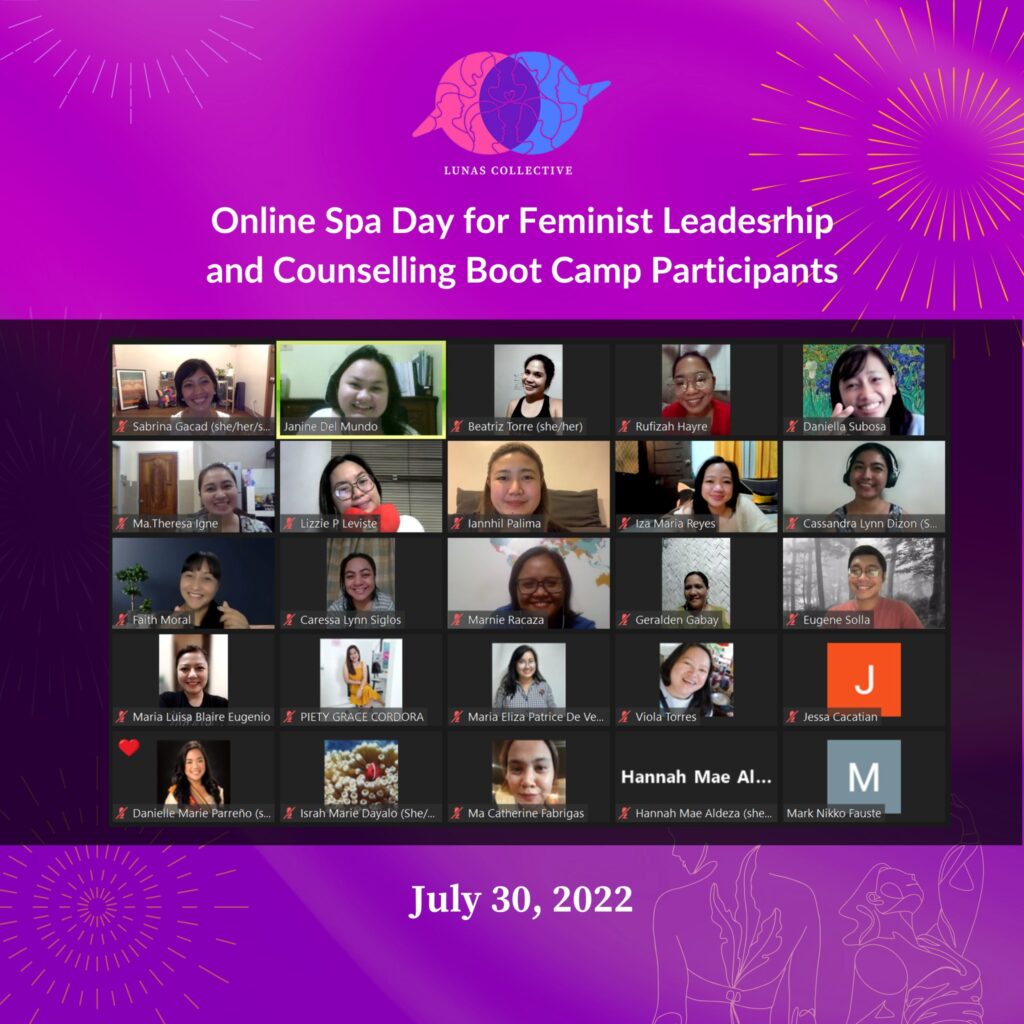
In total, more than 30 participants successfully graduated from the program, equipped with the knowledge and skills to make a real difference in their communities. A select few have continued their journey by volunteering with Lunas Collective.
Program graduates attend #DearSurvivor 2022
To celebrate the graduates’ achievements, the #DearSurvivor 2022 event was held at B Hotel in Quezon City on December 3, 2022. The event recognized the dedication and hard work of the participants and celebrated their commitment to making the world a more caring and just place.
Our Feminist Counseling Boot Camp and Feminist Leadership Training have not only enriched the lives of its participants but has also planted the seeds for a more compassionate and gender-just society. As we look forward to the future, we remain committed to empowering individuals to lead with care, empathy, and a feminist perspective.
This transformative program was made possible through the leadership of Lunas Collective’s Founder and Director, Sabrina Gacad, and Project Officer Janine Del Mundo. It was proudly supported by organizations such as the UP Center for Women’s Studies Foundation, Inc., the UP Center for Women’s and Gender Studies, the Philippine Business for Social Progress (PBSP), and Global Affairs Canada (GAC) through the Women’s Rights, Action, and Advocacy Project (WRAAP).