Dolls of Dignity: Stitching Stories of Period Power
This piece is written by Bry, a multimedia arts student who uses storytelling to document lived experiences and amplify real-life voices. Rooted in curiosity, empathy, and critical reflection, their work explores how personal narratives connect to broader social issues.
Written from the perspective of someone present in the space, this piece reflects Bry’s observations and reflections during Lunas Collective’s creative care sessions with menstruators.
When we were little kids, we used to play different games. These games became a way to express our creativity and explore our interests—sometimes we stumbled, we lost, we won—collecting experiences and lessons along the way. Who would have thought that after a decade or two, these same acts of play can take on a new meaning: becoming powerful ways to process real-life struggles.
When these forms of creativity are used to explore deeply personal and often stigmatized, unheard experiences, what does menstrual dignity truly look like?
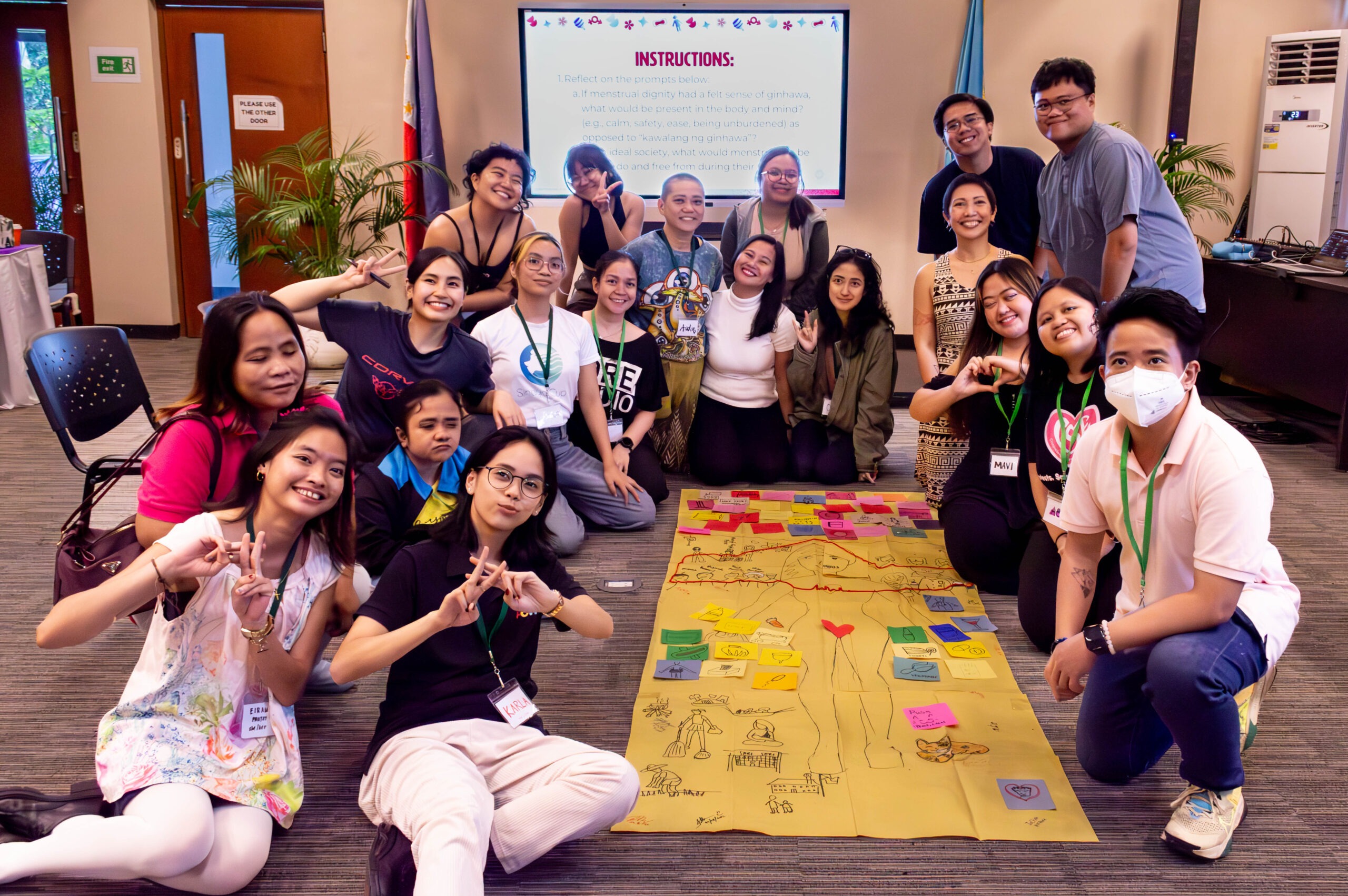
On March 7 and 8, 2026, Lunas Collective conducted a creative care session for their research project, “POWER, PERIOD: An Exploratory Research on the Meaning of Menstrual Dignity through Collective Care.” Diverse participants were invited to share their stories and experiences through doll-making, poem, human tableau, role play, drawing, and other art forms, reimagining what dignity and care look like in the context of their lived experiences.
Menstrual Sensation Through Body Scan
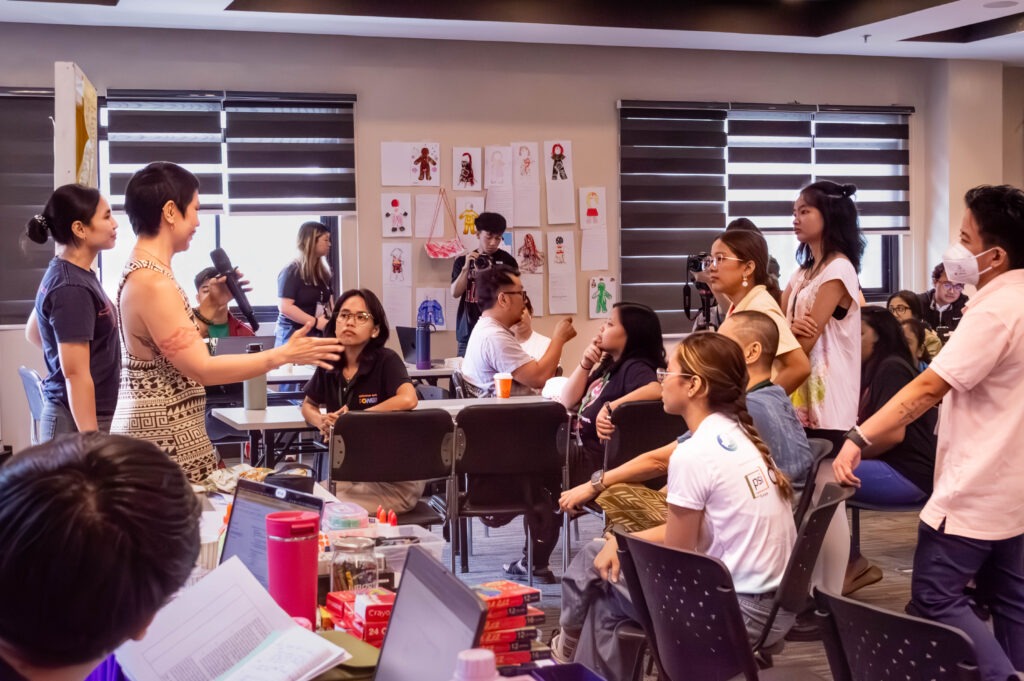
The workshop started with a guided body scan, participants notice where the memory holds and locate “sites of feeling” when they think of menstruation. “Parang hinihiwa yung ulo sa gitna,” the group shared the same sensation with one another.
These sensations were also translated into movement—not as a performance, but as a way of expression. Participants with diverse abilities described their movements, some with the help of a sign language interpreter, and each movement was mirrored by the group—an early gesture of recognition, empathy, and collective care.
After the body scan, the group was given materials such as cardstock, coloring materials, pencils and pens, glitter, different-colored yarns, sequins, and acrylic paint. Each participant was asked to create a “Doll of Dignity” and write a poem reflecting their experiences and insights from the body scan and group sharing.
Safe Space: Opportunity for Collective Sharing
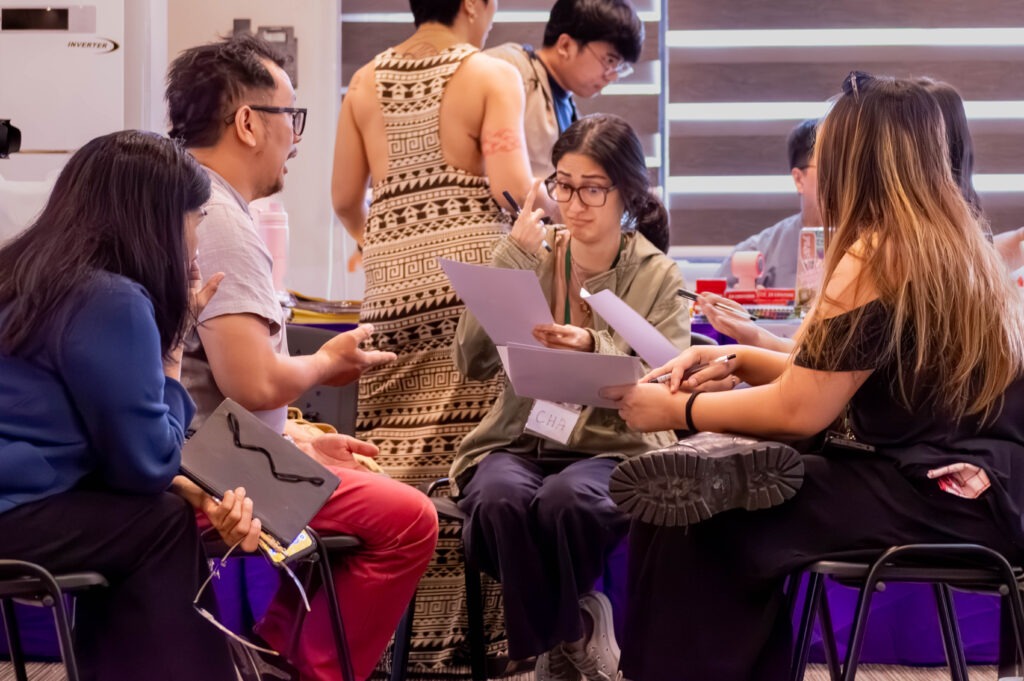
The workshop opened a space not just for storytelling, but also for participants to deeply listen to their bodies. They shared how menstruation is not a linear experience, but rather a constant shifting between pain, care, and adaptation. Some spoke about remedies that worked for them: drinking soda to ease the flow, using heating pads, while others found comfort in rest and stillness. Food also became part of the equation—what may seem harmless to the body, like langka (jackfruit), can trigger dysmenorrhea during menstruation.
This collective sharing revealed a pattern: menstruators learn to read their bodies over time through lived experiences. Every month brings anticipation, discomfort, and sometimes dread—but also preparation. Comfort becomes intentional, and care for oneself and others becomes practiced. Menstruation was described as both disruptive and instructive. It interrupts daily routines, limits movement, and reshapes plans. Yet at the same time, it signals people to slow down, to listen, and to respond—reminding them that pain signals the body’s presence and needs.
“Kahit ayaw man natin siya sa ilang araw, hihingin mo pa rin na dumating siya buwan-buwan,” a participant shared. Menstruation, though often unwanted, becomes something expected. It is a natural, uncontrollable cycle that demands readiness. Yet within this lack of control, there is a different kind of power—the power to prepare, to understand, and to care for oneself. Here, dignity begins.
We Fight: Battles And Dignity
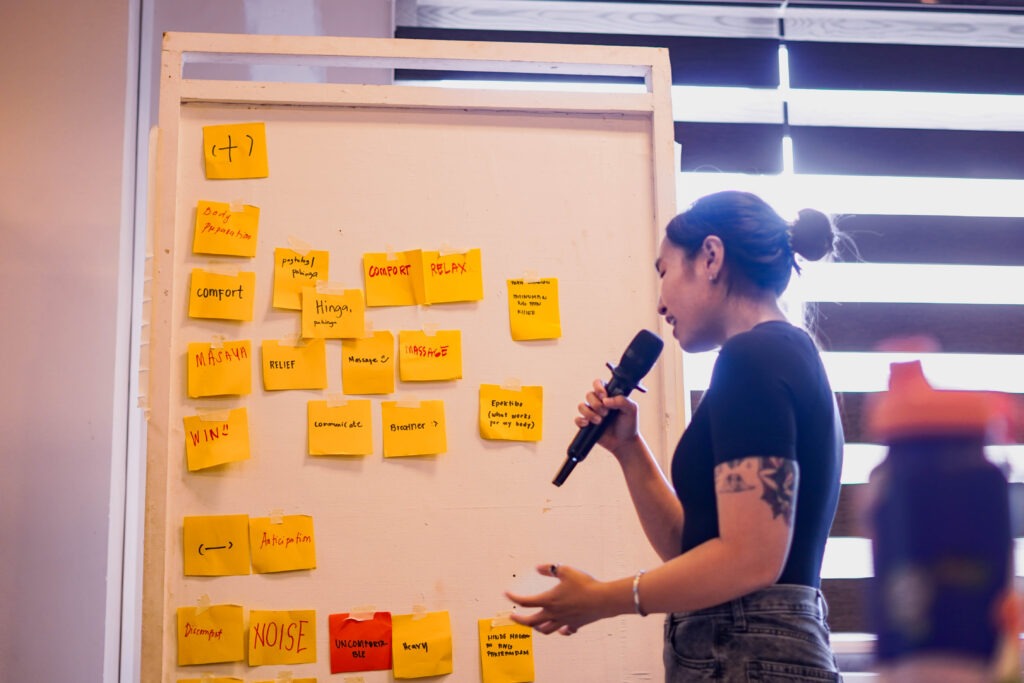
“We want to empower. The battle is not only within our bodies, but also within society.” Many participants traced their earliest encounters with menstrual stigma to everyday spaces—classrooms, homes, and workplaces. For some, menstruation was something to be hidden, joked about, or dismissed.
One menstruator recalled being told by a professor that they were “maarte” for expressing menstrual pain. Another shared how conversations about menstruation were discouraged in their home, especially in public spaces. These experiences reinforced a culture of silence, where menstruation became taboo. This silence becomes even more complex when layered with gender and identity. Transgender men in the group spoke about the double burden of experiencing menstruation while navigating discrimination. “Mabigat, doble ang hiya,” one shared, highlighting how menstruation can intensify feelings of exclusion.
“The cycle of shame can become a cycle of care.” In this sense, dignity is relational. It is built through spaces where people feel seen, supported, and understood—not only by their peers, but also by institutions.
Menstrual Dignity in Different Institutions
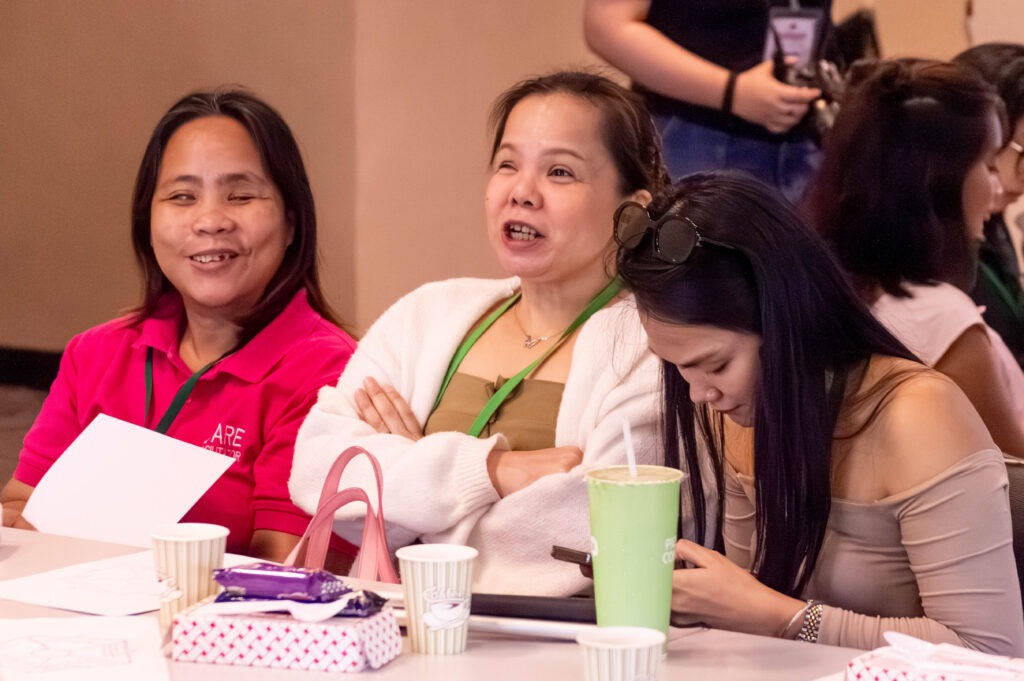
Menstruators also named barriers that prevent menstrual dignity from being fully realized. Responsibilities such as schoolwork, household chores, and profession demands often override the body’s need for rest. Even during significant life events, menstrual pain can overshadow what should have been joyful or memorable experiences.
Financial constraints also become part of this reality. Menstrual products, though essential, remain inaccessible for many. Some participants shared stories of people cutting cloth to use as makeshift napkins, while others pointed out inconsistencies in public health priorities: “Why are condoms free while menstrual products are not?” Workplaces and public spaces were also described as unaccommodating, especially in male-dominated fields. Facilities, resources, and policies rarely account for menstrual needs. Even when support exists, it is not always accessible.
Participants emphasized that dignity requires more than individual coping—it demands systemic change. This includes government-funded menstrual products, inclusive healthcare, and policies that recognize the diverse realities of menstruators. Education also plays a crucial role. Many shared that they only learned about menstruation after experiencing it, revealing gaps in early and accessible information.
Awareness creates space. But awareness alone must also be intentional and inclusive—reaching different communities, including Deaf and marginalized groups, while holding institutions accountable.
Reimagining Dignity Through Creativity and Care
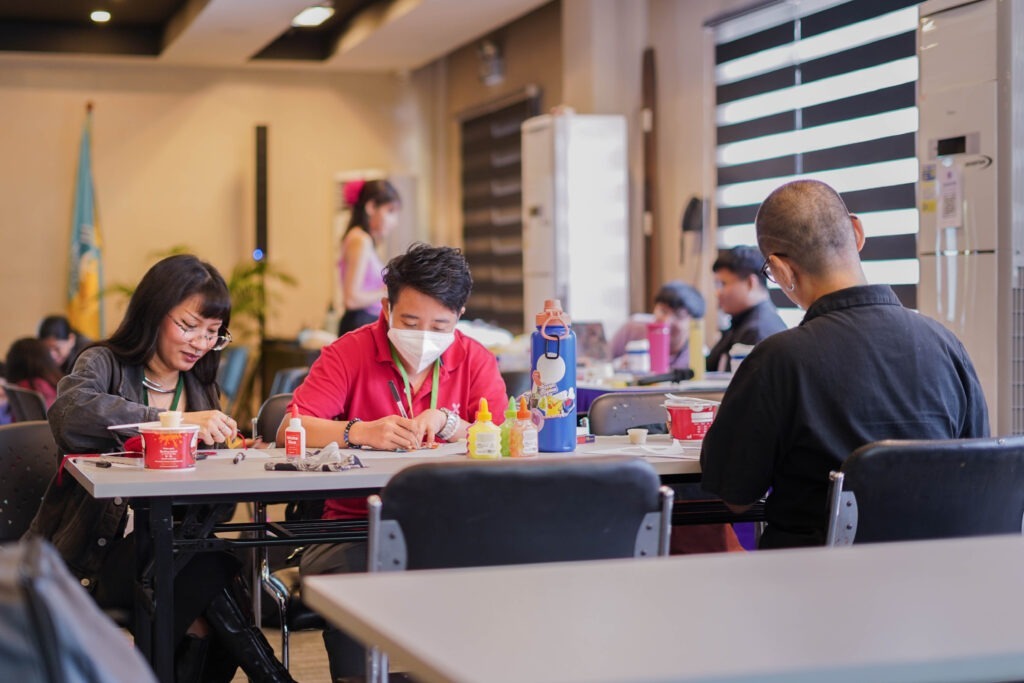
On the second day, participants revisited their creations, connecting their dolls to their inner child and their first experiences of menstruation. Through yarn, color, and texture, participants reflected on experiences marked by confusion, fear, curiosity, and eventually understanding.
This creative process revealed something essential: when people are given safe spaces, expression flows. Art became a bridge, connecting personal experiences to collective understanding. While pain remained a shared experience, participants recognized that its manifestations differ from one another. Some found relief in movement and physical activity, while others experienced comfort in stillness. Emotional responses also varied—some chose isolation to manage mood swings, while others found comfort in being cared for.
This showed how support is deeply personal. It can look like preparing warm compresses, offering food, providing financial help, or simply asking, “Kumusta ka?” It can also mean respecting one’s autonomy, allowing menstruators to define what they need, rather than assuming their limitations.
As participants reimagined menstrual dignity, they described a world without shame, where care is normalized and people have control over how they navigate their time and bodies. A world where menstruation does not hinder participation, but is understood as part of everyday life.
The workshop revealed that menstrual dignity is not a fixed concept. It is continuously shaped through experience, words, and collective action. It lives in small gestures of care, in the courage to speak, and in the systems we choose to build.
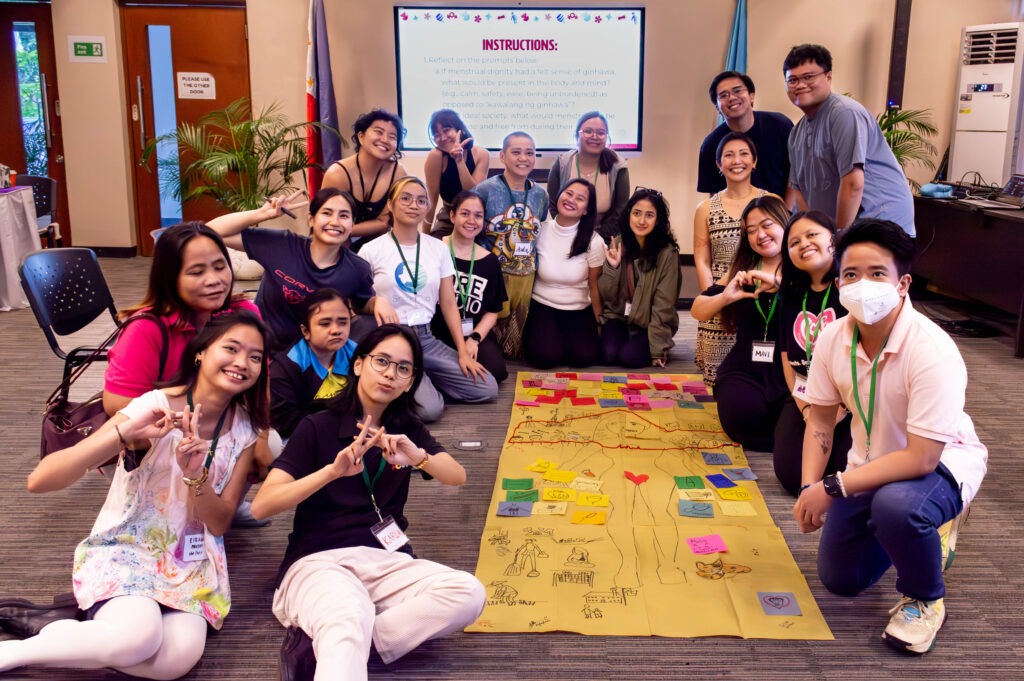
And like the games we once played as children, it invites us to imagine, to create, and to begin again—this time, with intention.

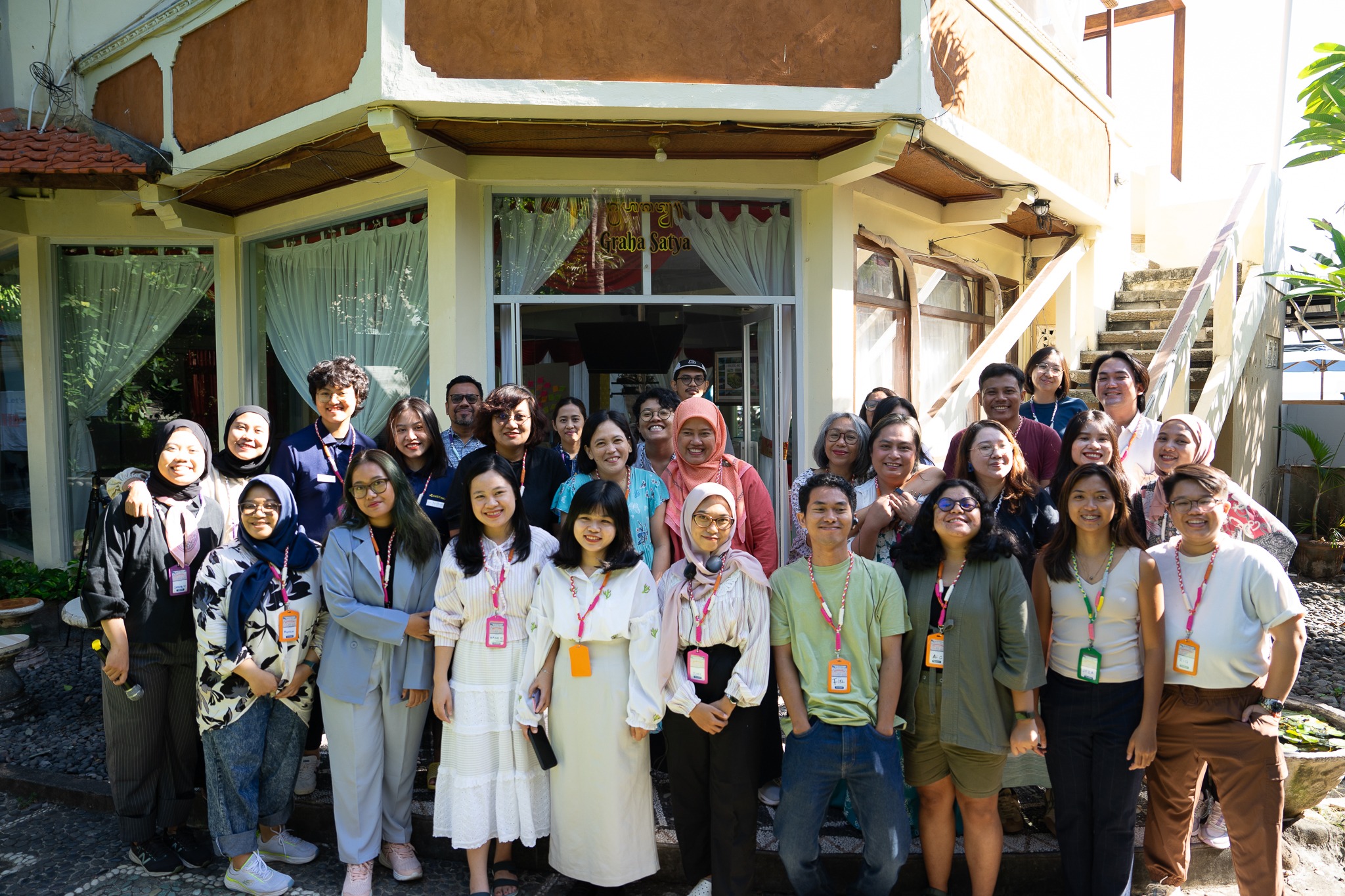
Lunas Collective Leads Open Space on Consent, Pleasure, and Clean Language in Bali
By Jeza Rodriguez, Chief Operating Officer, and Ria Landingin, Director of Communications
From June 9 to 11, 2024, the AwareNest CoP on Sexual and Reproductive Health and Rights (SRHR) convened in Tulamben, Bali, Indonesia, for a pivotal in-person forum. Set against the backdrop of Tulamben's tranquil environment and the historic USAT Liberty shipwreck, this unique location provided an inspiring setting for participants from Indonesia, Vietnam, and the Philippines. They engaged in vibrant knowledge-sharing sessions, impactful plenary discussions, and visited the Sekolah Ekoturin in Ban Village, a local initiative highlighting community-driven efforts in SRHR education and empowerment.
Creating a Community of Practice
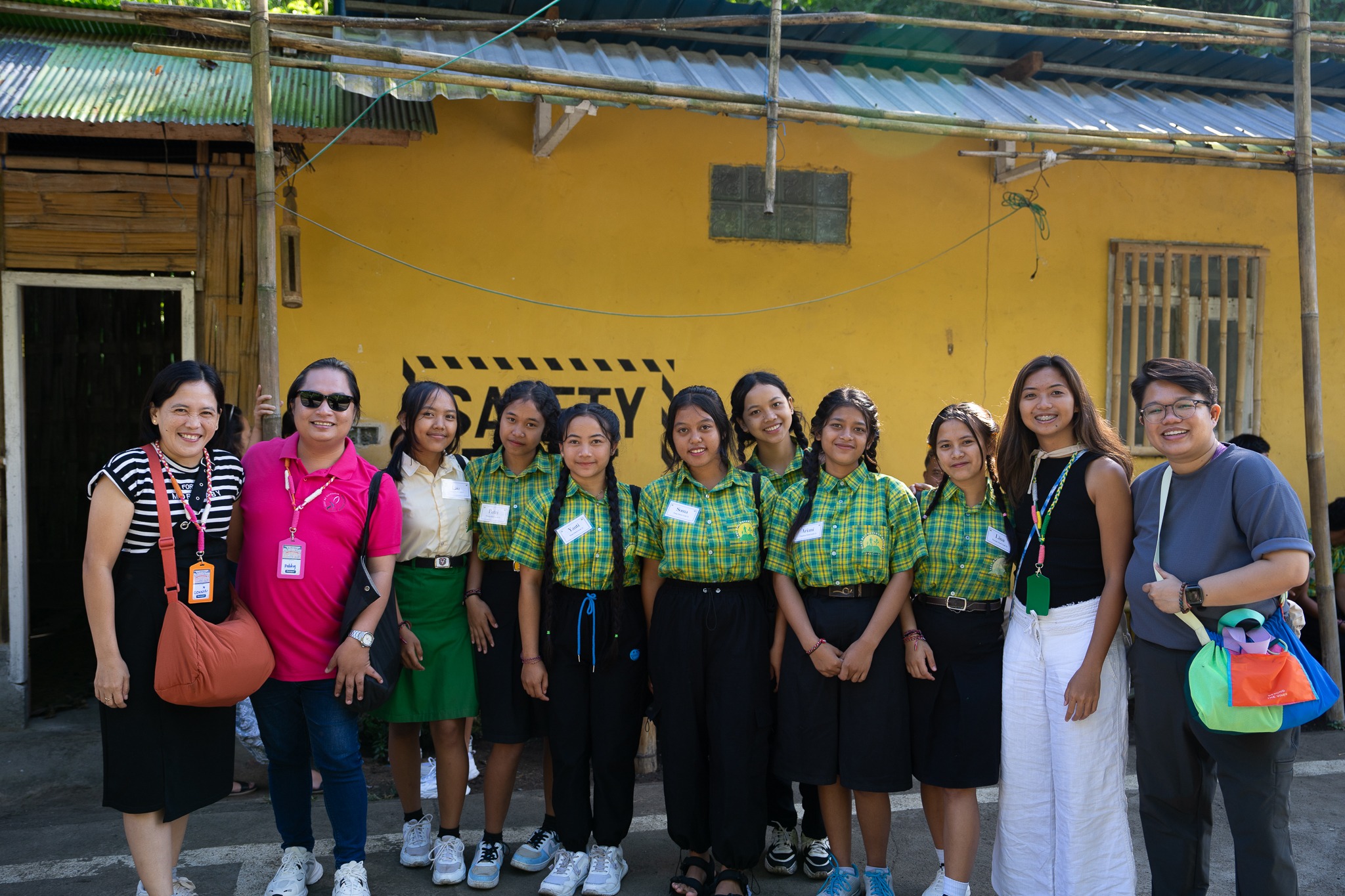 Since 2023, the AwareNest CoP has evolved through a year of virtual meetings, culminating in this enriching in-person gathering. Organized by Perkumpulan Pamflet Generasi and supported by EMpower — The Emerging Markets Foundation, the forum's open space sessions and the immersive visit to East Bali Poverty Project’s Sekolah Ekoturin exemplified its commitment to fostering collaboration and sharing best practices among SRHR practitioners across East and Southeast Asia.
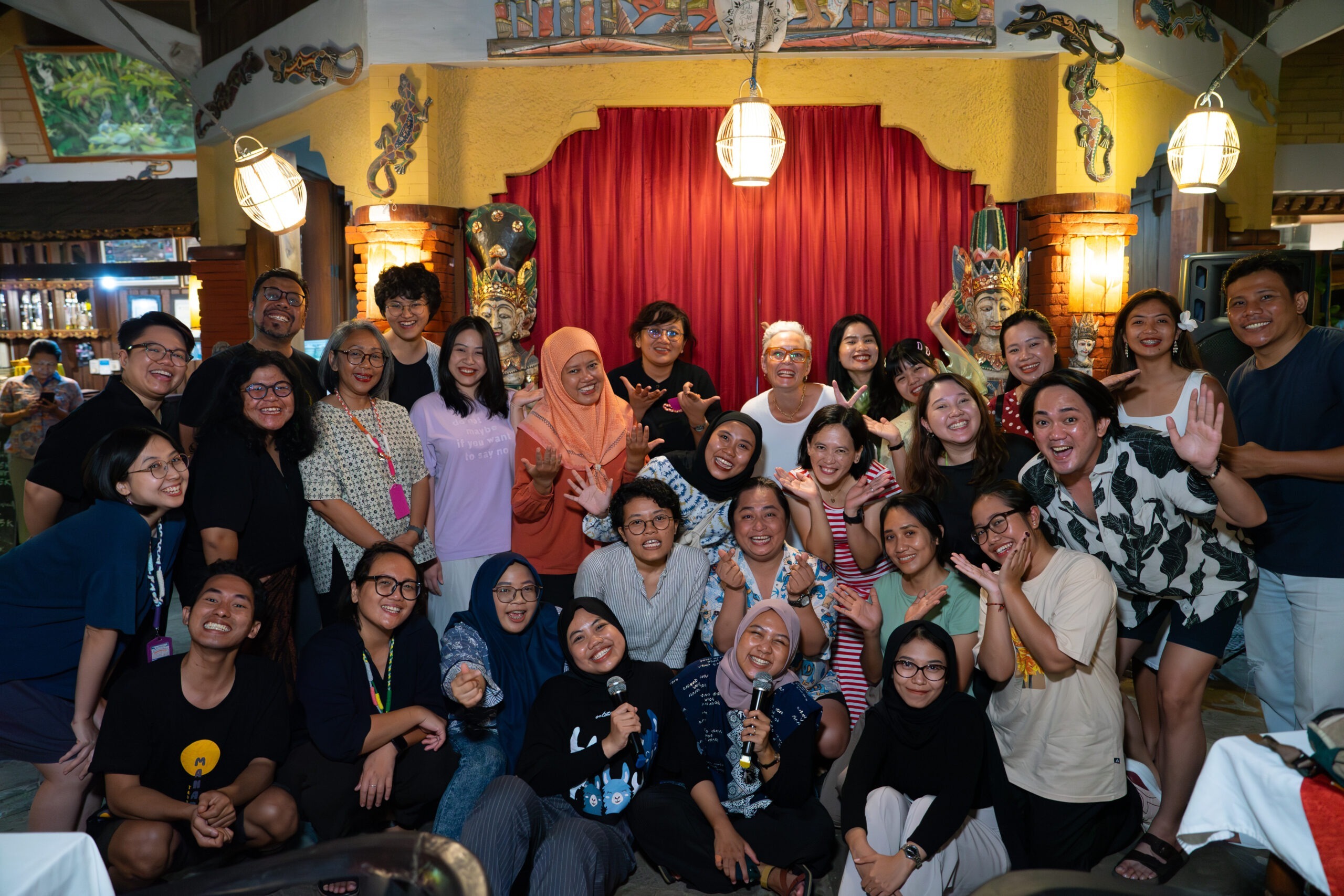 Participants not only shared their successes and challenges but also explored innovative approaches to address regional SRHR issues, underscoring the forum's pivotal role in shaping future strategies and initiatives.
Our Open Space Session
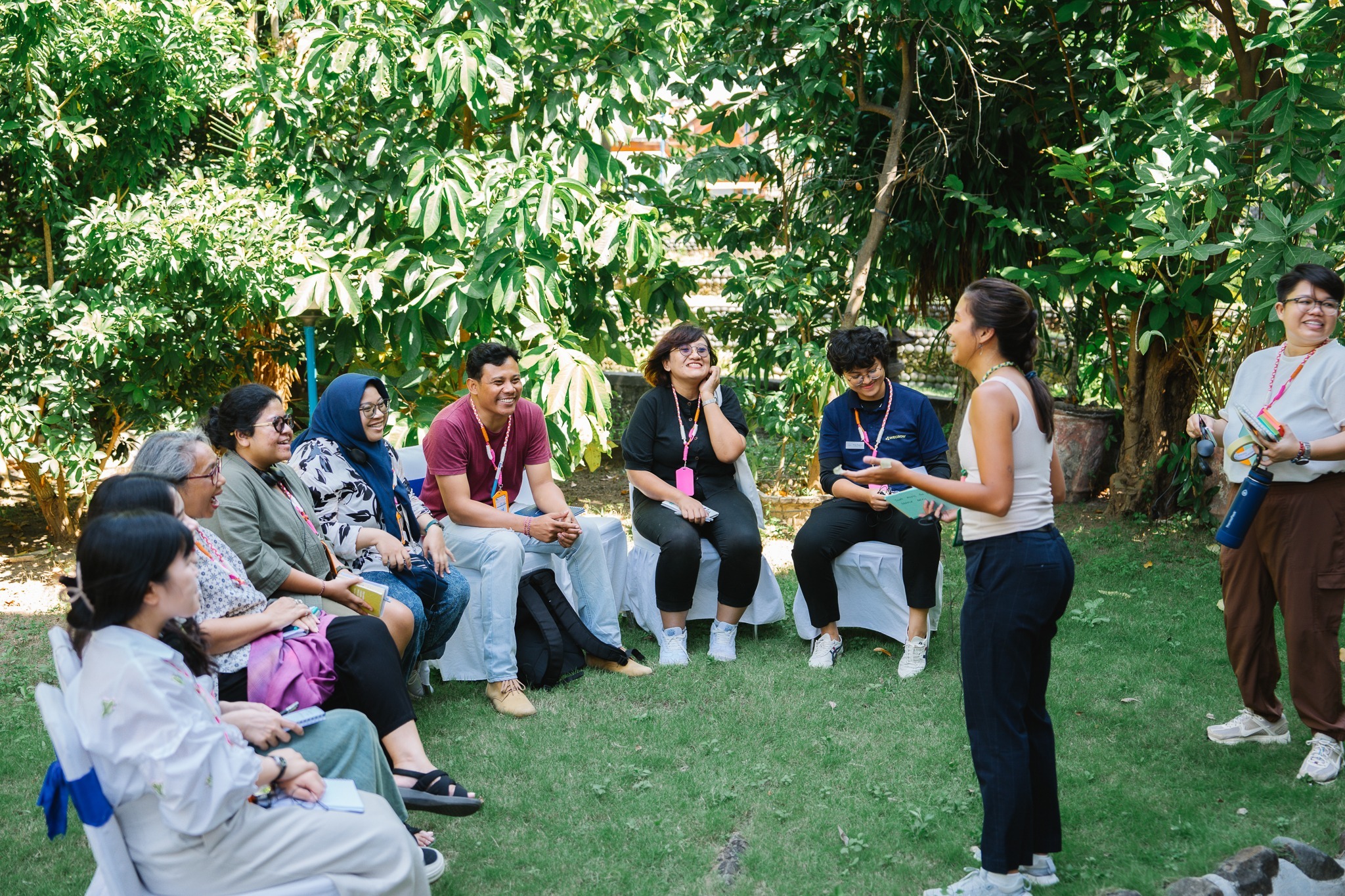
Representing Lunas Collective, we facilitated an outdoor open space session focused on "Consent, Pleasure, and Clean Language." The session delved into the foundational principles of consent as a cornerstone of respectful interactions and relationships. Drawing on insights from EMpower’s Learning and Training Methods consultant Charles-Louis de Maere, Founder of Exploration Labs and Licensed Visual Thinking Trainer of the Biklabo method, we applied Clean Language techniques as one of our applied practices rooted in Feminist Care principles.
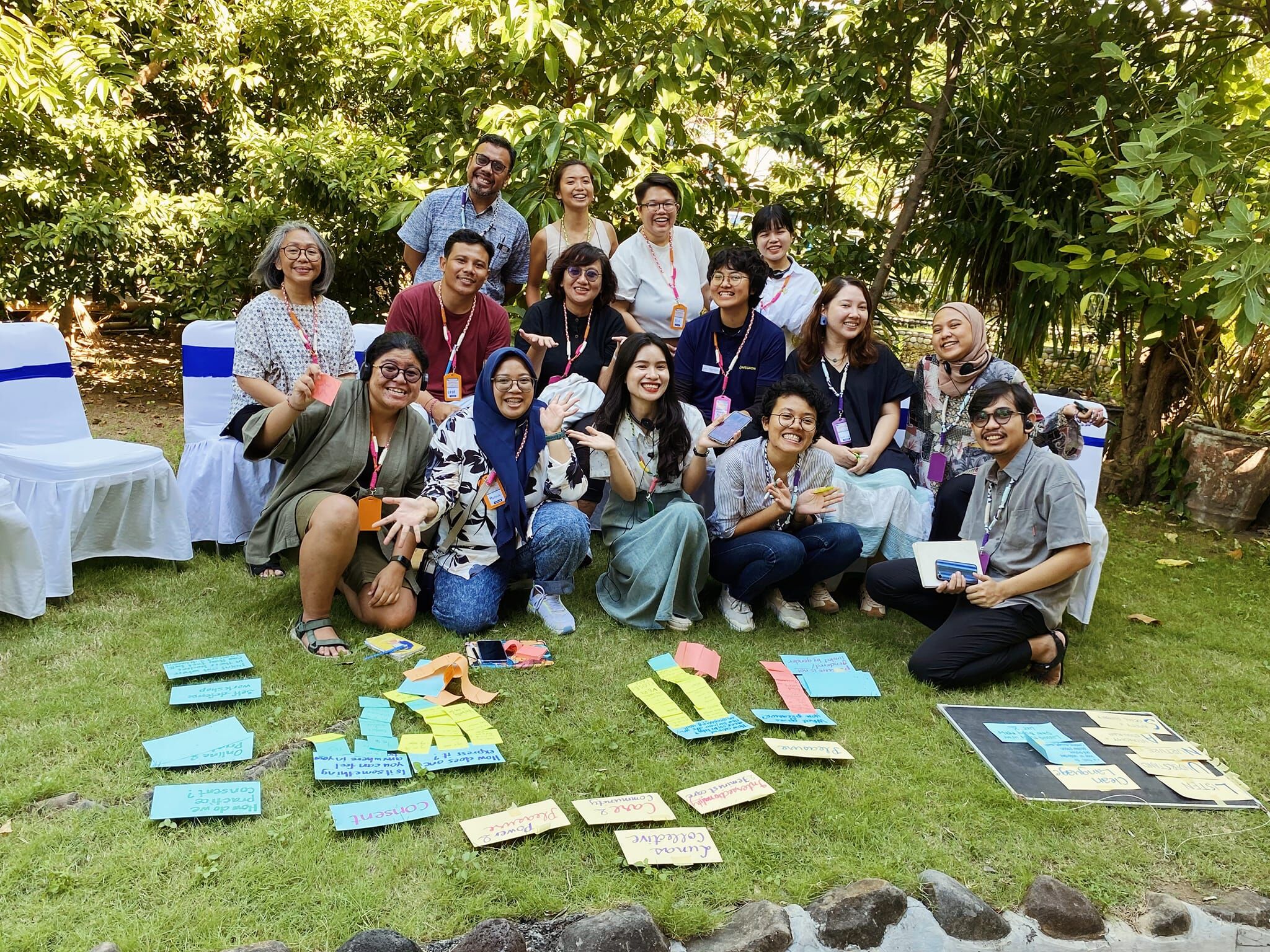 During our session, we dissected pleasure to encompass various forms of joy, happiness, and the sense of safety and comfort in our sexuality. This approach not only facilitated meaningful dialogue but also empowered participants to explore and share their experiences openly, enriching the collective learning and understanding within the CoP. Roots of Health (Ugat ng Kalusugan) led a session on "Legal Literacy for Human Rights," further enriching the diverse topics discussed during the forum. Philippines, represent!
Reflections
Following our open space session and the enriching opportunity, we reflect on the insights gained and the ongoing impact within the AwareNest CoP and broader SRHR community. Our commitment to Feminist Care principles, guiding both our advocacy and daily practices, was evident in our application of Clean Language during discussions. The experience also included a one-day free day in Denpasar, Bali, providing additional moments of connection and reflection.
Jeza, Chief Operations Officer
Although I've facilitated workshops for international audiences before, this experience marked my first time implementing the "Open Space" concept outdoors. Bringing our participants outside and actually using and applying the "Open Space" idea was a unique opportunity.
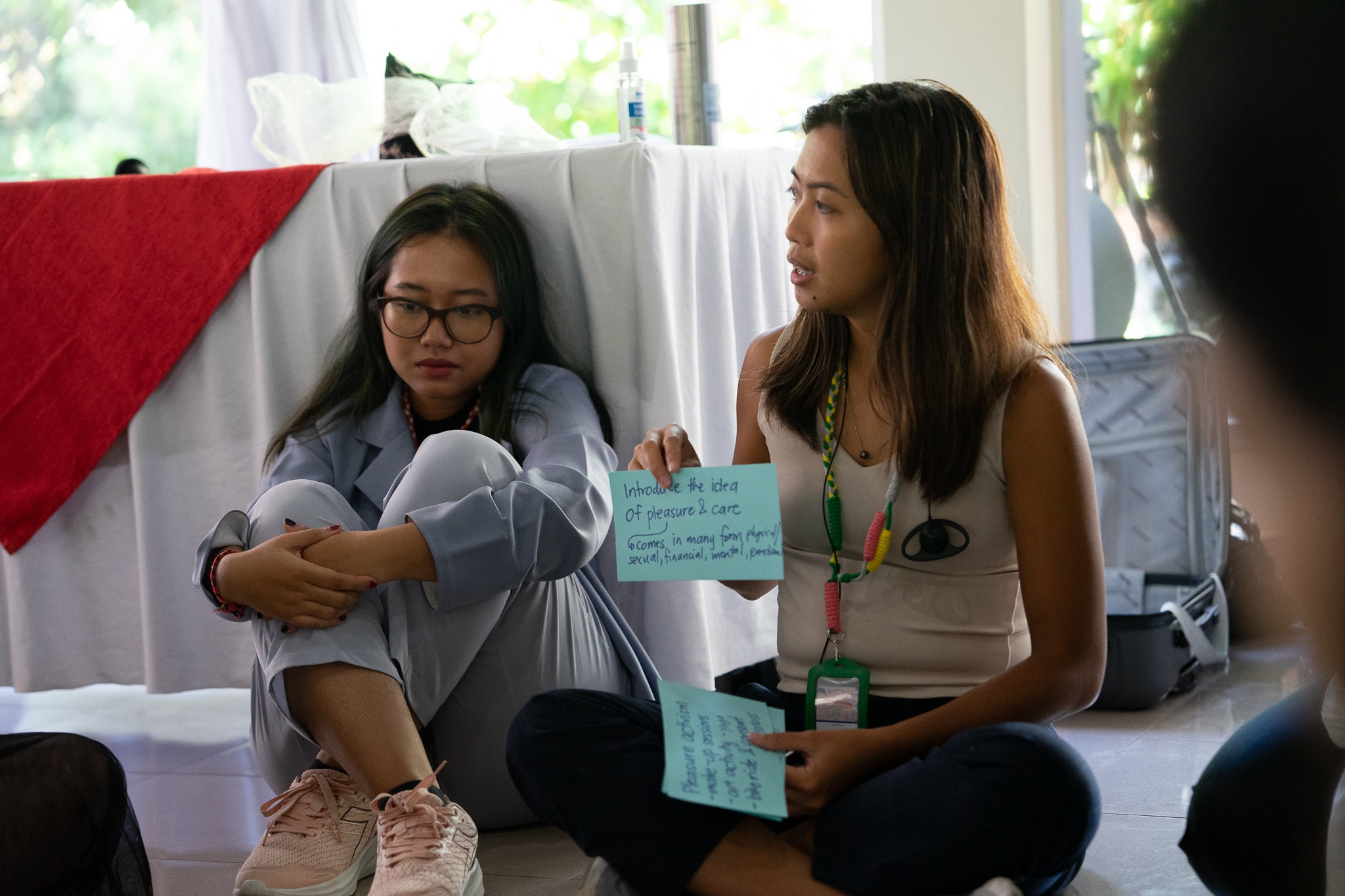 I have to admit that the idea of bringing people outside was heavily inspired by the bike workshops I've been doing for the past few months. This approach not only encouraged us to break away from traditional workshop settings, but it also supported our idea of "third spaces," places where we can interact with members of our community and even turn strangers into friends.
Not only did we enjoy our time discussing the concepts of Consent, Pleasure, and Clean Language, but we were also moved by the grassroots efforts of the East Bali Poverty Project (EBPP), where we met young people actively campaigning against child marriage in their community. We also learned about different advocacy approaches from the sister organizations.
It has truly been our “pleasure” to meet everyone and share what we have been doing in Lunas Collective. What a meaningful and relaxing work trip it has been. Matur suksma, Bali!
Ria, Director of Communications
After nearly four years with Lunas Collective, representing our non-profit at a regional gathering was deeply meaningful. Sharing how we turn theory into practice and translate our learnings into tangible care work felt incredibly rewarding. Seeing our approaches resonate with fellow EMpower grantees opened many doors for future collaboration. The sense of care felt like a ripple effect moving through the community. I’m truly honored to have represented Lunas on a regional stage.
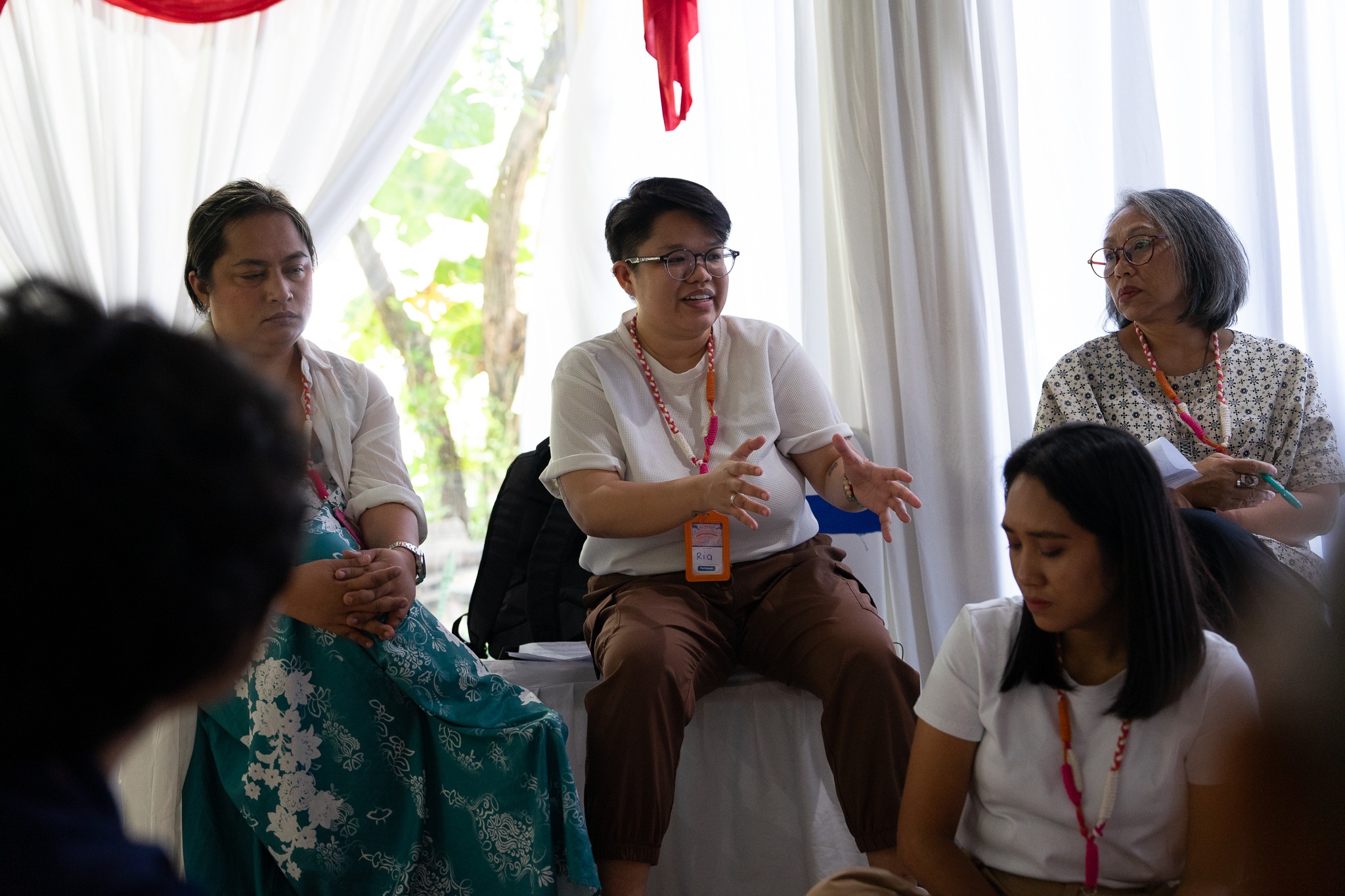
This opportunity was also a powerful push to keep going. The immersion brought so many things into perspective, making it even clearer why our call for collective action and our emphasis on care spaces are at the heart of Lunas Collective’s mission. It reaffirmed my commitment to our advocacy and inspires me to keep contributing to our shared goals with renewed energy and dedication.
As a bonus, Jeza and I squeezed in a bit of free time in Denpasar before our early morning flight. I even reconnected with the same Grab driver who toured me around Bali two years ago! We tried coffee, enjoyed local Balinese food, and ended the day sharing a meal with the driver who took us around the city. At Lunas Collective, we put in the work — but we never forget to celebrate our joys and pleasures, too.
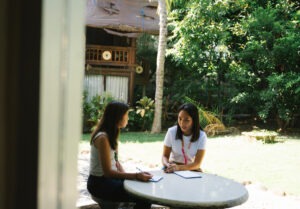
Read EMpower's article about this Learning Session.
Watch this highlights reel to get a glimpse of what transpired during this event:
Photo Credit: Perkumpulan Pamflet Generasi and EMpower — The Emerging Markets Foundation

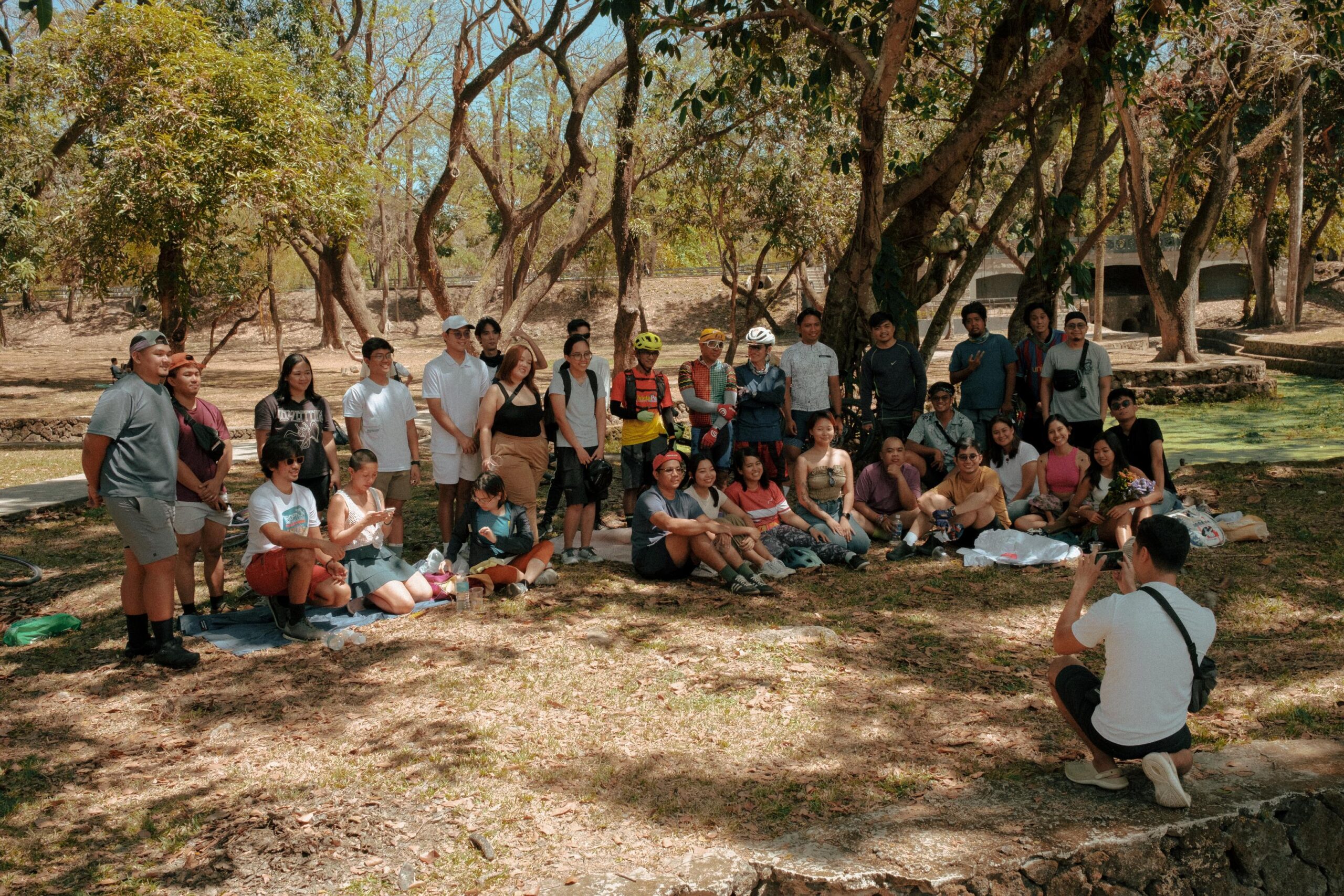
Bike & Landi: Merging Joyful Cycling with Meaningful Conversations on Consent and Pleasure
In a unique fusion of fun and feminism, Lunas Collective’s Chief Operations Officer, Jeza Rodriguez, recently organized “Bike & Landi,” an activity that combined cycling with insightful discussions on gender and social norms and intimate relationships.
Held on February 24, 2024, this event aimed to create a safe and inclusive space for participants to meet new people, learn about bike repair, and engage in conversations about “landi” in the context of pleasure and consent.
What started as an idea during Jeza’s 10-day meditation quickly became a reality, with Bike & Landi becoming a platform to test the concept of merging the joy of cycling with discussions around unfair social norms.

Starting from Centris Station in Quezon City, participants embarked on a community ride, stopping at the Dangwa Flower Market for a delightful flower shopping experience. The ride culminated at the UP Diliman Lagoon, where Sabrina Gacad, Lunas Collective's Founder, led a relaxed and engaging conversation on consent and pleasure.
Supported by Tambay Cycling Hub, Budol Buddy, Bikeary, Krebs Cycle, and Make it Safer Movement, Bike & Landi attracted a diverse group of participants, including families and first-time bike commuters. The event received overwhelming support, with participants praising its unique blend of fun and meaningful dialogue.
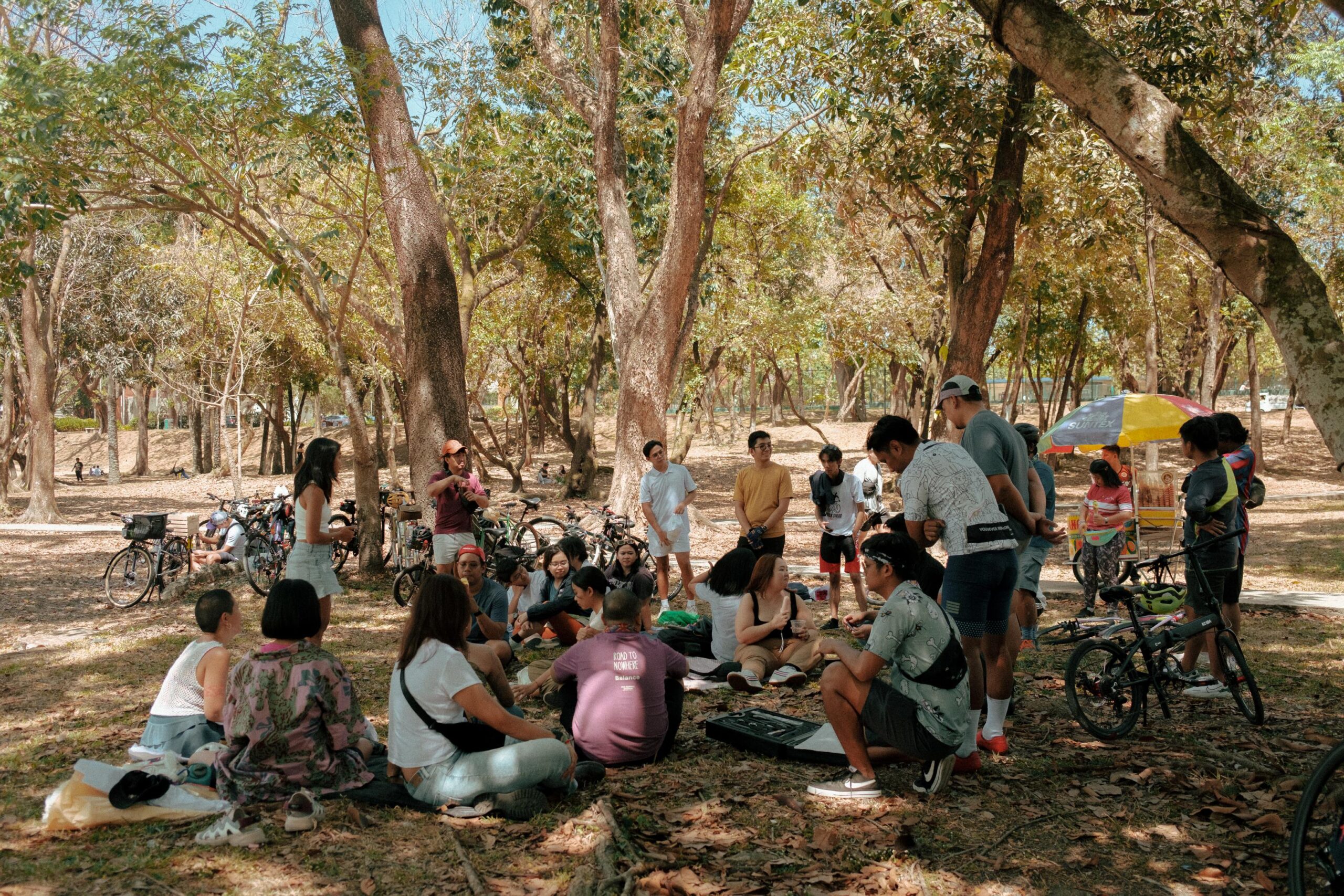
One of the highlights of Bike & Landi was a speed dating component, where participants engaged in micro conversations on topics related to desire, safety, and connection . This added a new dimension to the event, allowing participants to connect on a deeper level and further fostering a sense of community.

"The feedback from participants has been heartwarming, with many expressing how much they enjoyed the event, the lessons they took away, and the connections they made,” Jeza highlighted in her Instagram post.

The success of Bike & Landi exemplifies Lunas Collective's commitment to creating safer spaces and promoting respect for boundaries and consent. As an organization, we are incredibly proud of Jeza for her vision and dedication in organizing this event.
We look forward to more activities that challenge social norms and foster inclusivity and empowerment within our community!
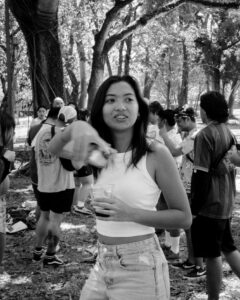
Jeza Rodriguez is a board-certified psychometrician, development worker, and feminist youth leader, currently serving as the Chief Operations Officer of Lunas Collective. With a strong commitment to advocacy, Jeza is known for her work in creating safe spaces and promoting pleasure activism. Beyond Lunas Collective, Jeza is an organizer and leader in her communities, enhancing her craft as a bike mechanic while dedicating herself to inclusivity and empowerment. Connect with her on Instragram (@jezarodz) or via rjezaantonette@gmail.com.
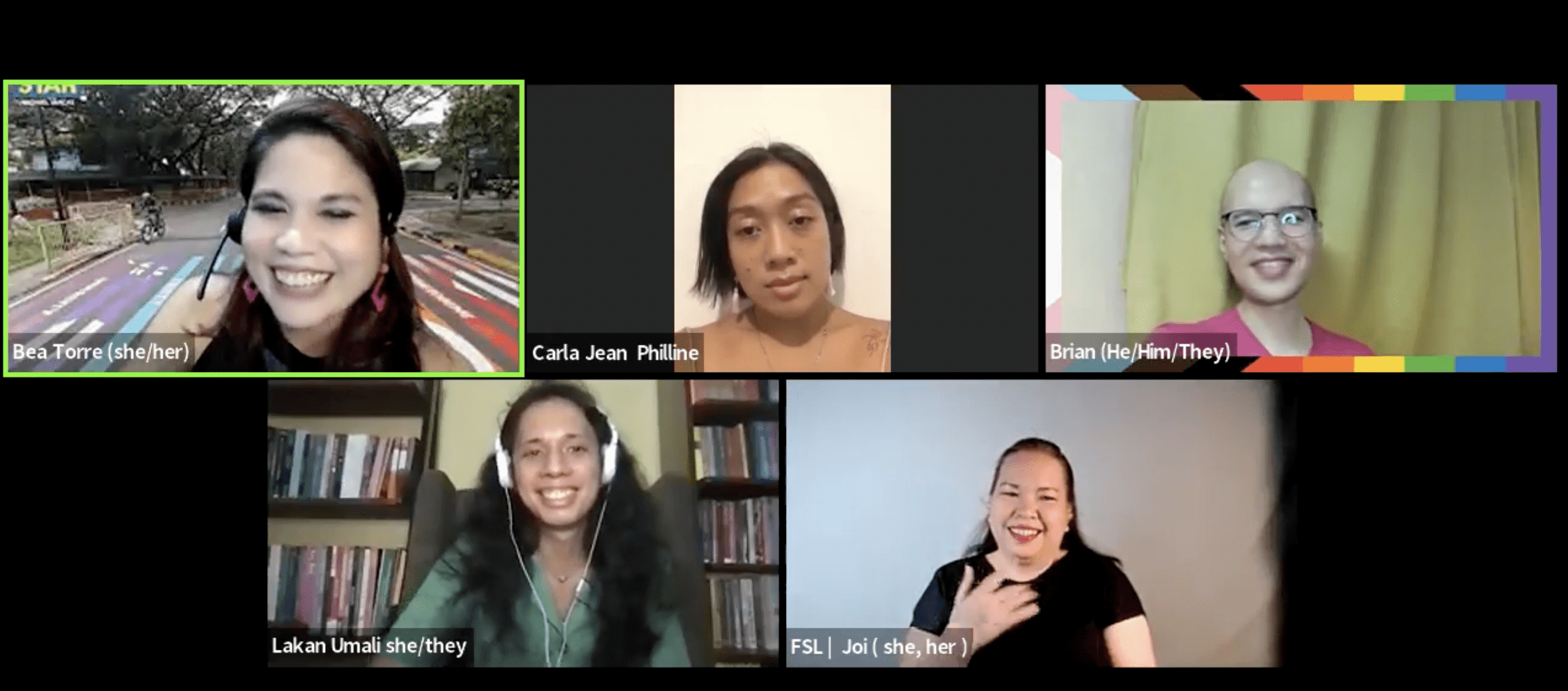
#DearSurvivor 2022 Pride Edition: Celebrating Individual Power and Collective Pleasure
We at Lunas Collective marked an empowering and historic moment this Pride Month with its first-ever #DearSurvivor: #PrideMonth Edition on June 28, 2022.
The event focused on creating a safe space for queer individuals and allies to come together and discuss stories of resilience in the face of gender-based violence – while also celebrating the pleasures that make each person unique.
This #PrideMonth edition highlighted the importance of care, compassion, and support in helping individuals take the first step toward healing, justice, and empowerment.
The event was held in collaboration with esteemed partners including the PAP LGBT Psychology Special Interest Group, the University of the Philippines Department of Psychology, UP Center for Women's Studies Foundation, Inc., and UP Center for Women's and Gender Studies.
Our event brought together a distinguished panel of speakers who lent their voices to the cause:
- Bea Torre - Chairperson at PAP LGBT Special Interest Group, Assistant Professor at the University of the Philippines Department of Psychology, and Qualitative Analyst at Lunas Collective, served as the host, guiding the event with wisdom and compassion.
- Brenda Alegre - A board member at the International Lesbian, Gay, Bisexual, Trans, and Intersex Association - Asia (ILGA) and the Society of Trans Women of the Philippines (STRAP), as well as a Gender Studies Teacher at the University of Hong Kong, shared her insights on the struggles and triumphs of the LGBTQI+ community.
- Nina Araos - Qualitative Data Analyst at Lunas Collective and a Graduate Student majoring in International Development and Policy Studies in Tokyo, Japan, brought a global perspective to the discussion.
- Lakan Umali - A talented writer and graduate student based in Metro Manila, added a creative and reflective touch to the dialogue.
- Philline - A Movement Artist and Embodiment Teacher, showcased the power of art and expression in healing and celebrating one's identity.
- Brian Baretto - SOGIE Specialist for the Ateneo De Manila University Gender Hub, Lead Volunteer for Flourish by LoveYourself, and a Drag Artist and Host known as Clea T, embodied the diversity and strength of the LGBTQI+ community.
#DearSurvivor, an initiative born out of empathy and solidarity, has been a sanctuary for survivors of gender-based violence to share their stories and heal.
We introduced this virtually in 2020, at the height of the COVID-19 pandemic. In 2021, it took a hybrid form, incorporating on-the-ground activities during the 16 Days of Activism Against Gender-Based Violence, a period running from November 25 to December 10 of that year.
The #DearSurvivor: #PrideMonth Edition was a testament to the strength, resilience, and unity of the LGBTQIA+ community and its allies. It served as a reminder that even in the face of adversity, healing and pleasure can be found, and that together, we can overcome challenges and celebrate love and identity.
Watch the online streaming here: #DearSurvivor PRIDE 2022