Narrative on the Menstruation Research Conference 2026
This reflection is written by Sabrina Gacad, Founder and Co-Executive Director of Lunas Collective, and Rafaella Potestades, Research Consultant, following their participation in the Menstruation Research Conference 2026 at the Brighton and Sussex Medical School, University of Sussex, where they presented Lunas Collective's ongoing research, Ginhawa at Gaan: Co-Imagining Collective Care and Dignity in the Menstrual Experiences of Filipinos.
The piece recounts their experience at the conference and the conversations, learnings, and connections that continue to shape Lunas Collective's work on menstrual justice, sexual and reproductive health and rights (SRHR), and collective care.

Lunas Collective made a panel presentation of the on-going research “Ginhawa at Gaan: Co-Imagining Collective Care and Dignity in the Menstrual Experiences of Filipinos” during the Menstruation Research Conference 2026 at the Brighton and Sussex Medical School, University of Sussex. Under the theme “Menstrual dignity, inequality and stigma,” we shared insights on the diverse Filipino menstruators’ nuanced understanding of menstrual (in)dignities, a collective vision of menstrual dignity, and our use of a decolonial feminist lens and arts-based and creative data gathering methods. In the same panel, other researchers presented on the following: accessibility and menstrual health and dignity, menstrual practices and religion, creative expression and artistic representations of the ‘weird’ in exploring understandings of the reproductive lifecycle and premature menopause, participatory and community-based efforts to promote menstrual health, and black women’s reproductive health experiences.
In the presentation, we emphasized the value of viewing menstrual health management and menstrual experiences beyond biomedical systems, hygiene discourses, and reproductive centralization. We also reiterated the importance of viewing menstruation as part of the sexual and reproductive health and rights (SRHR) discourse, rather than just advocating and understanding it in isolation. We discussed how an integrated view of menstruation, dignity and SRHR manifests the ways to reach menstrual justice.
During the panel’s question and answer portion, one participant asked for clarity on how to balance the need to connect menstruation with SRHR while not reducing its function to a “reproductive” issue alone. Another participant also asked about the work to challenge dominant and unfair meanings of being a ‘woman’ that are usually associated with menstruation and stigma. In response, the researchers discussed the SRHR framework and how it challenges the “reproductive” function and meanings of femininity and the inequitable burden of care that women are expected to fulfill in society. The discussion also highlighted the effectiveness of arts-based approaches to surface diverse and lived understandings of menstruation and in relation to SRHR (e.g., perceiving a steady cycle as a sign of good health and missing it after menopause, or others wishing to stop their periods to affirm their gender identity). Other speakers shared that it is necessary to normalize what others perceive as “abnormal” and “weird” in the context of menstruation, to ensure inclusion of diverse social identities and to challenge the dominant perception of periods as taboo or shameful.
In the two-day conference, we went to different workshops and learning sessions that are outside of Lunas Collective’s purview. We attended sessions on the intersections of menstruation with sports science, physical movement, reproductive issues such as PMOS (Polyendocrine Metabolic Ovarian Syndrome), menstrual health and technology, and the relationship between mental health and affective sense-making experiences of perimenopausal and menopausal menstruators. In these sessions, Lunas was able to connect with other researchers in the biomedical and health sciences field, and share insights on the social underpinnings of systemic power differences on the everyday life of a menstruator (e.g., in relation to health indicators, lack of access to physical spaces where movement is possible, unpaid care and domestic work and precarious working conditions menstruators face that make it difficult for a ‘work-life balance’). We were able to gather greater insights on the scientific meaning making and understanding of menstrual health and hygiene management, especially in consideration of its impact on menstruators’ mobility and choices when it comes to sports, work, and everyday movement and wellbeing.
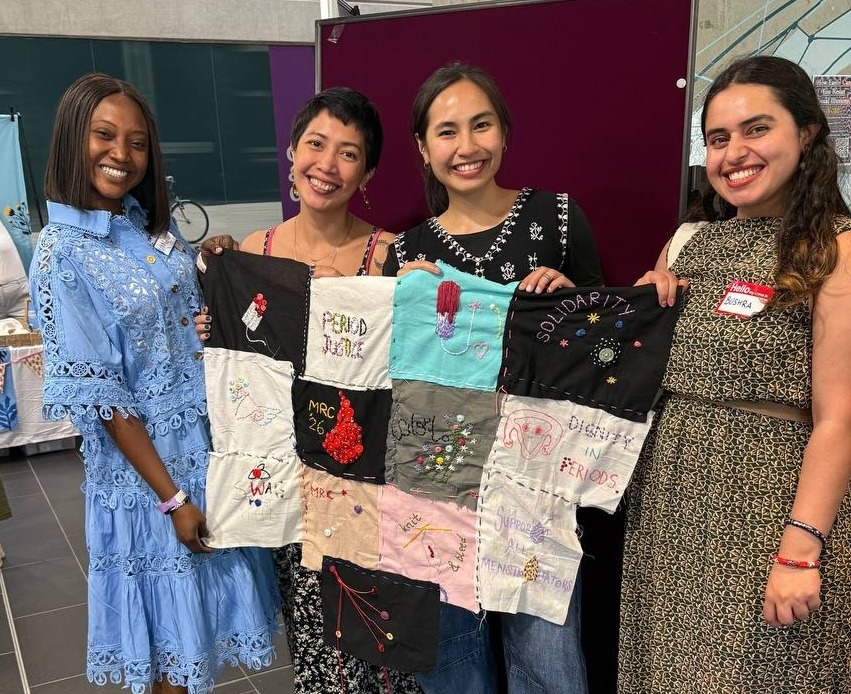
In connecting with the work of advocates and educators, we learned from Margaret Bolaji’s poster about SWAG Initiative’s effort to encourage male allyship in menstruation and dignity and attended a care workshop facilitated by Bushra Mahnoor of Mahwari Justice in Pakistan, where we each crafted messages of menstruation, dignity and justice on patches that joined together to form a tapestry. We also attended a workshop on menstrual education for adolescents in the United Kingdom and Ghana facilitated by Irise.
 Here we found interesting tools to teach students across the ages 9 to 14 about the menstrual cycle, and individual challenges and preferences for particular menstrual products. The tools included a uterus model, sanitary napkins, cups and tampons, and colorful case studies and cut-outs. The interactive methods encouraged adolescents to explore their understandings of menstruation with greater empathy and worked to demystify periods for younger people.
Throughout the conference, Lunas Collective connected with researchers and advocates about the various aspects of our work - education, exploring decolonial feminism in menstruation and the broader SRHR movement, and centering feminist care in community organizing. We noted shared challenges - shrinking windows for funding, enduring stigma against menstruating bodies, and a silo’d view of the various aspects of work on menstruation and health. We also appreciated shared aspirations - expanding the biomedical, the social, and the embodied knowledges of menstruation, health and dignity, promoting education across the lifecycle, creating networks of solidarity and care. The conference has provided us perspective and inspiration, that it is quite powerful to integrate science, technology, art, education, and the multitude of diverse voices and lived experiences in a regional and global effort to promote menstrual dignity and justice.


Dolls of Dignity: Stitching Stories of Period Power
This piece is written by Bry, a multimedia arts student who uses storytelling to document lived experiences and amplify real-life voices. Rooted in curiosity, empathy, and critical reflection, their work explores how personal narratives connect to broader social issues.
Written from the perspective of someone present in the space, this piece reflects Bry’s observations and reflections during Lunas Collective’s creative care sessions with menstruators.
When we were little kids, we used to play different games. These games became a way to express our creativity and explore our interests—sometimes we stumbled, we lost, we won—collecting experiences and lessons along the way. Who would have thought that after a decade or two, these same acts of play can take on a new meaning: becoming powerful ways to process real-life struggles.
When these forms of creativity are used to explore deeply personal and often stigmatized, unheard experiences, what does menstrual dignity truly look like?
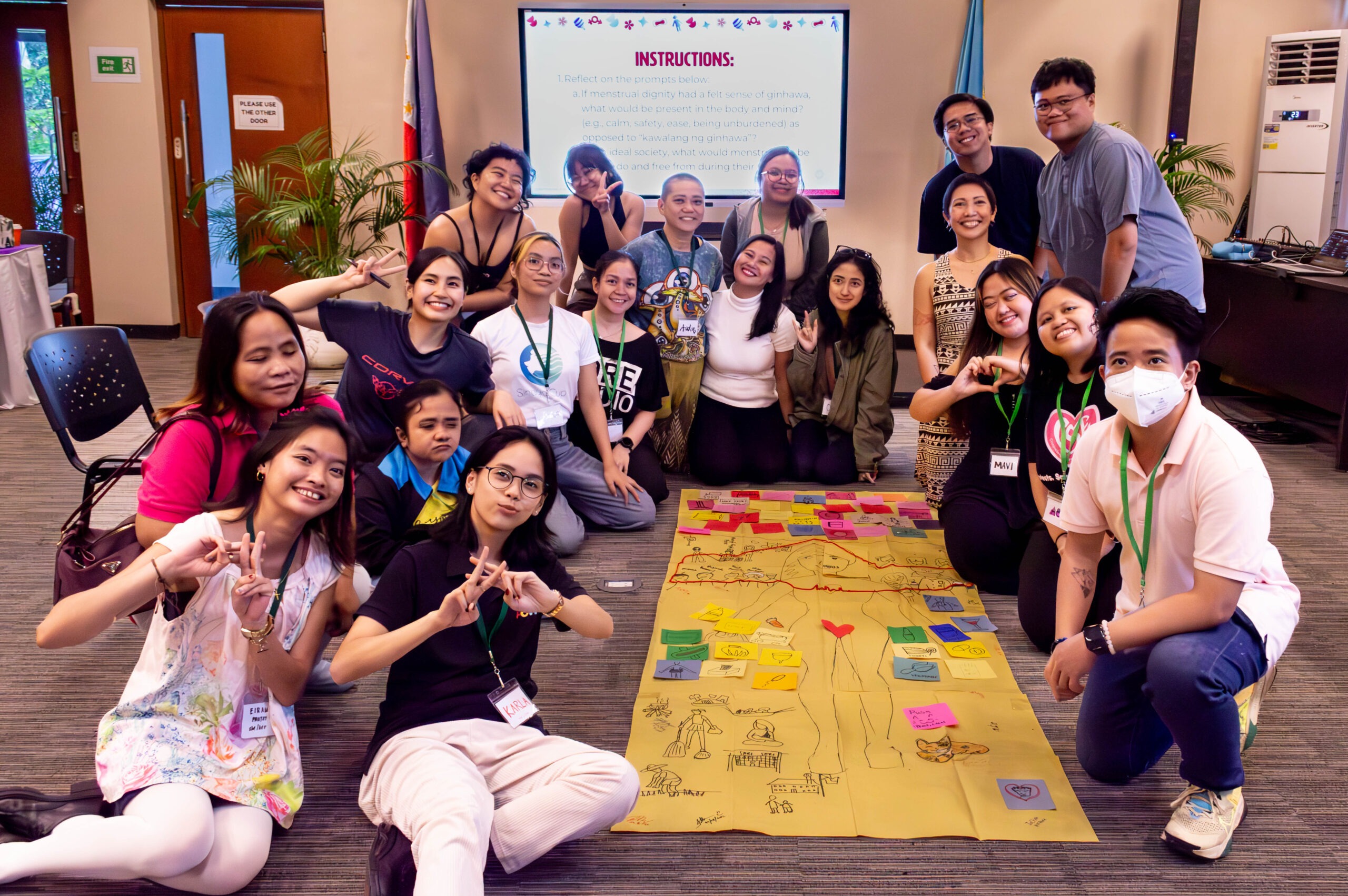
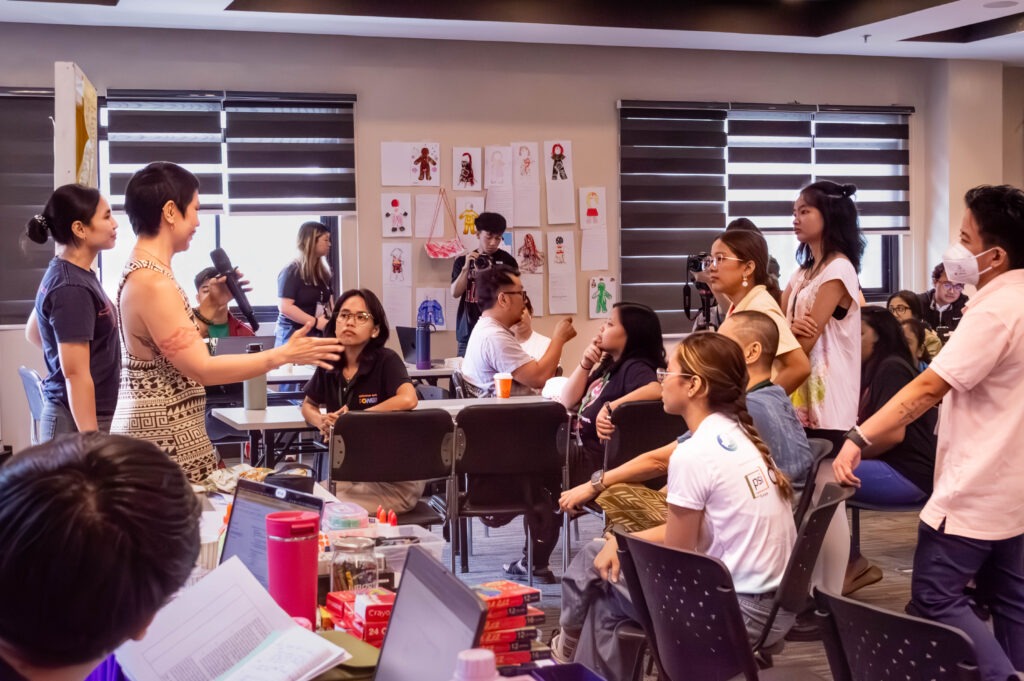
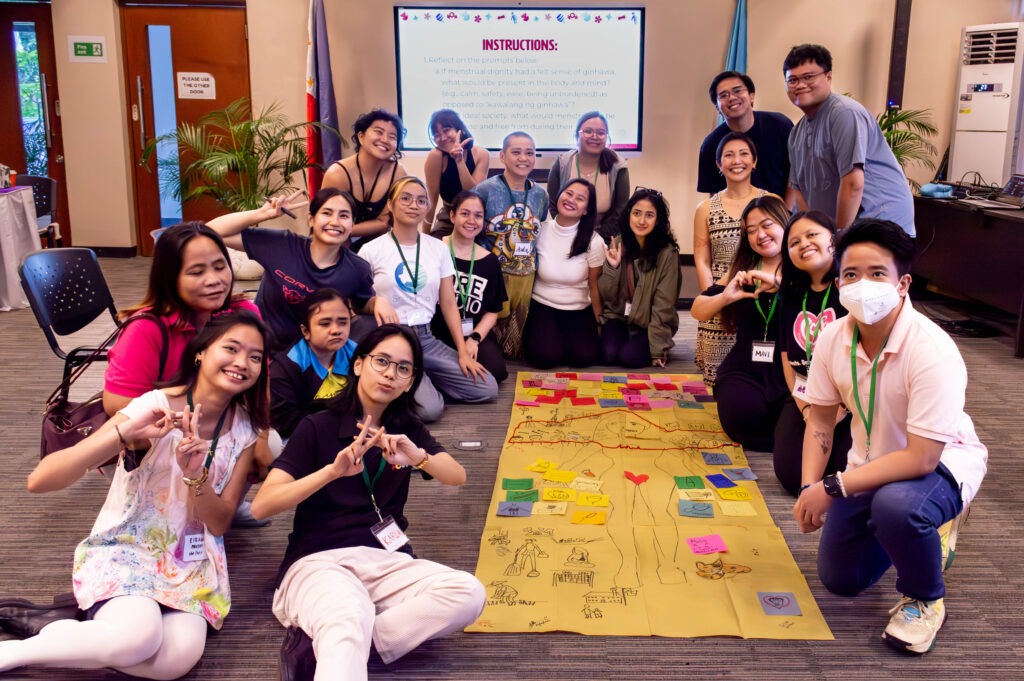
On March 7 and 8, 2026, Lunas Collective conducted a creative care session for their research project, “POWER, PERIOD: An Exploratory Research on the Meaning of Menstrual Dignity through Collective Care.” Diverse participants were invited to share their stories and experiences through doll-making, poem, human tableau, role play, drawing, and other art forms, reimagining what dignity and care look like in the context of their lived experiences.
Menstrual Sensation Through Body Scan
The workshop started with a guided body scan, participants notice where the memory holds and locate “sites of feeling” when they think of menstruation. “Parang hinihiwa yung ulo sa gitna,” the group shared the same sensation with one another.
These sensations were also translated into movement—not as a performance, but as a way of expression. Participants with diverse abilities described their movements, some with the help of a sign language interpreter, and each movement was mirrored by the group—an early gesture of recognition, empathy, and collective care.
After the body scan, the group was given materials such as cardstock, coloring materials, pencils and pens, glitter, different-colored yarns, sequins, and acrylic paint. Each participant was asked to create a “Doll of Dignity” and write a poem reflecting their experiences and insights from the body scan and group sharing.
Safe Space: Opportunity for Collective Sharing
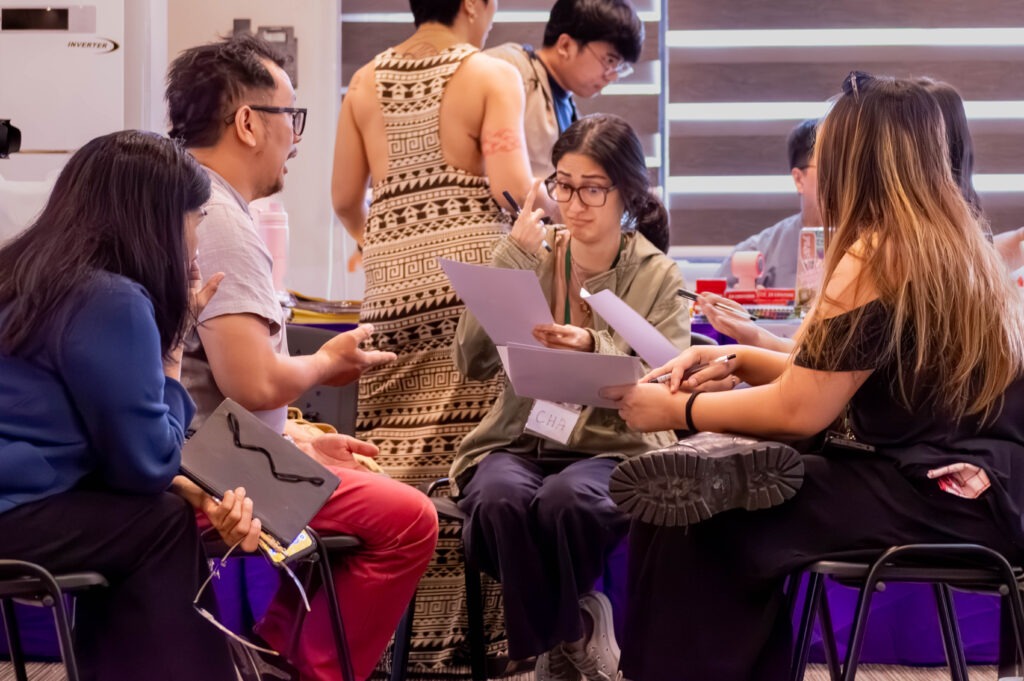
The workshop opened a space not just for storytelling, but also for participants to deeply listen to their bodies. They shared how menstruation is not a linear experience, but rather a constant shifting between pain, care, and adaptation. Some spoke about remedies that worked for them: drinking soda to ease the flow, using heating pads, while others found comfort in rest and stillness. Food also became part of the equation—what may seem harmless to the body, like langka (jackfruit), can trigger dysmenorrhea during menstruation.
This collective sharing revealed a pattern: menstruators learn to read their bodies over time through lived experiences. Every month brings anticipation, discomfort, and sometimes dread—but also preparation. Comfort becomes intentional, and care for oneself and others becomes practiced. Menstruation was described as both disruptive and instructive. It interrupts daily routines, limits movement, and reshapes plans. Yet at the same time, it signals people to slow down, to listen, and to respond—reminding them that pain signals the body’s presence and needs.
“Kahit ayaw man natin siya sa ilang araw, hihingin mo pa rin na dumating siya buwan-buwan,” a participant shared. Menstruation, though often unwanted, becomes something expected. It is a natural, uncontrollable cycle that demands readiness. Yet within this lack of control, there is a different kind of power—the power to prepare, to understand, and to care for oneself. Here, dignity begins.
We Fight: Battles And Dignity
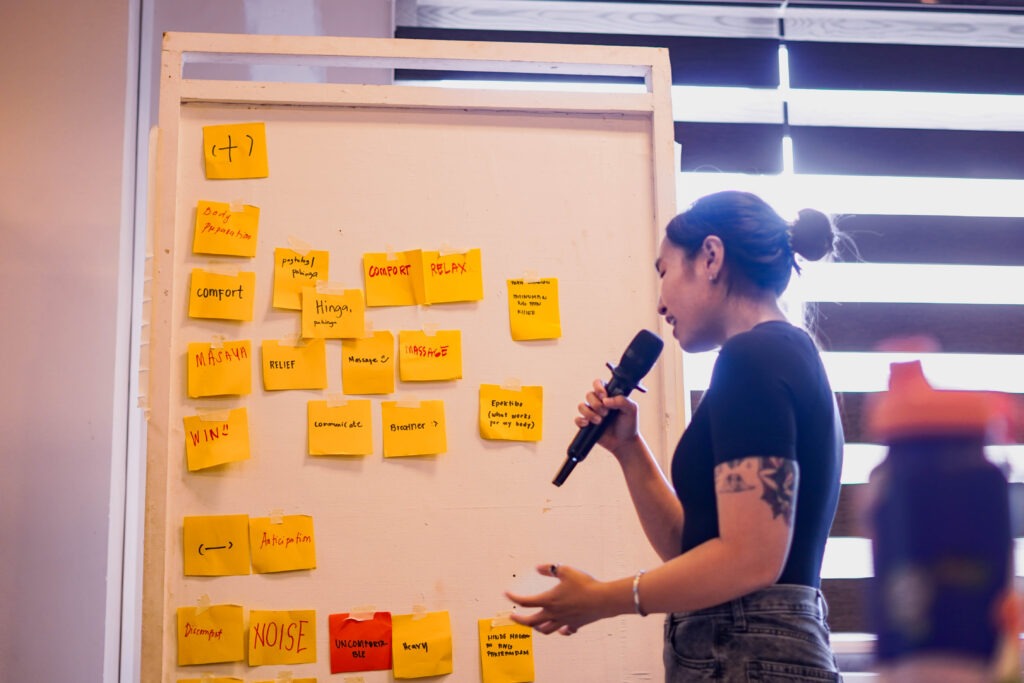
“We want to empower. The battle is not only within our bodies, but also within society.” Many participants traced their earliest encounters with menstrual stigma to everyday spaces—classrooms, homes, and workplaces. For some, menstruation was something to be hidden, joked about, or dismissed.
One menstruator recalled being told by a professor that they were “maarte” for expressing menstrual pain. Another shared how conversations about menstruation were discouraged in their home, especially in public spaces. These experiences reinforced a culture of silence, where menstruation became taboo. This silence becomes even more complex when layered with gender and identity. Transgender men in the group spoke about the double burden of experiencing menstruation while navigating discrimination. “Mabigat, doble ang hiya,” one shared, highlighting how menstruation can intensify feelings of exclusion.
“The cycle of shame can become a cycle of care.” In this sense, dignity is relational. It is built through spaces where people feel seen, supported, and understood—not only by their peers, but also by institutions.
Menstrual Dignity in Different Institutions
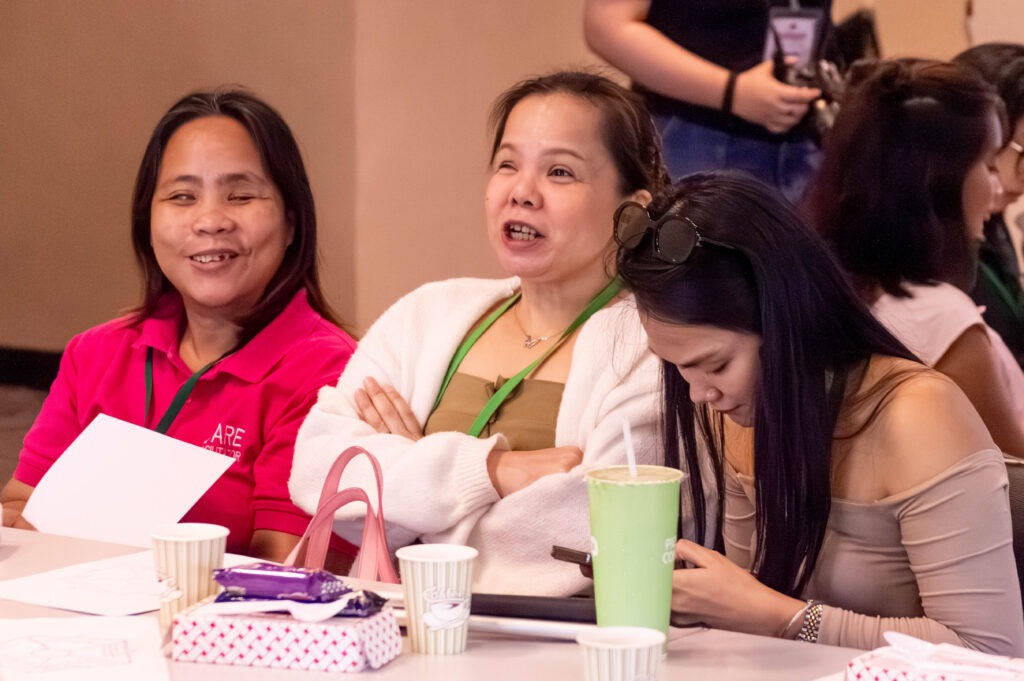
Menstruators also named barriers that prevent menstrual dignity from being fully realized. Responsibilities such as schoolwork, household chores, and profession demands often override the body’s need for rest. Even during significant life events, menstrual pain can overshadow what should have been joyful or memorable experiences.
Financial constraints also become part of this reality. Menstrual products, though essential, remain inaccessible for many. Some participants shared stories of people cutting cloth to use as makeshift napkins, while others pointed out inconsistencies in public health priorities: “Why are condoms free while menstrual products are not?” Workplaces and public spaces were also described as unaccommodating, especially in male-dominated fields. Facilities, resources, and policies rarely account for menstrual needs. Even when support exists, it is not always accessible.
Participants emphasized that dignity requires more than individual coping—it demands systemic change. This includes government-funded menstrual products, inclusive healthcare, and policies that recognize the diverse realities of menstruators. Education also plays a crucial role. Many shared that they only learned about menstruation after experiencing it, revealing gaps in early and accessible information.
Awareness creates space. But awareness alone must also be intentional and inclusive—reaching different communities, including Deaf and marginalized groups, while holding institutions accountable.
Reimagining Dignity Through Creativity and Care
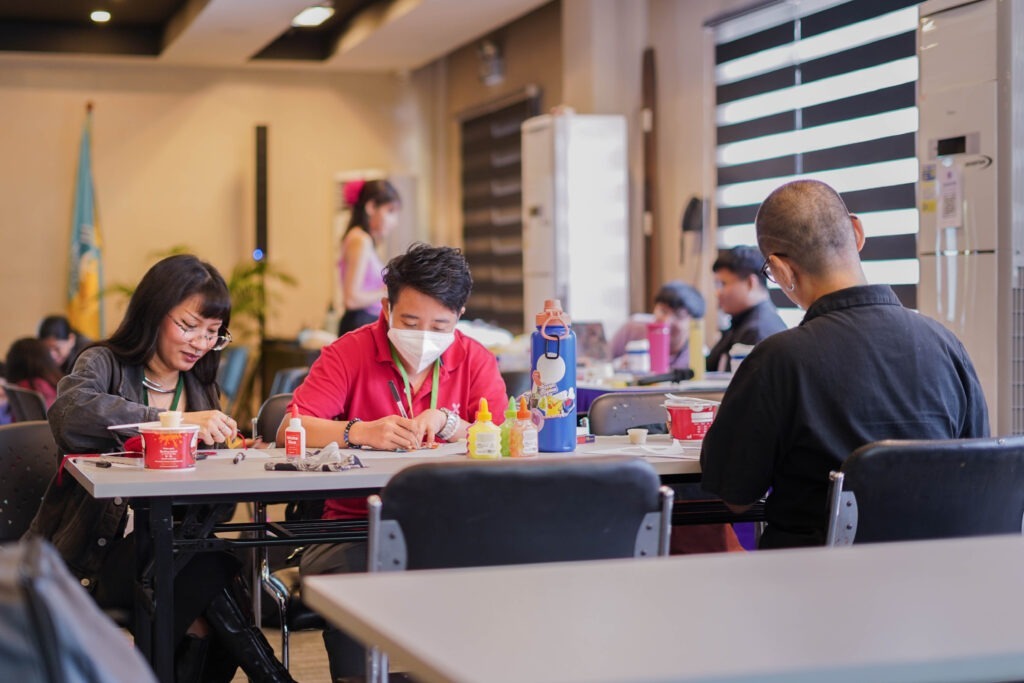
On the second day, participants revisited their creations, connecting their dolls to their inner child and their first experiences of menstruation. Through yarn, color, and texture, participants reflected on experiences marked by confusion, fear, curiosity, and eventually understanding.
This creative process revealed something essential: when people are given safe spaces, expression flows. Art became a bridge, connecting personal experiences to collective understanding. While pain remained a shared experience, participants recognized that its manifestations differ from one another. Some found relief in movement and physical activity, while others experienced comfort in stillness. Emotional responses also varied—some chose isolation to manage mood swings, while others found comfort in being cared for.
This showed how support is deeply personal. It can look like preparing warm compresses, offering food, providing financial help, or simply asking, “Kumusta ka?” It can also mean respecting one’s autonomy, allowing menstruators to define what they need, rather than assuming their limitations.
As participants reimagined menstrual dignity, they described a world without shame, where care is normalized and people have control over how they navigate their time and bodies. A world where menstruation does not hinder participation, but is understood as part of everyday life.
The workshop revealed that menstrual dignity is not a fixed concept. It is continuously shaped through experience, words, and collective action. It lives in small gestures of care, in the courage to speak, and in the systems we choose to build.
And like the games we once played as children, it invites us to imagine, to create, and to begin again—this time, with intention.